


Behavioral Economics and Donor Nudges: Impulse or Deliberation?
Charitable organizations can use insights from behavioral economics to help people follow through on their impulsive and deliberative intentions to give.

Charitable organizations can use insights from behavioral economics to help people follow through on their impulsive and deliberative intentions to give.

Impact evaluations are an important tool for learning about effective solutions to social problems, but they are a good investment only in the right circumstances.

To fulfill the promise of cash transfers, we need to double down on investment in research.

Research on the needs and habits of the poor shows that nonprofits can serve a vital function in expanding access to financial services.

Collecting data to demonstrate your organization’s impact is great to do when you should, wasteful when you should not.

Public debate about two prominent poverty-alleviation programs shows that over the past 15 years international development has become much more scientific.
Does financial education training for children in Ghana help instill a culture of good decision-making? Take a reader survey and find out.
Economic development efforts are best served by testing and refining assumptions about what works.
Predict the results of two recent development studies, conducted by IPA, one of the world's leading poverty research organizations.
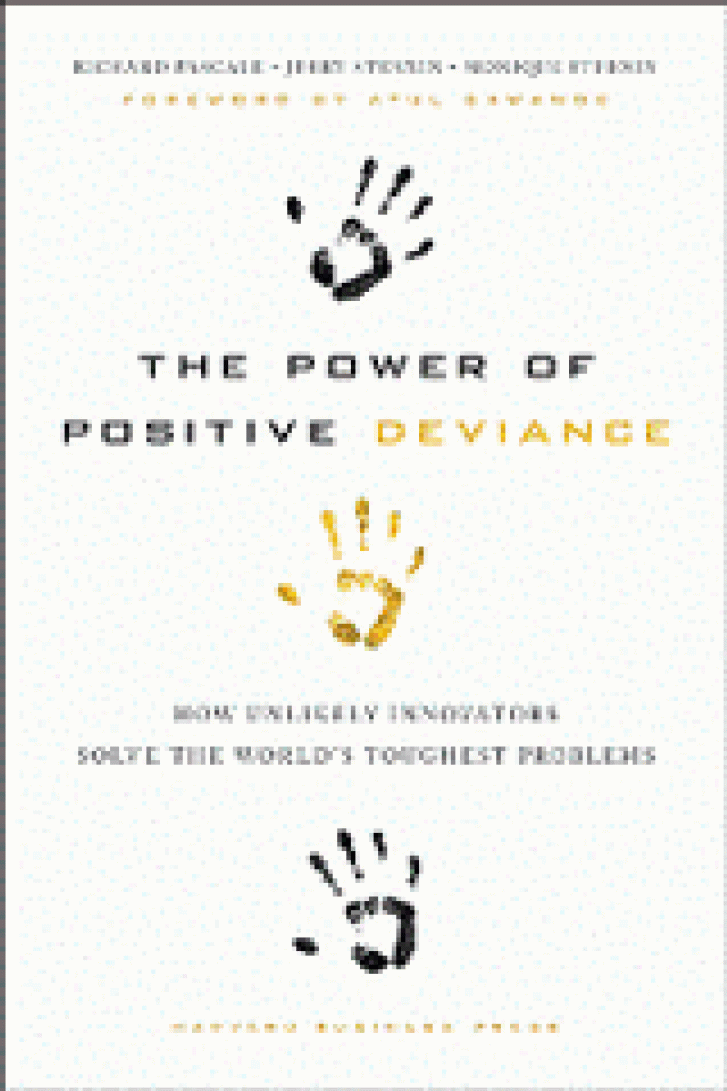
The Power of Positive Deviance: How Unlikely Innovators Solve the World’s Toughest Problems by Richard Pascale, Jerry Sternin, & Monique Sternin

To enrich the bottom of the pyramid, bankers to the poor should make saving money easier by using the latest findings from economics and psychology.