




In this episode
The Skoll Foundation was founded in 1999 by Jeff Skoll, the first president of eBay. Today, it’s known for its focus on investing in social entrepreneurs and social innovators who are working on bold solutions to social problems across the globe. In this episode, Barbara Wheeler-Bride speaks with Marla Blow, CEO and president of the Skoll Foundation, about how her private and public sector experience informs her work, how Skoll quickly spun up a fund for social entrepreneurs dealing with disruption, the purpose of convenings like the annual Skoll World Forum, and how philanthropy can continue to support an ecosystem where innovative solutions and novel ideas drive social change.
Guest
Marla Blow
Guest
Marla Blow
Marla Blow
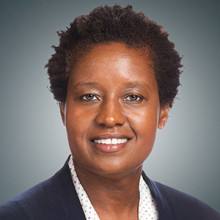
Marla Blow is the chief executive officer and president of the Skoll Foundation.
Resources
-
“A Mission-Aligned Investing Approach,” a 2025 SSIR article on mission-aligned investing co-written by Marla Blow
-
WaterEquity, an asset manager that directs private investment into safe water and sanitation for low-income communities
-
Tech Matters, an organization that builds technology for the social sector
-
ChildLife Foundation, an organization transforming emergency care for children in Pakistan's public hospitals
-
SmartStart, an organization expanding access to early learning for young children across South Africa
-
Indus Action, an organization helping India’s most vulnerable families access government benefits that they're entitled to
Transcript
Marla Blow
I see social entrepreneurs proving it every day. They're not waiting for the perfect conditions. They're not waiting for all the stars to align. They act, they learn, and they show us what's possible.
—
[MUSIC]
—
Barbara Wheeler-Bride
Hi everyone, I'm Barbara Wheeler-Bride, an editor at Stanford Social Innovation Review. And this is Giving with Impact, a podcast featuring conversations with leaders from across the social sector about what's at the heart of achieving more effective philanthropy. We're produced by SSIR with support from DAFgiving360®.
We have arrived at the final episode of season six. If this is the first time you're tuning in, I invite you to check out the other episodes from this season.
In this episode, I speak with Marla Blow, the CEO and president of the Skoll Foundation. The Foundation was founded in 1999 by Jeff Skoll, the first president of eBay, and it's known for its focus on investing in social entrepreneurs and social innovators who are working on bold solutions to social problems across the globe.
Marla brings experience from the private and public sectors to her role. And in addition to talking about how the experience informs her work at the foundation, we discuss Skoll's Pivot Fund, which was quickly spun up after the dissolution of USAID to support organizations that needed to take a beat and figure out what comes next. Marla reveals how she's thinking about this moment of disruption and the ways philanthropy can continue to support an ecosystem where innovative solutions and novel ideas drive social change.
—
Barbara Wheeler-Bride
Marla, can you tell us about your background and how you came to lead the Skoll Foundation?
Marla Blow
My background is varied. I have been a multi-sector kind of professional over the course of the years. I spent about a decade or so in professional services, in investment banking, money management, that kind of arena. Moved into consumer finance. I was in large corporate for quite a while and then from there actually had an opportunity to move into the regulatory space. I helped start a federal government agency called the Consumer Financial Protection Bureau. And that really opened my eyes. I started thinking about the entire population in the United States, and so that time in the public sector was a real game changer.
From there I became an entrepreneur, started a company focused on consumer finance after what I learned at the CFPB, and really built a double bottom line-oriented company to address some of the challenges consumers are facing in dealing with their financial products. And then I sold my company in 2019 and from there really committed myself to impact and moved into philanthropy after that. So I spent time in all of the major sectors and understand the tools and opportunities and limitations of each of the sectors.
That's the quick and dirty of how I got to where I am in this seat at the Skoll Foundation.
Barbara Wheeler-Bride
So how does that cross-sector experience, and maybe especially your work in the public sector, how does that inform how you think about your current role at the Skoll Foundation?
Marla Blow
I think about my current role very much informed by my journey through all of those different areas. And I guess importantly it makes me think about the need for all of the tools of each of those different parts of our broader society in order to address deeply entrenched problems in certain places that recur, right? So the private sector brings a level of determination and commitment to execution in order to perpetuate itself in a space where, versus the government, which can think again, like I described, think about everyone, not just your market, not just your segment, not just your customers, not just your competitors, but think about how this is working across the board and what rules of the road are needed, and then can establish those rules of the road. Philanthropy can take some risks on an unproven solution and be able to allow new participants, new ideas to be explored in a place where private sector's not going to take that kind of gamble. The public sector is not thinking about what are the actual implementations and much more about how are they behaving and how are they complying. And so I can see the importance of all of those pieces coming together in order to shape a functioning market or a functioning social fabric or sort of an intact social fabric. Those are spaces where I think having had an in-depth kind of behind-the-curtain look at each one of those sectors has given me an unusual perspective on the opportunities that we have in front of us.
Barbara Wheeler-Bride
Is there maybe one lesson from that past experience that feels really relevant to the challenging economic times that philanthropy and social entrepreneurs find themselves in right now?
Marla Blow
I'm smiling because one of the takeaways that I get from all of it is that every sector thinks other sectors are inefficient, right? “They don't make best use of this, they're not great at that, these don't move fast enough, they have too much overhead,” etcetera. None of the sectors are super efficient. Nobody is breaking new ground on being able to do things incredibly smoothly or with very low overhead. Everyone has a tax associated with what they do. It's easy to point to someone else's cost structure, or speed of reaction time, or time to market. That is a very common tool. But it's actually true of all of those sectors. That's what I took away from being in all of them.
Barbara Wheeler-Bride
So mission-aligned investments have taken philanthropy, particularly, by storm, and more and more funders are thinking about how their endowments and investments are having social impact. How has Skoll Foundation approached this? And what's your progress been like?
Marla Blow
So taking a more mission-aligned approach for us has really been part and parcel of how the Skoll Foundation was set up from its inception. The great thing about our structure with Jeff at the helm as the living donor behind the foundation is that he's been able to embed his ideas and his ethos at every step of this organization's growth and evolution. Our endowment is managed by Capricorn, which is a sister organization of ours, and they have been impact investors all the way through. And they manage our endowment in partnership with us. So we are able to leverage all of our capital and work as, you know, kind of hand in glove with them to drive maximum impact not just across the grantmaking, but also in how we invest and allocate our endowment itself. We can think very fungibly and flexibly about what kind of capital to bring to bear on a problem. And it's informed by the fact that their organization is … we are sort of in the same tent, right? We are really siblings in this. So we have not had to go and relearn how to do anything. It's been baked in, and that makes us really nimble, right? And I describe us maybe as a little bit more sure-footed on being able to engage in impact investing across a spectrum of opportunities.
Barbara Wheeler-Bride
I do want to ask … are there any particular success stories that you can share with listeners from your experience in impact investing or your mission-aligned investment or partnership with Capricorn?
Marla Blow
There are a couple of success stories I can speak to about where our capital, where our investment orientation and our impact-first kind of approach really manifests itself. One that we've spoken to multiple times, and that in fact I think our organizations have worked together to write a much longer case study about, is WaterEquity. WaterEquity is an asset manager that directs private investment into safe water and sanitation for low-income communities, largely in emerging and kind of frontier markets. And that organization has been a part of the Skoll Foundation portfolio for I think 15, maybe even 20 years. And over the course of that journey with them, we have made grants to them. We have made program-related investments out of our grants budget to them. That's kind of a returnable grant. We have made fixed income investments in instruments that they have generated. And now we are underpinning an equity vehicle that they use that has enabled them to go out and reach 10 million people with safe water and sanitation. And they have upwards of $800 million of capital now in their structure. And that's been informed by kind of a long-term relationship with patient, risk-tolerant capital at every stage. We initially helped them prove that this is viable through a grant. And then when they were capable of attracting fixed income kind of investments and they were generating that kind of return profile, we could bring Capricorn in as a fixed income investor, and that gave institutional credibility to the caliber of investment that that really represents. That enabled others to participate and be attracted to what we were doing. And that has become a hallmark and probably one of the best working examples of how we work with organizations.
Barbara Wheeler-Bride
What advice would you give to other funders who might be coming to the world of mission-aligned investments now — later on, past their founding?
Marla Blow
For foundations that are newly thinking about impact investing, first and foremost what I would say is: Approach this as a long-term aspiration. Generally speaking, there is massive amounts of organizational resistance to this kind of change. It is often baked in the bylaws. There are often reporting structures that make this complicated. There's a level of comfort with what we already know how to do. This new thing introduces a whole, you know, set of questions that we don't know about. And all of those are surmountable, but they take time, and it may require doing things like revisiting the bylaws. And then after you get started, you can learn, right? Test and learn your way into taking bigger and bigger steps in this direction.
In some instances, a carve out is a great way to start — create a pocket or a pool of capital that can be applied to some of these challenges and and opportunities. And then inviting others in, right? Participating in collaborative structures, learning from other similarly situated institutions, sharing and understanding from other investor groups.
Bringing in outside expertise is another opportunity that many organizations have availed themselves of. That also can sometimes help instill a little bit more confidence that we are not flying blind in what we're doing. There's a ton of important guardrails around all institutions. And those guardrails are intended to keep us from running off the road. But those are not immovable, right? You can have new guardrails that incorporate impact investing and make that a part of the road, right? And put that inbounds.
Doing it without going through those steps can often yield painful results, right? Discomfort, a quick retraction the minute it doesn't go perfectly. So to make this kind of a lasting change in the landscape of an organization is a journey, and to think about this as the beginning of a long-term move in a direction that we are all gonna go on together.
Barbara Wheeler-Bride
Does the foundation have any new goals related to impact investing that you're thinking about or that you're prioritizing?
Marla Blow
I think about the moment that we're in, right? We're in a space where a significant component of sovereign funding, whether that's USAID — but it's not just USAID, a lot of European funding has been removed from the market. There have been huge consequences associated with that, especially as organizations mature. And so I've been thinking about how we rebuild business models in this sector. Right? What we can enable organizations to learn about earning revenue, how we can be a supporter of the kind of space that they need to be able to experiment and demonstrate that they are resilient because they have multiple sources of … they have earned revenue, they have grant revenue, they may have some kind of a membership model, maybe there's another funding stream that they can access. And then all of those things can contribute to a different kind of capital structure. In particular, the addition of earned revenue and, ideally, earned revenue as organizations get beyond a certain size threshold makes them eligible for a different kind of financial instrument that otherwise might not have been available at earlier stages.
So I'm expecting that as we see actually relatively mature organizations have to grapple with life after USAID and life after this withdrawal of so much funding, that they will actually pivot and find themselves in a space where they do become eligible for a very different kind of capital stack. And so that does bring me to another piece of it, right? I do think more actively now about not just making individual investments, but participating in various parts of a capital stack, whether it's serving as a first loss layer, serving as a guarantee, serving as a match, right? Where we will incent other investors to come on board by saying if you invest a dollar, we'll invest a dollar, right? And that enables this to grow at a much more active and a much more confident pace. And so those are examples of ways that we're starting to think about what we do.
I've also been keen to get a lot more emerging managers active in this space, and so bringing our capital in as limited partners in sort of fund-oriented investments that are led by people that are proximate to the problems or challenges. That's another area where some bigger opportunities I hope will start to come our way.
Barbara Wheeler-Bride
Marla, you've started answering this question, but I want to ask it just maybe a bit more broadly, even outside of impact investing, how are you thinking about the moment that we're in right now and some of these bigger-picture challenges that social entrepreneurs are facing?
Marla Blow
This moment is a big one, right? We are in, I think, a profoundly disruptive time. The geopolitical uncertainty, the transformational technology that's at our doorstep, deepening inequities in a host of places. Foreign aid cuts compounded all of that. And that is fundamentally reshaping this sector. And in all of that disruption and uncertainty, that's also opportunity. That's always where creativity and new ideas can find a space, right? Just a little crack to be able to be explored.
Barbara, maybe the way I would describe it is there's no going back, right? This is not about let me try to figure out how to get back to what I used to do or function the way that I used to function. This is now about moving beyond traditional models, embracing collaboration, looking at locally led solutions, finding the kind of catalytic capital that I was talking about earlier. We've worked alongside social entrepreneurs in some cases, including some of the examples I was giving earlier. We've walked alongside some of these social entrepreneurs for years. And they have shown us time and time again that they know how to find an opportunity in chaos, right? And be able to respond to the conditions on the ground. And that they can drive systems change. And then when they lose ground, they pick themselves back up and they get back to work on changing that system again.
And so a couple of key things, right? We, like I mentioned earlier, look at all of the capital at our disposal and look for opportunities to apply it to the organization based on where they are. And then we look at and bet on people, right? We look at who is leading an organization. Jeff's mantra on this has been “bet on good people doing good things.” And it comes back to that for us. We work with great people, we get to know them deeply over long periods of time, and we trust them to lead the charge. We listen to them, we move behind them and find ways to support them. And it's about our connecting, our championing, and our investing in their ideas and their energy so that they can be resilient and be responsive, right? And reactive to the conditions that are always changing.
One of the things that I do think is important to point out is it always feels in the moment like it's unprecedented, right? In this moment of unprecedented change. But there was the Great Depression, if you go back to that. You can go back to the financial recession, the, you know, the crisis. We went through COVID, right? Like each of these things has been massive upheaval and required gigantic change. And here we all are, right? And we figured out a way, and we learned and we got bigger and better and stronger and different. And have no doubt that that'll be true in this instance as well.
Barbara Wheeler-Bride
Marla, you said the word pivot earlier, so let's talk about the foundation's Pivot Fund. How did that fund come about? Do you remember the origin of that idea?
Marla Blow
So when USAID was dismantled, we did what we always do in a crisis, right? We listened to our partners. Many of them work in global health and climate, and they were hit hard and fast. In particular, from USAID alone, over $300 million dollars of funding was lost. And then there was incremental funding beyond that, lost from lots of other global sources.
And what we heard time and time again was that they needed just a moment, right? They needed the ability to stabilize their organizations, and then they needed the ability to redesign their organizations. So what we did was adapt a playbook that we used during COVID, actually. The Pivot Fund was designed to do exactly that, right? First, to enable organizations to stabilize. We were not trying to step in or replace money that was being dispersed through USAID. And we wanted them to have time to rethink their operations and come and figure out a new path forward.
So what we ultimately did was set aside a specific targeted $25 million commitment where we actually ultimately dispersed over $28 million. And that was to help stabilize and then help — exactly as the word describes — enable organizations to change and operate differently, approach it from a different vantage point, and pivot to more sustainable models.
It was just inspiring to see how creative people got, right? The kinds of ideas. People are building new revenue models. There were new fee-for-service offerings. We’re strengthening local leadership by delegating authority that had previously been concentrated in central hubs. And then also working more closely with community partners in response to this. We found people embracing new technology solutions, building data platforms and other kinds of digital tools. We discovered a new commitment to efficiency and ultimately looking for avenues to introduce even retail-level fundraising where possible.
And those are not easy. Those are all really hard, especially trying to do that change in relatively short order. But they came up with what's the best thing that my particular organization can do as a part of a broader ecosystem, and then put together those proposals and shared those with us.
And then on that point, for those organizations that didn't feel like they specifically needed to remain as a standalone, some of them started to think about their structure in their current incarnations entirely. They started thinking about mergers or some kind of combination, some kind of acquisition model. Something like this is really celebrated in the private sector, right? It's considered a hallmark of success if you find, you know, an exit, as they say. And that includes my own experience. I sold my company, and that's considered a huge win. And we’d love to see the social sector start to think about that in the same kind of fashion, right? Look at opportunities to change shape, right, and join forces with others.
I can give you an example: Tech Matters is an organization that builds technology for the social sector, and Jim Fruchterman and his team have been long-term partners of ours. They took some Pivot funding and they spun off two successful social enterprises. That freed up Tech Matters to focus on data stewardship for the social sector, on moving in the direction of new AI projects, and continue building the “tech for good” field, and allowed other work to continue in a different incarnation, in a different kind of organizational structure.
Jim told us that the funding that we gave him and his team gave them the time to make those transitions in a much more careful and thoughtful way. And that kind of creative restructuring towards, in some ways, a more focused model and allowing work that was valuable to live on in a different construct, that is exactly what this sector has to do and what we hope our funding is in a position to be able to do with our Pivot fund.
Barbara Wheeler-Bride
So funders can move quickly and creatively and do new things as you did, if they want to. And it looks like it sounds like for me that Skoll had both the means and the will to do that quickly. One of the critiques of philanthropy is that it can move slowly, even in a crisis. So, how do you think an example like the Pivot Fund, or even based on your experience, how do we shift philanthropy? How can we shift the sector to kind of being more responsive? Moving quickly? I mean, what have you seen in your experience, like … the wisdom that more people can learn from.
Marla Blow
What I love about the question is it echoes something that you and I talked about before, which is everybody thinks that everybody else's sector is not moving fast enough, right? And we all have an interest in enabling all of us to move more efficiently, in, again a more sure-footed way toward change and addressing the problems. We all have to learn from one another and learn from working together. What I think of as an opportunity is for there to be modeling. Right? Demonstrate for others, share publicly what you're doing, what you've learned, what worked. I have had so many people reach out after reading about the Pivot Fund, hearing what we're doing, just so that they could find out, “Tell me more. What is that? How did you come up with it? How did you effectuate that? What do we need to do organizationally to do the same kinds of things?” But partly it's you, you first have to just see that other people are doing, can do it and are doing it. In our case, it's informed by a set of long-term relationships that allow us to have the confidence to move in fast and not put organizations through a protracted diligence when they're in the middle of what's already a crisis moment. And maintaining connectivity with organizations over long periods of time, and staying with a problem over long periods of time, was very much an enabler for us of being able to move at that pace.
Barbara Wheeler-Bride
Let's talk a little bit about Skoll World Forum and the Skoll Awards for Social Innovation. The foundation values the power of convening innovators and the idea of leaders coming together to learn from one another and collaborate. And you're kind of touching on some of those themes now. Why do you think it's so important to invest in those connections?
Marla Blow
You know, from the very beginning, Jeff's vision around this has been to invest, connect, and champion social entrepreneurs. He understood the value of coming together to learn, to collaborate, to push one another's thinking, to share the load in some ways, and to renew the energy and charge the battery that it takes to do the kinds of work that organizations that we've been funding have actually been doing.
The forum brings together 1,500 leaders and change makers from all over the world, 80 countries and counting. That includes social entrepreneurs. It includes social innovators. It includes other philanthropic funders and private foundations. It includes government, academia. We invite media organizations for storytelling purposes, and we invite the private sector as well. So it's back to that idea that we need all of the sectors to participate if we are gonna make change.
And importantly for us, we emphasize representation from the global South in what we are pulling together. We have strong cohorts from India, from Brazil, and then of course from the UK, where the conference itself takes place, and then from the United States.
We give out the Skoll Award at the Skoll World Forum, and it's where we really demonstrate organizations and highlight organizations that embody what it means to drive lasting change. This is not about building an alternative or parallel system, right? This is about engaging in deeply entrenched problems and finding ways to address them so that they can be adopted by existing systems like government, like supply chains in the private sector, etc.
What we think about is organizations that can provide direct service in a novel or innovative way and change a system. Right? So give you a couple of examples. In 2026, our school awardees were ChildLife Foundation, which is transforming emergency care for children in Pakistan's public hospitals. It was SmartStart that was about expanding early access, expanding access to early learning for young children across South Africa. And Indus Action, which helps India's most vulnerable families access government benefits that they're entitled to.
And in each of those instances, you know, the point of ChildLife is not just to be able to get people through an emergency care situation as quickly as possible and within reach of people that might not necessarily be geographically near a source of care in an emergency, but also be able to understand why the care system has not been able to function as effectively as it could and help change and shift that system itself through their solution and through getting that solution adopted by hospitals, other health providers, by ministries of health, right, across the states in Pakistan and setting up a very different experience that's available much more broadly than just who they can reach.
2026 was our twenty-third year of the Skoll World Forum, believe it or not. And it started with just a couple hundred people, right, in a relatively small setting, and has really become 7,000 people, well beyond just the Skoll World Forum itself — 7,000 people coming to Oxford to participate in our event, but in a set of other events, all around this idea of social entrepreneurship and opportunities for change and commitment to impact. We are one of the anchor components of this, but it is not exclusively us at this point. It's now become an ecosystem, and one of the best places for social entrepreneurs and for funders looking for innovation to connect.
Barbara Wheeler-Bride
Are you thinking about the forum differently now given there's been so much disruption as you mentioned earlier in the social sector and wider society?
Marla Blow
You know, I think of it as still serving as the connective tissue that we all need. There have been times where I was worried that maybe it was not the time to celebrate or have an uplifting event. And instead we learned the exact opposite. There is no more important time to have a gathering and get people together and have an uplifting event. Because there has been so much onslaught from so many different directions, the importance of being able to hold up the triumphs, right? And again, share the challenges, identify creative solutions, and learn from one another has never been higher. And so I've learned that the value of the forum is not just in moments of triumph. It's in moments of all kinds of challenge as well as in victory.
So I'll give you an example of one of the things that stayed with me from this past year. We had Trevor Noah and Wawira Njiru of Food4Education on stage together, and they talked about dignity, right? They talked about what it means to design solutions that honor the people that they're meant to serve. They talked about what it means to build a business and what kinds of metrics and the ways that we would be talking about what Wawira has built if we were using the language that gets applied in the world of business, right? Trevor described what Wawira has built and would say, “If you were a private sector entity, we'd be calling this a unicorn,” right? And we don't use that language in the social sector. But what she is doing is creating value and building wealth for these communities. She's not extracting from them. She is investing in them and bringing life to them in a way that is really profound. And to see the two of them exchange in that way and see the beauty of that exchange and have everybody walk away as inspired from that conversation as we were is what it's all about, right? It's creating moments like that.
Barbara Wheeler-Bride
Marla, you're about two years into taking over this very high-profile institution. I noted recently that the Ford Foundation released a new strategy related to their leadership transition. I just wondered if you could say a few words about what your strategic priorities are for the organization and how you're thinking about the future of the Skoll Foundation.
Marla Blow
So we've been in a moment of significant transformation ourselves, and indeed I've been CEO now for … I'm rounding the corner on over a year and a half and headed into two years, as you point out. And we have gone through an overhaul of our strategy as well, and that's been something that we've done over the course of this period of time.
Our focus is in four key areas. We focus on preventing deforestation in the precious lungs of this planet, in the Amazon basin, in parts of Indonesia, in the Congo Basin, where we can find opportunities. We focus on girls' education, enabling access and completion for girls around the world. We focus on supporting smallholder agriculture in all aspects of improving yields, improving incomes, creating better access to markets and know-how, technology, fertilizer, all the tools that enable smallholder farmers to be more successful. And we focus on improving the conditions for community health workers as extensions of ministries of health — enabling them to be trained, professionalized, credentialed, and importantly compensated for the work that they do, because community health workers save lives. Those are the four thematic clusters that inform our concentrations and where we focus our work.
We are recentering social entrepreneurship at the heart of what we do. That's been our true north from the beginning. I was just sharing with our team that when we look back at the adoption of social entrepreneurship, it is unbelievable to see how much more mainstream that topic has become over the years of our work in this space. And so we are really proud of having played a part in helping center that in the popular imagination and helping people channel their ambitions in that direction. And then we use the Skoll World Forum as a way to continue to celebrate that, right? And continue to advance that idea.
And for us, being able to do that in those four areas that we highlighted makes us capitalize on what we've learned, right? Where we've seen opportunities and solutions have real traction and change the trajectory in some of these spaces. That's why we continue to focus in those four areas. So those four areas that I highlighted came up because of things we learned, not because we sat down and looked at and pre-decided, “We're gonna do these four things.” We found incredible entrepreneurs working on problems in those spaces. Their solutions started to really take hold and change the trajectory. And we stuck with them and started adding to this … these kind of constellations that we had in these areas, and we continue to do so.
Barbara Wheeler-Bride
What’s something that gives you hope right now?
Marla Blow
So, recently I had a memorable conversation and a trip to the Amazon with a member of our portfolio, an organization that won the Skoll Award a number of years ago, called MapBiomas. They took us up part of the Amazon River, and we went and visited an Indigenous community that now has solar power and internet access in a place that was otherwise quite under-resourced and disconnected in a variety of ways. And the presence of solar power — reliable, you know, recurring power — and the access to the internet has now changed lives in this community in a way that no theory would have ever communicated to me vs. being able to see it myself. First of all, the vastness of the Amazon is out of this world. It's unbelievable. And then, second, to hear from a local community member that the number one source of revenue in this little community now is tourism was mind blowing. And my first question was, “How do people find you, right? Because I’ve flown from Washington, D.C. to Sao Paulo and then flew from Sao Paulo to Manaus, then took a boat four hours upriver to get to you. So you're not exactly on the beaten path.” And their answer was, “People find us on booking.com.”
And that simple answer really brought home for me why it matters for people to be connected, right? Why it matters for someone to see that scarcity in this community and decide I'm gonna take it upon myself to address this problem and create connectivity that is viable and manageable for this community and will create a source of livelihood for them.
There are other knock-on benefits to this. One of the big ones is that their children are coming home, right? Children are leaving these communities because there's quote/unquote “nothing to do,” right? That's what you can imagine, a kid saying that. And now there's internet access, there's power, and you can come home and come and live in your local community and be with your family and still be able to build a life for yourself.
And then the third piece that I would add to it is they now have telemedicine. They used to have to wait for a doctor that would come by boat once a month. So can you imagine having an illness that requires treatment, having a newborn child, whatever normal life events there are, and you're waiting for the water to be high enough, and/or for your month, your time to come up for a doctor to come and visit your community? Now they can communicate test results and they can get connection with the Ministry of Health on an ongoing basis. And we went and visited that clinic that relies on this power and this internet access to be able to serve those communities in near real time and give them almost immediate feedback. And that is life-changing for everyone there. I cannot tell you how inspiring it was to get to see that. And that was generated by MapBiomas as an idea to continue to address the needs of Indigenous populations in places that we want to stay populated, but stay populated in ways that there's the thriving, not just the surviving, but the thriving of the forests and finding alternative sources of of economic engines in those spaces.
I don't want to minimize where we've been and what we've gone through. I am also a big believer that resilience and ingenuity is always the thing that emerges from going through what we've all gone through. That finding new ways to solve problems, that there is now new interest from different quarters, right? Opportunities for new kinds of partnerships. That there are fewer resources, that is real and that is true, but also often with fewer resources, there is increased resourcefulness, looking at other things as a resource, right? Besides just money. Money's not the only resource. There's people resources. There's technology resources, right? There's a host of things that can be brought to bear on a problem. And the people cast about for those things in times of dramatic change and in times of potential scarcity.
So one of the things I keep coming back to is something that I heard someone say at an event, which is that it is not the case that when you feel hopeful you take action. It is the fact of taking action that drives hope. And when I see entrepreneurs rolling up their sleeves again — to either come in and engage this problem in a different way or roll up their sleeves to try to regain ground that they gained before, lost, and now have to go and regain — seeing them take action is what gives me hope, right? And my own actions and the actions of my team, and our own engagement in this and our own commitments, those are the kinds of things that give me hope. I see social entrepreneurs proving it every day. They're not waiting for the perfect conditions. They're not waiting for all the stars to align. They act, they learn, and they show us what's possible.
Barbara Wheeler-Bride
I really enjoyed talking with you and hearing your perspective on some … what you're seeing in the world. What you're hearing from entrepreneurs. The challenges that we're all thinking through. And also I really liked your notes about the opportunities that there really are for all of us, and the examples of people who are seizing the opportunities, right? And who keep moving forward and innovating. So thank you so much for talking with me, Marla.
Marla Blow
Absolutely. The pleasure was all mine. It was great to talk to you, Barbara. Thanks.
—————
[MUSIC]
—————
Barbara Wheeler-Bride
Thanks to Marla for speaking with me. If you enjoyed this conversation and want to read more about innovative social entrepreneurs, mission-aligned investing, or the creative ways that philanthropy is responding to funding and organizational challenges in the social sector, I encourage you to become an SSIR subscriber. Your subscription support helps us continue to serve as a platform for sharing knowledge, research, and first-hand experience from practitioners in philanthropy, nonprofits, impact investing, and much, much more.
And a reminder to please subscribe, rate, and leave a review of Giving with Impact wherever you get your podcasts. This helps people discover the show.
And stay tuned, because we'll be back in the new year with a new season of the show.
Giving With Impact is produced with support from Jordan Turgeon, Marcel Malekebu, and Bryan Maygers, who have truly made this season of Giving with Impact possible.
A special thank you to DAFgiving360® for their financial support. DAFgiving360® is an independent 501(c)3 with a mission to increase charitable giving in the United States. DAFgiving360® provides the tax-smart and simple giving solution of a donor-advised fund or DAF account. Visit DAFGiving360.org to learn more.
Stanford Social Innovation Review is published by the Center on Philanthropy and Civil Society at Stanford University. Visit SSIR.org to learn more and subscribe today.
Giving With Impact is hosted by Barbara Wheeler-Bride and produced with support from Jordan Turgeon, Marcel Malekebu, and Bryan Maygers. Artwork is by Peter Grant. Thank you to DAFgiving360® for their financial support to make this podcast possible.
DAFgiving360 is an independent 501(c)(3) public charity with a mission to increase charitable giving in the U.S. DAFgiving360 does this by providing the tax-smart and simple giving solution of a donor-advised fund (DAF) account to donors and financial advisors. Since our founding in 1999 as a 501(c)(3) public charity, DAFgiving360 donors have recommended over $50 billion in grants to 300,000 charities. Visit dafgiving360.org to learn more.