



In this episode
Donors have the motivation and the means to give, so what’s slowing them down? Host Barbara-Wheeler Bride interviews two donor advisors about some of the roadblocks and friction philanthropic donors face when it comes to giving. First, a check-in with Mary Jovanovich, senior manager and charitable consultant at DAFgiving360®, about what she’s hearing from families and individuals. Then, a conversation with Ben Klasky, founder of Seismic Philanthropy, about “option paralysis,” why he thinks donor-advised funds may be getting a bad rap, and what nonprofits can do to better engage with donors. Giving With Impact is developed with the support of DAFgiving360®
Guests
Mary Jovanovich
Ben Klasky
Guests
Mary Jovanovich Ben Klasky
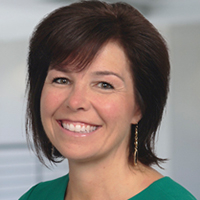
Mary Jovanovich
Mary Jovanovich is senior manager and charitable consultant with DAFgiving360®.
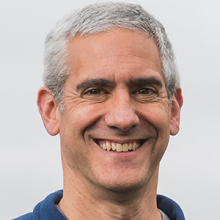
Ben Klasky
Ben Klasky is founder and principal of Seismic Philanthropy, which advises foundations and families on philanthropic strategy.
Resources
-
“Helping Donors Get Unstuck,” an article Ben Klasky wrote in SSIR
-
The long-range charitable giving calculator that Ben mentions in his interview
-
“Slow Philanthropy,” a recent SSIR article that examines why ultra-wealthy people lag behind the philanthropic aspirations they express
-
DAFgiving360®Giving Guide, a resource that can help you answer key charitable giving questions, no matter where you are in your philanthropic journey
Transcript
Ben Klasky: People try to be perfect with their gifts. And I encourage them to not be perfect. Go for great. Don't go for perfect.
—————
MUSIC
—————
Barbara Wheeler-Bride
Welcome to “Giving With Impact.” I'm Barbara Wheeler-Bride, an editor at Stanford Social Innovation Review. Our show is produced by SSIR with support from DAFgiving360®.
This episode has some incredibly timely takeaways for donors, advisors, nonprofits, and fundraisers as we enter what's known as the giving season. But really, the insights from our guests are something to keep in mind year-round.
I interviewed two donor advisors about some of the roadblocks or friction that donors face when they're making philanthropic gifts. First, we'll touch base with Mary Jovanovich, senior manager and charitable consultant at DAFgiving360®, about what she's hearing from families and individuals that slows down their charitable giving.
Next, I have a conversation with Ben Klasky, founder of Seismic Philanthropy, about some of the ways to help donors move beyond those roadblocks. Ben draws on his experience as a donor advisor and nonprofit CEO and talks about some of the broader trends he's seeing in philanthropy right now, including the rise of collaborative funds, using AI in philanthropy, and how donor advised funds can be a more effective tool for giving.
Mary and Ben also share a bit about why they do the work they do to help donors think deeply about giving with impact. I know you'll appreciate hearing from them. Now here's Mary.
—————
Barbara Wheeler-Bride
Hi Mary. Can you tell us a bit about your background and what led you to work on charitable planning and charitable giving?
Mary Jovanovich
First and foremost, it was something that was taught by my parents. And this is something that I've talked to other people about, that philanthropy is actually a taught behavior by someone else or they've gone through an experience that caused them to become philanthropic. So my father was actually a Boy Scout leader for 35 years. I'm what's called a “cradle Catholic,” so I was very engaged in the church. I was taught by nuns, and I myself was a Girl Scout. And so giving back was part of my family DNA. And I realized that not everyone had been given the same opportunity that I've been given. And so when I learned that people didn't have the same abilities that I had because of where they were born, financial literacy became very important to me. And then my first official professional job when I graduated, I started working at a bank, and I saw firsthand how many people struggled with money and balancing checkbooks and not making ends meet. It sort of became this new fire within me to help everyone, you know, learn about finances, learn about, you know, how to balance a checkbook, learn about savings accounts, CDs.
Then I got introduced to Charles Schwab and it was working at Schwab that this opportunity became available to me. And I was like, “Oh my God, this is the best of everything. My passion could be aligned with my profession. And it's just the most incredible opportunity ever.” And so I like to tell people that I help donors who have hopes, dreams, and wishes make impactful realities. And I do so through a donor advised fund account.
You know, there's a couple of things my mom taught me: pay yourself first, and how you get the biggest bang for your buck. And so for me, one of the things that I am always talking to donors about is how do we get the biggest bang for your buck? How do we get the biggest bang for your charities? And how do we maximize it? And what are some of these strategies that you can utilize? But at the end of the day, the most important thing that I say to my donors is: I want you to experience the joy of giving. Because if there's one thing that I know, I know that when you give, you actually receive more.
Barbara Wheeler-Bride
I really liked what you said about philanthropy. Philanthropy is a taught behavior, it's a lived experience. Could you summarize what some of the top roadblocks are, or what might cause a donor to hit pause?
Mary Jovanovich
I think I'm gonna look at it from two different perspectives. One, from a family foundation perspective, and then also from an individual standpoint. So when you're looking at it from a family foundation perspective, it's really on all the opinions of everyone being included. And so what I'm finding is that there's a lot of discussion within the family on how the funds are supposed to be utilized. Is it values-based? Is it geography-based? Is it mission-oriented based? Because as the younger generations are coming in, they don't feel like they're having a say in how the money is being dispersed. And I had a conversation with a donor yesterday, in fact, where it's the daughter. And so the father who founded the foundation is very strong about how the money should be utilized, but they're wanting to engage the younger generation. And it's those differing of opinions that are causing roadblocks. So you could say family dynamics plays one aspect of the roadblock.
From an individual standpoint, it's really twofold. One of the things that I've been seeing is: Where do I have the biggest impact, and how do I know that the money I'm giving is doing what I intend it to do?
I think one of the things that in both scenarios, they're both trying to create structure and to use their funds as their voice to create change. And that's the biggest roadblock I think personally is creating the structure. Because people don't know where to begin. They don't know where to get the research. They don't know who they can trust. They don't know, you know, where's that first starting point? And so I think that they look to other individuals to help them with that. But then again, they're not quite sure whether or not that's the right solution, either. And so in a way, they're almost paralyzed in a sense because they're searching for all of these answers, and then it becomes even more complicated because they're trying to create the change, but they're getting so many opinions that now they become confused within the process.
And one other thing I think is that, you know, we live in a society that demands immediate answers. And when you're trying to create structure, when you're trying to create the change, that takes a lot of time and it takes a lot of patience. There's going to be failure that's going to happen. And so I think that that's another roadblock, is if something fails or it doesn't go as planned, then people sometimes lose hope or they get disappointed or they get disinterested in the process, because they had this big idea and the idea didn't go as planned. And so there's that element of failure and feeling like that should be a defeat, when sometimes, you know, failure could be a really great learning opportunity and something that you could embrace.
And then there's the research that's out there. I mean, there's so many different places to go now to find out information, or sometimes it doesn't even exist. So it could be that the data analysis that someone wants doesn't even exist, or the data analysis that they want, the nonprofit may not be able to provide. And then there's the potential that it could be potentially flawed with some bias, whether it be unconscious bias or intentional bias. But if there's a differing of opinion on expectations and outcomes, that creates additional roadblocks. So the donor and the charity haven't delivered on either side of the equation.
Barbara Wheeler-Bride
Could you share how you respond to a donor who you sense is hesitating to make a gift for whatever reason?
Mary Jovanovich
Well, the first thing I try to understand is why the hesitation, or why the frustration or, you know, why are they reaching out. And so the first thing that I'm gonna do is really listen to what's happened in the past, you know, what's worked, what hasn't worked. From there, I break it down to see where potential communication issues might have occurred or misunderstandings or inability for certain things to take place. Because depending on the underlying charitable vehicle or how they want to support that organization, that may or may not be possible. So that again is another roadblock. It could be just the underlying vehicle doesn't allow them to do whatever it is that they're trying to do. Like with the donor-advised fund, for example, you can't pay someone a salary. And so that's a misunderstanding that they didn't understand the vehicle itself.
Barbara Wheeler-Bride
I wanna circle back maybe a bit to something you said earlier, and it's a wondering that I had when I was thinking about this topic. I'm curious about how much the “perfect being the enemy of the good” comes into play with so many options for charitable giving.
Mary Jovanovich
In a perfect world, what I would love to see is, like, more collaboration and less silos. I think that there is a huge opportunity in the nonprofit sector to look to other organizations to find that golden thread, that common thread that runs throughout the organizations where they could move the dial forward for the collective good as opposed to just staying focused on their individual mission. And the same is true for donors. Instead of a donor being so focused on their particular goal and objective, is there a possibility for some sort of compromise for the greater good to create that change, to be successful? And so that's something that I think the nonprofit struggles with. You know, sometimes they stay siloed and they're very protective of their donors and they don't want other nonprofits to know about their donors because then they might be, you know, afraid that they might lose a source of revenue or maybe lose the donor completely because now they've become enamored with another nonprofit. And that's something that donors sometimes can do too, that if this organization doesn't do what they want, they're gonna go find another organization to do it. And so instead of embracing the failure and trying to overcome that roadblock, they move on to a different organization to try to accomplish it. So again, it really is that communication. It's the understanding, the patience, the collaborations. Those are things that I think break down all of these roadblocks and help people really stay focused on: It takes time to create change. And I think we forget that a lot now.
The other thing that I try to help donors do is — and I'm using this expression from another donor that I was working with, because it kind of caught me off guard. She told me that she was trying to create structure because she wanted to “control the chaos.” And I was sort of fascinated by that statement. She didn't really know if the giving that she was doing was accomplishing the goals that she wanted. Or was she just giving because it was out of habit? Or was she giving because it was what she was told to do, and it was like she was just continuing on with her parents' legacy.
And so she said, “I just need to control the chaos, because I don't know if it's working. I don't know if what I'm doing is right. And I just need to control the chaos.” And it still lingers with me today because there's so many competing priorities in the world. Again, another roadblock. There's so many competing priorities. Which one do you pick and where do you begin? And other people have said, “I don't want to be spitballing my philanthropy, either.” And so those are some of the things that I think about too is creating structure to give people peace of mind and then to be able to look at themselves at the end of the day and be really proud of what they're doing with their money as it relates to their giving, regardless of what that cause is.
Barbara Wheeler-Bride
Thanks, Mary. This is really helpful and I think also channels some of the donor concerns or hesitations that we hope to address in this episode. Thanks for joining us today. It's always good to talk with you.
Mary Jovanovich
Likewise, thank you, Barbara.
—————
MUSIC
—————
Barbara Wheeler-Bride
So Ben, tell us a bit about your background in nonprofits and philanthropy.
Ben Klasky
Sure. For a good chunk of my career, I was serving as a nonprofit executive director or CEO. And then I made a career shift about, I don't know, eight years ago when I had a chance to go to the Gates Foundation on a special assignment for a year. And one of the things we were looking at was how to help very wealthy individuals move more of their money. We knew that people had the intent to give money away, but then taking action could be a problem. And I got the bug. And so soon after that Gates project, I started my own company, and we advise families and foundations on their strategy for giving money to great causes.
Barbara Wheeler-Bride
What do you think are the top motivations for people to give to nonprofits and charity right now?
Ben Klasky
Honestly it depends, because when you've met one person or one foundation, you've met one person and every one of them are unique. But I would say charitable giving is as old as time. And religions, almost all the major religions teach about giving. I mean, you've got tithing and offerings in Christianity. You've got Sadaka in Judaism. Muslims refer to Zakot; Hindis refer to Donna. If you go 400 B.C., so we're still talking a long time ago, the wealthiest ancient Greeks were fighting, they were competing, to pay the most taxes they could to take care of armies and amphitheaters and temples. The person who maybe put it best was Andrew Carnegie back in the 1800s. He said, “There's only three things you can do with your money if you have more of it than you need: You can spend it on stuff. You can leave it to your family. Or you can give it away to charity.” And you know, he did that, and now there's 2,500 libraries around the country that he helped create.
So you know, beyond all of that, I think there are two main reasons people give. I mean, the first is tax breaks. It turns out that in our country you can retain a lot of control over your money if you don't give it all to Uncle Sam. And you have a say in where it goes, even though you're giving it away.
And then this might sound rosy-eyed, but I would say pretty much everybody I've worked with cares deeply about addressing really chronic problems that exist in the world today, you know? It could be global health or climate change or homelessness. I mean, pick your issue. But the reason people are motivated to give is they want to solve problems.
Barbara Wheeler-Bride
Thinking about the current moment we're in – there's economic uncertainty, tech disruption over the past few years, there's cuts to government funding for things like the social safety net and humanitarian and global development – have you seen anything change? You talked about these kind of like, maybe more like core tenants or like core motivations, but is there anything that's shifting a little bit in how people are thinking about giving?
Ben Klasky
I mean, the biggest thing I'm seeing right now is people are reacting to the government cuts from last year. And again, pick your issue, but whether it's the EPA or USAID or public radio and television, I'm finding that people are doubling or tripling down on what they care about and supporting charities, and they're addressing huge gaps. I mean, I know of one international organization that had a billion-dollar budget and they were working in refugee camps, and now they have a $500 million budget because USAID was half their budget. And perhaps they got too connected to one source of funding, but I see the funders I'm working with saying, “That's not good enough. We need to still support refugee camps.” And so they're giving more. That's probably the biggest thing I'm seeing as trends.
There's also AI, and it's affecting this space as much as everybody else. Some of the funders I work with are thinking about the existential threat, and they're actually funding that as an issue around AI, but most people are using AI the same way we are: to help with research, to take notes at meetings, to analyze information. And so that's another trend that we're seeing in philanthropy is AI is showing up there too.
Barbara Wheeler-Bride
So the idea for this episode of “Giving with Impact” came from an article you wrote for SSIR called “How to Help Donors Get Unstuck.” So I wanted to talk a little bit more about that. And just based on your experience and conversations you've had with donors, could you summarize what you've come to identify as the top barriers or the top roadblocks to giving or giving more?
Ben Klasky
I think one of the main barriers is what I would call option paralysis. There are just way too many choices for charities. There are 1.8 million charities out there. And just to put that in perspective, that's like a hundred times the number of movies that you can download. And it's five hundred times the number of books in a typical bookstore. And I know I have trouble choosing what book or movie I'm gonna watch. And so if you go onto the sites that exist to help you figure out what you want to give to, like let's say you want to give to cancer research and you type that into some really great useful sites that are out there, you're still gonna get hundreds of options for charities that serve that need. So we know that people when they have more choices, they're actually less satisfied, and they're less likely to make a decision. So one of the issues is just there's too many options, and people freeze.
Another barrier that's probably worth mentioning, because I think it's the biggest barrier, is, and again, I don't have fancy words for this, but I would say simply … life. I mean, these are normal people like you and me. They have more money than I do! But they are facing the same issues that I do. They might be running the company that made them their wealth, and that takes time and energy. Maybe they have a kid who's sick, or they're caring for an elder parent. Their plumbing is leaking. And these things are important and time-sensitive, and so giving away money takes time. It takes thought and energy, and people often kick it down the road and say, “I'm gonna get to that. I really am, I'm gonna get to it.” And they push it down for years or never get to it. And I think life just gets in the way for some people.
Barbara Wheeler-Bride
So this is the million-dollar question for the episode: How can donors overcome these barriers?
Ben Klasky
You say a million dollar question. I mean, I'd like to think it's a billion dollar, because we're gonna … because people are gonna listen to this and a lot more money's gonna move.
Barbara Wheeler-Bride
That’s true!
Ben Klasky
First of all, people need to realize they can probably give away a lot more money than they think. I created a kind of a fun little calculator where you enter how much money you wanna give away, how much time you want to spend on it, and what you think you're gonna earn in the market. And it turns out that people's math is way off. If I were to say to you, you know, let's make up a scenario, like you've got twenty million dollars and you wanna give away half of it. So you'd think if I asked you how much you're gonna give away, your first answer might be ten million dollars. That's half of twenty.
Well, it turns out that if you plug it into this calculator, and this is just purely time value of money because you're earning money on that, you need to give away about ten percent of your wealth every year, year after year, for like nineteen years before you'll get to half of it. And so you'll end up over the period of almost twenty years, giving away something like thirty million dollars, even though you started with twenty. In year number one, if you're giving away ten percent, you have to figure out how to give away two million dollars, and that's not easy. And so people that have a lot of money because the money's earning more in the market often find that it's hard to give it away fast enough. And I know that sounds silly or funny, but people can give away a lot more than they think. So that's one way to overcome the barrier is to let yourself free and know, “I can probably get going on this.”
And the second is just … people try to be perfect with their gifts. And I encourage them to not be perfect. Go for great. Don't go for perfect. And just get started. Make three significant, for you, gifts and see what happens. See how you feel about it. See how the impact is on those gifts. And nothing, all the research you're gonna do, nothing compares to actually seeing how charities are using the money you give them.
And then if I had one more to throw in to overcome the barriers, I would get some help. We hire people all the time to help us. We hire people for our leaking pipes. We hire people to help us with our fitness workouts and yoga. We hire people for taxes. And people are often reticent to get help with charity, and yet it's work. And often they rely on their wealth managers for help. And I mean, I have a lot of friends who are wealth managers. I'm an MBA. And they're all really nice people, and they care about the world, and they care about their clients. But they are paid by those clients to retain their assets, to grow their assets, and they're just not trained to help give it away wisely. So find an advisor that you trust and who you can have heart-to-heart conversations about your legacy and about your kids and about your disease and what you care about, and somebody who's seen a few things and helped them, have them help you with your strategy and your systems.
Barbara Wheeler-Bride
Before speaking with you, I talked with another donor advisor about some of the barriers and challenges they've seen and their experience. And a lot of what you're saying is lining up. One thing she mentioned that I wondered if you'd comment on is the dynamic that sometimes when we talk about giving, we're not talking about individuals making individual gifts, but rather families or family foundations making more of a group decision about giving. Do you have any specific advice for families, or maybe a solution they should really drill down on or focus on to help them overcome barriers?
Ben Klasky
I mean there's the classic intergenerational issues. You might have a really conservative grandfather and a really liberal granddaughter, and how do they figure out what they both care about with their family foundation? We get paid to help have these conversations, to, you know, have a messy whiteboard and to think through what a family may have trouble talking about themselves. I would also say there are exercises that you can go through to figure out your values. And often those two family members that I mentioned have some very common interests. They may disagree about women's health, but they both care deeply about the environment. And so you can find some common ground. And then I would just recommend bringing people in from the outside. So don't have this conversation just as a family, but bring in nonprofit leaders. Listen to them, learn from them. Talk to other families who have been down this road before you and learn how they are approaching it. You're not in this alone, and you can learn from others who are walking this path with you.
Barbara Wheeler-Bride
I have another related question. Over the past decade, we've seen an increase in the number of collaborative funds in philanthropy. Do you think that's one solution for funders who might hesitate to move or give on their own? Is there an appeal to funding an organization as a group versus on your own or as an individual funder?
Ben Klasky
Well, first of all, funding and fundraising and also charitable giving are a relationship business. And so I think there is value in what I would call collaborative gift funds. The idea of joining forces with other funders can create efficiencies. You can hire an expert together. You can make smart bets on nonprofit work. I mean, even at the Gates Foundation, which was at the time the biggest foundation in the world, there was a sign that said basically they want to go it with others. They don't want to go it alone, because they knew that no matter how much they spent, there was always a bigger problem, and they wanted other people to help. So the idea is appealing.
I would say if you had asked me 10 years ago about these funds, how they would do, I thought then that they would take off much faster than they have. If you look at the financial markets, you've got mutual funds and basically everybody owns them. What, you know, with your IRA or your 401k, anybody who has any retirement money has a mutual fund. But a lot of donors do not do collaborative giving. And I'm not sure why. I am seeing more movement than you might think on local issues. So recently in Seattle where I live, there was a shooting, and overnight one of these collaborative funds popped up to help care for the families. And it did quite well. A lot of people wanted to help. And I think they didn't know how to give to those families. And so this fund was an easy way to hit “go” and get money where you trusted it needed to go. I think we'll see more collaborative funds continue to grow, but they aren't taking off as fast as I thought they would.
Barbara Wheeler-Bride
I want to talk about your experience working for nonprofit organizations. With that in mind, what feedback do you have now — as a donor advisor and someone who works really closely with donors — what feedback do you have specifically for nonprofits or grantees who want to help reduce the friction or kind of the slowdown or reduce the barriers when making a gift?
Ben Klasky
I'm glad I had many years with my hands in the dirt working at nonprofits and fundraising because now that I'm giving money away, I remember what it's like on the other side and the power dynamics that exist. So that said, I wish I knew then what I know now, having seen the other side of giving money away. I spent so much time trying to get proposals to be perfect. I mean, I would literally take six months or nine months before sending a request sometimes, because I was trying to get the perfect ask. And it doesn't need to be perfect.
My number one piece of advice for nonprofits is just ask. You're not gonna offend somebody. They can always say, “Let's talk about this. You asked for too much,” or “Let's revisit this,” or “I can't do this right now.” The worst thing is you'll hear no. But don't wait forever.
You know, there was a great book I read years ago when I was learning to fundraise. It was written by a fundraising professional. And she said there are really only three things that most donors are looking for. And now that I'm on the other side, I agree. Like the first is to be thanked, because people want to be thanked. The second is that they literally need an IRS language thank you that allows them to track their gift. And by the way, those first two things you can do in about a minute with a template letter. And yet. And yet I'd say about half of the organizations that I help funders give to don't. They don't send a thank you note that's IRS-compliant quickly. And it just isn't that hard.
And then the third thing, and this is where most — and I'm really not exaggerating, I think maybe 80, 90 percent of those that we fund — don't follow up with just a simple how it was used. And it doesn't have to be strong metrics. I mean, some people require that, but just a simple, “Hey, you gave us this money six months ago or nine months ago, here's how it was used.” And if you close that loop with funders, they're much more likely to engage with you and come back.
I would also consider how AI is affecting nonprofits that are so cash-starved. And many of them have started using AI to represent them, and you cannot reach a live person anymore. And I have called nonprofits having done our research but not having a relationship with them yet and actually trying to give them a six-figure gift and have spent weeks trying to actually find someone, because they have an automatic answer machine and their website says, you know, “Contact this admin @ nonprofit,” and you can't get to a real person because admittedly, they're cash strapped and they're using technology to help. But I would make sure you make it as easy as possible for people to connect with you when they're trying to give you money.
Barbara Wheeler-Bride
I really appreciated what you had to say about AI and some of the trends you're seeing in terms of donors using it and then also maybe some of the not so great ways that nonprofits and fundraisers might be using it. I wonder if there are any other trends you're seeing in philanthropy right now.
Ben Klasky
There's a lot of energy right now around donor-advised funds or DAFs. And to some degree, I get it. And when I say I get it, there's some constructive energy, some concerns about them. And I think the biggest concern is that there's several hundred billion dollars sitting in them. And the three biggest DAF companies are holding something like 160 billion dollars between them. This might surprise you because they're under so much fire, but for the most part I love them. And I'm not getting paid by any DAFs to say that! They're just really user-friendly. You can make one gift and that's all you need to track for the IRS. Some of them are willing to take on illiquid assets that you can't use otherwise for charity. And they do a lot of things that foundations can do without some of the headaches. And so being on the giving side of the equation, they make life really easy. It's important to remember they're not for everyone, because they won't allow you to do some things that foundations can do. But for the most part I think they're getting a bad rap. The biggest concern that people have is that money is sitting there, and by my research it looks like DAFs are actually moving about 20 to 25 percent of their assets out every year. Whereas foundations that are only required to give 5 percent away are giving something like 6 percent. So they're moving money. I think a legitimate concern around DAFs is they're not transparent. And as critics point out, there is no minimum payout, so some money does sit there for people. And so I guess I wouldn't be opposed to a 5 percent payout rule for DAFS. But some DAFs are actually making their own rules to deal with this. Fidelity, for instance, has started automatically giving away a portion of people's DAFs if they're sitting inactive. Like I said, I think they're getting a little bit of a bad rap, and I think they're a really great tool for a lot of people.
Barbara Wheeler-Brid
I appreciate what you had to say about some of the critiques. And I also think that an element that we're touching on here in this conversation is: There's issues too with people who may have money in DAFs but who are feeling tripped up, or they're not ready to– the same barriers to funding exist, right? Because you do have to make a decision. You do have to sift through the who's, the what's, the where do I want my money to go. It may seem amplified, because there's a lot more money there, but the problems are still in essence the same. Do I have that right?
Ben Klasky
Yeah, you do. Usually this happens when people have a life event. They inherit money, they sell their business, somehow they come into a lot of money, and their tax advisor says, “You should put some money to charity right now.” And the DAF makes that easy to do. But don't assume that when you've put money in a DAF, it's gonna start moving out the door the next day. You still need to do the work. And some of the DAFs will have– if it's a lot of money that you've put there, they have people that will help you move the money. But otherwise, I guess it's a repeated theme, but I'd find an advisor to help you do the work. Doesn't matter where the money's sitting. It's still work to get it out to the charities.
I would throw one more curve in here, which is that many of the DAFs are also held by community foundations. And they are a different player than sort of the big institutional DAFs because they're typically but not always less efficient. They usually cost a little more, but they also are moving money towards local staff to help move money locally. So if you, say, put your money in a city — you know, a Seattle Foundation, Silicon Valley, you know, community foundation — then the staff that are operating that DAF know the region and they're helping give money to that region. So there's more than one way to look at a DAF. And they are not all the same.
Ben Klasky
One trend we haven't talked about yet, and it's a positive one, is that people seem to be doing more research. There was a study about a decade ago called Money for Good, and it found that only a third of donors conducted any, ANY research at all on charities before making a gift. And today those numbers have popped up ten years later. It's easier to do research now. And the majority of people – and some studies are showing up to 85% of people – are looking at charities, at least their websites before giving. There's still room for growth. I mean, I people are not comparing charities on their effectiveness very much, but to give without thinking about it, there's been a lot of movement. If I had one piece of advice to donors, it would be to do at least some research. And I was thinking about my kid who is a camper and a hiker, and he just spent three hours this week researching a camping tent to get the best tent that he needed for hiking. And I think sometimes we do more research on a piece of clothing or even of food that we're buying at the grocery store than we do on a charity that's supposedly gonna change the world. So I think it's a positive trend. I think people are doing more research than they used to, and I hope that continues.
I guess one other trend I'm seeing is people are giving they are more likely to give repeatedly than they used to. And by that, I guess the old story I talk about is if you go to a restaurant and you like the restaurant, you go back to it. You don’t go to a restaurant and you say, “They serve me really great pizza, but I can't keep going there because I can't keep giving to them year after year.” But people do that with their charities. They say, “That was a really good charity, but I won't give to them year after year because they can't depend on me.” And I think people are getting over that mentality. I know the people I'm working with are, and it's a trend I'm seeing is that people are willing to make multi-year gifts, they're willing to give unrestricted gifts and trust the people who are leading the organizations, and they're willing to give again and not say, “I'm done, even though you did a great job.”
Barbara Wheeler-Bride
Ben, we talked a little bit about collaborative funds and DAFs. Are there any other specific giving vehicles that you see as being more popular now, or that donors are more curious about or willing to try, or something we haven't talked about today?
Ben Klasky
There are recoverable grants, and this plays into impact investing. And the idea here is that you put money into a cause, they invest it, and over a period of time, they earn enough money back from their investment that you get it back, so you recover the gift. And then you can give it again. And it's a pretty powerful concept to be able to give money, put it to use, and then use it again. It's amazing when it works, and an important thing is that it doesn't work for everything. It only works when an idea can break even over time. So affordable housing, if you're subsidizing housing and people then come in and pay rent, even though it may be below market rate, you can perhaps get your money back. Health clinics, if you're gonna build a health clinic and they can charge people to get health care, you can get your money back. But if you're trying to feed people in a food bank or if you're trying to do a homeless shelter, those people can't pay for those services and you're not gonna get a recoverable grant.
I have an idea about recoverable grants, which is that the donor-advised funds that we were just discussing could really benefit from them, because they've got this problem that people think they're not moving enough money. That problem is largely based on people not knowing where they want to give yet. And so I feel like every major DAF should have a list of 10 vetted, amazing recoverable grant opportunities, and you as a user could just check a box and say, “I wanna give to global health” or “I wanna give to housing” and know that within two or five or ten years that money's gonna come right back to the DAF, and you can give it again because by then you'll know where you wanna give it. So that's not happening yet, but it should.
Barbara Wheeler-Bride
I think a lot of what you covered today is just so useful for donors and advisors and DAFs and nonprofits. And I really appreciate you taking the time to talk with me and share your ideas and share your perspective. And again, the overall theme we wanted to talk about, helping donors get unstuck, I think you've helped move people along a bit on that road. So thank you for that.
Ben Klasky
Overall, I just think people overcomplicate this business, and maybe you've heard a few themes in my messages today that I would just keep things simple. If I were to tell you that you picked the fifth and the 20th and the 25th best performing stocks this year, you'd be pretty excited. And I think people try to find the best charity, and they spend so much time trying to find the best charity that they don't move the money. So I would just encourage people to take risks. They took risks earning the money, probably. Or somebody did in their family. And yet they freeze when it's time to give it away. Like just go for it.
—————
[MUSIC]
—————
Barbara Wheeler-Bride
Thanks to Mary and Ben for speaking with me. You can read Ben's article, called “Helping Donors Get Unstuck,” in Stanford Social Innovation Review. We'll link to it in our show notes.
If you enjoyed these interviews and want to read more about the trends that donor advisors and leaders in philanthropy and nonprofits are seeing right now, please subscribe to Stanford Social Innovation Review. Your subscription ensures we can continue to bring you more stories about innovations in giving, fundraising, and philanthropy.
And a reminder to please subscribe, rate, and leave a review of “Giving With Impact” wherever you get your podcasts. This helps people discover the show.
Next week, we'll learn more about how the Patrick J. McGovern Foundation approaches funding technology and AI in the social sector.
“Giving With Impact” is produced with support from Jordan Turgeon, Marcel Malekebu, and Bryan Maygers.
A special thank you to DAFgiving360® for their financial support to make this podcast possible. DAFgiving360® is an independent 501c3 with a mission to increase charitable giving in the United States. DAFgiving360® provides the tax smart and simple giving solution of a donor-advised fund, or DAF, account. Visit DAFGiving360.org to learn more.
Stanford Social Innovation Review is published by the Center on Philanthropy and Civil Society at Stanford University. Visit SSIR.org to learn more and subscribe today.
Giving With Impact is hosted by Barbara Wheeler-Bride and produced with support from Jordan Turgeon, Marcel Malekebu, and Bryan Maygers. Artwork is by Peter Grant. Thank you to DAFgiving360® for their financial support to make this podcast possible.
DAFgiving360 is an independent 501(c)(3) with a mission to increase charitable giving in the United States. DAFgiving360 provides the tax-smart and simple giving solution of a donor-advised fund (DAF) account. Visit dafgiving360.org to learn more. 1026-K1M7