





In this episode
Impact investing has grown exponentially over the past 20 years. How is the field evolving? What are the new approaches and strategies that are making impact investing more accessible and appealing to funders of all sizes? How can the curious get started? Megan Kashner from Northwestern University’s Kellogg School of Management joins the show to address critiques levied at the field and how to tell if an investment is having an impact. Giving With Impact is developed with the support of DAFgiving360®
Guest
Megan Kashner
Guest
Megan Kashner
Megan Kashner
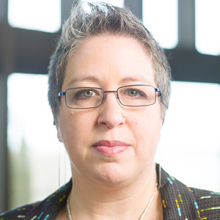
Megan Kashner is a professor and director of social impact & sustainability at Kellogg School of Management at Northwestern University.
Resources
-
Impact Investing Today and Tomorrow, a series of articles in SSIR with insights on the growing field of impact investing from members of the Impact & Sustainable Finance Faculty Consortium that Megan Kashner leads
-
Five Dimensions of Impact from Impact Frontiers
-
Alpha in Impact: Strengthening Outcomes from Impact Capital Managers
-
GINN’s State of the Market 2025: Trends, Performance and Allocations
Transcript
Megan Kashner:
We have never had more tools or opportunities to use our money to make a difference than we have right now.
—————
[MUSIC]
—————
Barbara Wheeler-Bride:
Hi, I'm Barbara Wheeler-Bride, an editor at Stanford Social Innovation Review. Welcome to a new season of “Giving With Impact,” a podcast featuring conversations with leaders from across the philanthropic ecosystem about what's at the heart of achieving more effective philanthropy. This season, you'll hear interviews about topics that are top of mind for donors, philanthropists, nonprofit leaders, advisors, and other social innovators. I'll be talking with guests about innovations in funding global development, ways to help donors overcome barriers to giving, how to take a place-based approach to philanthropy, funding AI in the social sector, and more.
“Giving With Impact” is produced by SSIR with support from DAFgiving360®.
For this episode, I spoke with Megan Kashner from Northwestern University's Kellogg School of Management about impact investing. Megan is a professor and director of social impact at Kellogg, and she also leads the Impact and Sustainable Finance Faculty Consortium, a community of educators and researchers in the impact and sustainable finance fields. Megan and I talked about impact investing and its growth. She also addresses critiques levied at the field and talks about what makes a good impact investment. You don't want to miss that. She had thoughts on ways donors can get started with impact investing and how impact investing fits into the wider spectrum of giving.
—————
Barbara Wheeler-Bride:
So you study and educate people about sustainable finance and impact of investing, which is why you came to mind when we were trying to think of someone who could talk with a broad view of the field and also some deep knowledge about impact investing. So thank you so much for coming to talk with us.
Megan Kashner:
I'm super happy to be here.
Barbara Wheeler-Bride:
I want to start with a level-setting question. How do you define impact investing for people and where it sits in relation to other forms of philanthropy and funding social good?
Megan Kashner:
I think the first thing that I think of when you ask that question of how do you define impact investing is the question of how do we define impact. Because my sniff test for impact is not your sniff test for impact, right? We can have different impact priorities, but overall we as a field need to consider what rises to the standard of impact and therefore impact investing.
So, my personal definition that I use professionally for impact, and particularly social and sustainability impact, is that we're describing something that causes a significant positive change, that addresses a pressing social or climate challenge. And what's important about that is a few words: significant, right? We have to be able to measure it. Positive: it needs to be going in the right direction. And that it is addressing a pressing social or climate challenge. So once we have, you know, our own definition, whatever ours is, of impact, then the question is: What is impact investing?
And the truth is, we use the word “investing” sometimes even when we're deploying capital philanthropically. You know, Bridges Management has a fantastic spectrum or continuum of impact capital that goes all the way from philanthropy, all the way to impact and impact first investing and thematic investing and sustainable investing and responsible investing, and finally, you know, mainstream market, you know, major market investment that is not taking impact into account. When we talk about impact investing, we are usually talking about investing that is taking an intentional lens and intentional consideration of the impact that those dollars, when deployed, will have.
Barbara Wheeler-Bride:
That's one thing we'll dive a little bit more into as we continue to talk. But I want to ask you now more about the modern field, or the field as it is right now, of impact investing. It's been around for about 20 years, if I'm counting right. And I wonder if you could speak to how the field has developed, or how you would describe where things stand now in the world of impact investing.
Megan Kashner:
Impact investing is pretty darn big now. The GIIN, the Global Impact Investing Network, estimates each year the size of the assets under management, the AUM, of impact investing. And for the most recent year of data, which I believe came out in 2025, that estimate was 1.6 trillion U.S. dollars managed by almost 4,000 investing organizations. That's a very big number.
Barbara Wheeler-Bride:
Huge!
Megan Kashner:
But that doesn't answer your question. That doesn't answer your question of sort of where do we stand? I think in the early days of impact investing, we were looking a lot at impact investing through a VC lens, impacting in ventures, enterprises, funds that were focusing on impact startups, double- and triple-bottom-line companies to help those companies grow and scale. And we have truly evolved as a field over the past 17 or 20 years, whatever, however we measure it. And today impact capital is deployed as loans or debt, as recoverable grants, guarantees, revenue-based financing, program-related investment investment, mission-related investment. It takes different tenors in addition to forms. Sometimes it's deployed as patient capital, right? That allows more time for that investment to come to fruition. Concessionary capital, you know, that is comfortable with a lower rate of return, an approach to investment that is more risk-tolerant than other forms of capital. And so today when we're talking about impact investing, we're truly talking about everything from, you know, investing in a climate tech startup all the way to investing in, coastal protection or restoration infrastructure or in market development, in, you know, an economy that is ripe for growth. It's such a broad field.
Barbara Wheeler-Bride:
You've touched on this a little bit, but what are some of the new things happening in the sector that are maybe making impact investing more accessible to more people or more organizations? Because I know there are increasing numbers of foundations that are investing their portfolios in impact, so it seems like everywhere you turn, people are talking about impact investing. Organizations are talking about it. What are some of the new things that are happening now?
Megan Kashner:
Some of the newer lenses, I would say, or approaches to impact investing—and in particular, you're talking about sort of a philanthropic lens on these things—the first that comes to mind is catalytic capital. This is where an impact-first investor—can be a foundation or other—provides capital that accepts more risk or accepts concessionary—meaning below market rate expectation returns—that intentionally unlocks impact and de-risks investment opportunities for other investors, for market rate investors to come in. This can be in the form of first loss capital. It can be providing subordinate debt or guarantees. Patient capital, right? That's comfortable with a longer time horizon. Flexibility on repayment. All of these different things can really unlock other capital to be able to flow. So that's thing one.
The second is I would say investing through and with philanthropic capital. So in particular, using DAF—donor-advised funds—that are currently not being deployed as charitable gifts or grants that's sitting in a DAF account. And that amount of money, at most recent measurement, is, you know, it's over 325 billion dollars sitting. And that money, under certain rules and circumstances, can be used for impact investing, so that the capital and earnings that are returned from those investments flow right back into the DAF, stay in that charitable vehicle. And you know, DAF funds can be invested in early stage VC funds. They can be used as recoverable grants, as debt, as loans, right? They can be used as guarantees in many different offerings. And it's such a creative way to sort of double down on the impact of the charitable funds in a donor-advised fund. So I would say that's thing two.
A few other things, and I'm going to run through these three pretty quickly, are I'm excited about things like community-led funds and alternative ownership structures—community land trusts, cooperative ownership, employee ownership. The ownership economy is a big topic these days, and there are many ways to plug in as an investor. The second here is place-based capital stacks, where community foundations or other local philanthropy can combine with CDFI—community development finance institutions—through lending guarantees, public incentives, right? Institutional capital around super important local things like housing, childcare, small business, things like that.
And the final thing I'm gonna talk about is: I am super jazzed and have been for years about outcomes-based financing or contracting, where additional funds or incentives are provided or paid when a social or or climate program hits or exceeds its intended outcomes for people and communities. I love that, because then what you're doing is, whether it's government contracting, philanthropic contracting, investing, you are rewarding the outcomes and the behavior and the impact that you want to see.
Barbara Wheeler-Bride:
You've touched on this a little bit as you've described some of these vehicles for impact investing, but do you see growth or a shift in particular social issues? Are there investments flowing more toward climate or health care or education, or does it seem like it's just across social problems?
Megan Kashner:
I think we've matured as a field, and we have learned that not everything should or can be investable for financial return. And I'll give you an example of that. I would not want to invest for return in disaster relief, right? When someplace has experienced flooding, fire, whatever it might be, earthquake, I want to make sure that money gets there fast and it doesn't have many strings attached. On the flip side of that, I would be happy to invest in disaster prevention, right? Things like hardening to protect against climate change-triggered events like wildfires and floods, things like parametric insurance and infrastructure improvement. Those are things that I'd want to look at investing in, because preparation and prevention, that can yield significant return without compromising impact. And I think as a field, we have learned that not everything is an instance in which we can do well by doing good. And so if we take those things, and they're often basic human needs kinds of things, and we say, “Ya know what? We're not gonna put the weight of a returns expectation on those,” that leaves us then with where the field is focusing on, which is a combination of: What's investable for impact, right? Where can impact investing dollars actually be that trigger that can help grow the scope, the scale, the impact? And where can we model and realize consistent and predictable revenue flows and therefore returns?
Barbara Wheeler-Bride:
I think some of the things you were just saying about certain issues being philanthropy—this is a philanthropic cause vs. this is an impact investing cause or something that is more in line with an impact investment—relates to some of the critiques you hear of the field. For one, the idea that it's just not possible to have meaningful social impact and financial returns. Full stop. Or, the idea that we have philanthropy or philanthropic investments—you talked before about using the investment term, so I just did it—and then we have commercial investments on the other side, and we're kind of fooling ourselves if we think we can have both at one time.
There's also critiques of measuring what real impact is. What was the impact of the investment? Did we make an impact? What change actually happened as a result of that investment?
I also think, related, there's this idea that the field is growing, as you talked about. It's huge. There's a lot of momentum, there's capital there. There's a promise of achieving outcomes, but maybe the numbers don't seem to add up. Or: It's growing, but does it really have potential? Or: Is it growing because it offers maybe some might say a too-good-to-be-true promise? So what would you say to all of those critiques or concerns or wonderings that people have when they hear impact investing?
Megan Kashner:
Where I'm gonna start on this is to answer a question that you didn't ask, because it's gonna help frame the rest of your questions. The question of what makes a good impact investment, right? What is it? And the very first thing, the very first thing that makes a good impact investment is an addressable and attractive market opportunity. Right? It first has to be investable for return. And I think that there are criticisms of the field that believe that we are still back fifteen, seventeen years ago where everything was all roses and butterflies and we thought we could just, you know, have all of our cakes and eat all of them as well. So the first thing that makes a good impact investment is that attractive and addressable market opportunity.
The second is the impact piece, right? There has to be a clear path to measurable impact that can be attributed to the investment, right? That would not have happened were it not for the investment. So you have to have those two things. And if you don't have those two things, it's not going to be a good impact investment.
Then you're gonna go deeper, right? “Okay, I've got those two things. I believe those first two things to be true.” You still need to look at the investment terms, the returns modeling. What's the timeline? What's the size of the addressable market? Is this an approach that makes good sense? This is basic diligence. And there is too much good money that I would say has been thrown at purported impact investments that didn't meet those first three things.
And the fourth thing I will say that makes a good impact investment is a strong team and advisors. Do you trust, and why do you trust, these folks to be the ones to realize that impact and those returns? So I just wanted to set the table there.
So you talked about, you know, impact investing having a criticism as not being able to return market rate returns. So what's interesting is, you know, we talked about the GIIN earlier, the Global Impact Investing Network, and their annual survey of hundreds of impact investment capital managers. And interestingly, 89% of the assets under management by those who responded to this survey are targeting risk-adjusted market rate returns. Market rate returns, right? Almost 90%! Leaving 11% to be targeted either at below market rate but near market market rate returns, or only 2% targeted at capital preservation: “All I want is my money back.” Right? So that flies in the face of that criticism, right? If the intention and the strategy of these capital managers is anything to take stock in.
Interestingly, foundation financial or investment managers responding to this survey also, overwhelmingly, their AUM—their, you know, assets under management—are targeting market rate returns 73%, but foundations engaging in impact investing had a much higher rate of allocating AUM to near market returns 5% and 21% to capital preservation, where that foundation that is engaging in impact investment is comfortable with about, you know, 21% of the assets under management represented by those surveyed is really they're looking for their money to come back so that they can deploy it again. But in both these cases, whether it's 89% or 73%, they're seeking market rate returns.
And so the question then becomes: How does an impact investment do that? Right? Is there alpha? Is there a financial returns benefit value of investing with an impact lens? And there's not a huge amount of data on this, but let me at least say what the field says. Impact Capital Managers and Tideline have sort of categorized three overarching ways that they believe that impact investing can add alpha. The first is opportunity access: uncovering or being able to invest in opportunities that others would not have found or would not have understood the value in. Second is value creation: investing in opportunities that actually drive higher financial returns, have a lower cost of capital, or have a higher value at exit. And then the third is outcome strengthening: not just impact outcomes, but decreasing the risks and improving project and investment strength and longevity because of the strength of the impact investing lens and diligence and promoting efficiency and accountability in management.
Most impact investors I know are seeking market rate returns, if not better. Our friends, especially foundations who engage in concessional rate investing, risk-tolerant investing, catalytic capital provision, they are in that, you know, that 11% of mainstream impact capital managers or that 26% of foundation impact capital managers who are comfortable with that, but that's the minority.
Barbara Wheeler-Bride:
You've talked a lot about the financial returns. What about the question of measurement and the question of what is the actual impact? I don't know, is there a GIIN survey that you can point to that has kind of those sweeping numbers, those big numbers to say, “Yes, we did X, Y happened, and so we know what the outcome was, what the impact was,” which you've talked a lot about previously in this conversation.
Megan Kashner:
The good news is that we have come incredible leaps forward. I've been teaching these topics for 10 years at this point. And 10 years ago, I basically was trying to teach my students the wild, wild west, right? Everybody had their own way of approaching measurement, of materiality, of attribution. And today, we as a field we've come together and we've agreed at least on what good measurement and management looks like. Impact Frontiers and the Impact Management Project developed the five dimensions of impact.
So those five dimensions of impact are: What? What outcomes is the enterprise or investment contributing to? Who? Who are the people or communities experiencing the outcomes? And you have to imagine that each one of these needs to be deeply quantified, right? The third is: How much? How many people experience the outcome, and to what degree? Again, quantified. Contribution: How much of that impact came as a result of the enterprise's effort or because of that investment, as compared to what would have happened without it? And risk: What's the likelihood, what's the possibility, again, quantified, that the outcomes will be different than expected? By norming on these five dimensions, we have now finally a shared language.
That doesn't really answer your question. Your question is: Do we have numbers? We have now great numbers on carbon and greenhouse gas reduction, right? On you know, agricultural, you know, dimensions, on supply chain, even in many cases, you know, human rights in the supply chain, things that are more easily seen, measured, counted, and reported in a way where you're talking about apples to apples. Where we still don't and might never have very clear normed apples to apples is on human impact. When we are measuring the impact of access to financial services for a woman in rural India, the outcomes and impact for that woman are going to be quantifiable, measurable, we're going to use the five dimensions, great. But if you introduce that same level of financial services access to a woman in coastal Ecuador, you might be measuring very different outcomes, right? They might be actually different metrics.
And human impact is hard to measure, right? There are some fantastic measures that exist, but they're suited to the thing that they're trying to measure. There's a metric called the progress out of poverty index, the PPI. Fantastic, great! But if progress out of poverty isn't the thing that you're trying to address with your financial services access for women in rural areas, but instead you're trying to decrease violence against women, right? Or increase women's participation in the local economy, then you're measuring different things. And so at the very least we're getting to the place where we recognize value and find validity in measurement that meets those five dimensions without having true norming.
Barbara Wheeler-Bride:
Do you have any critiques of the sector right now?
Megan Kashner:
I don't know if this is a critique as much as it is an observation. We've seen greenwashing. I have colleagues, academic colleagues, who have proven, you know, greenwashing and they've found it and they've identified it, and their research is actually improving and decreasing greenwashing in practice. Fantastic.
Barbara Wheeler-Bride:
That’s great.
Megan Kashner:
In the world of human impact, the field has faced some criticism for allowing some things to be labeled and sold as impact investments without sufficient foundation. There's an example that happened where a UK-based investment fund, where the fund that people had decided, “I'm going to invest in this fund, right?” The firm had a fund. And the fund had a stated intention of fighting poverty. An investment out of that fund helped finance a luxury hotel that ended up charging $400 a night for a room. The argument, I think, was that the investment created jobs. But calling that an impact investment, right? There was a big hubbub that calling that an impact investment really doesn't meet a lot of people's sniff tests.
I was once pitched the opportunity to invest in a startup that was purporting to serve low-income young adults in the U.S. by encouraging them to drop out of college and stake their futures on learning to be an entrepreneur.
Megan Kashner:
I could not get myself out of that conversation fast enough, right? In my mind, the risk of entrepreneurship, especially for a young adult, it’s high, and the upside to them already being in college, right? And persisting or trying to persist in college, right? Has a proven quantifiable upside. And yet these founders were trying to pitch this to me as an impact investment.
Each of us needs to be discerning, right? We need to never take for granted that what we're being told is all exactly as it seems. And like any investment, we have to kick the tires and engage in true diligence. But another thing that we can do is look to trusted voices, trusted advisors, trusted firms, trusted partners, right? In impact investing, there are some trusted firms and funds that have led the way and that are already held in great esteem. And then there are other firms and funds that are sort of new entrants, maybe they're long-standing investment firms and they're acting a little bit like a chameleon to put on an impact hat when they think that the opportunity might suit them. The good news is that in the current U.S. climate and market climate, a lot of the tourists, the posers, the spectators, they've cleared out. You know, it's really easy to find those trusted funds, trusted asset managers, trusted advisors. And the importance of diligence and care in terms of who you trust to source and aggregate investment opportunities is on each individual and an institutional investor.
Barbara Wheeler-Bride:
What's the argument for impact investing over philanthropic grants or other financial assistance and loans?
Megan Kashner:
I'm not going to make an argument for impact investing over philanthropic support. We need all of it. We need the way that capital is deployed for impact to match and meet the opportunity to make a difference and the problem that we're trying to address. And if the problem that we're trying to address is local, you know, main street small business development, then loans might be exactly the right vehicle. If the thing that we're trying to address is early childhood services for young people with significant disabilities, then maybe philanthropy or government contracting, is the way that we need to be looking. And there's this brilliant spectrum of how we can use our money all the way in between. And that spectrum, sometimes it's a spectrum between like, you know, giving the money away—so a 0% return, if you will, right?—to concessionary risk, you know, risk-adjusted market rate, right? All the way.
But sometimes it's a spectrum of, as you were saying, what tool we use. Are we using our philanthropic funds that are currently invested somewhere as a guarantee or a backstop for a bigger investment. And then our dollars aren't called on unless things go south for that investment. Are we using our dollars through our donor-advised fund or through our endowment to deploy as impact investment in a way that then brings those returns right back into that charitable vehicle? Or are we using dollars for full out investment, and when we get a windfall, hopefully, of return, we can choose, right? Are we gonna take that impact investing return and reinvest it for impact or for not? Are we gonna put it into a charitable vehicle? We have never had more tools or opportunities to use our money to make a difference than we have right now.
Barbara Wheeler-Bride:
I liked what you had to say about discerning in terms of your investments, but even stepping back to this bigger spectrum of tools and the opportunities that are there for donors. It's discerning as a donor, deciding for yourself what is important to you, or how you define impact even, right? And how you define impact in a bigger, broader way in terms of what your gift, or what your giving, or your investment will accomplish. I wonder if you see any challenges for the field right now. It's growing, which we talked about. Are there any challenges that come along with that?
Megan Kashner:
I think one of the biggest challenges we see as people and institutions who want to be part of solutions for progress, you know, that accrues to people and communities comes from outside of the impact investing sphere, right? The disappearance of USAID and the decline globally of development finance, the sort of fear-driven withdrawal of folks investing philanthropically or otherwise towards diversity and inclusion and belonging initiatives. The fear around investing in the green economy and clean energy and other climate solutions. There are these outside forces that are impacting some of what used to be the assured, you know, unit economics providers or underpinnings of many different aspects of the impact investing field. That said, there was an initial retrenchment, and we're seeing a return. People are coming out, realizing that the world, you know, the sky has not fallen, that they can still deploy their dollars for impact and for climate, you know, adaptation, mitigation, you know, resilience, and we're starting to see those dollars flow again.
Barbara Wheeler-Bride:
In 2020, you and the Global Consortium you lead wrote several articles for SSIR about the future of impact investing. So fast forward to today, look into the future now. Where are we headed?
Megan Kashner:
The Impact and Sustainable Finance Faculty Consortium started in 2017 at Kellogg. We convened about 52 people. We had a list of everyone we could all think of who was teaching impact investing in sustainable finance. And the Rockefeller Foundation and the Ford Foundation provided some money to help us pay for people's flights. That was 2017.
This year, this June 2026, we had our 10th annual convening. This is a group where you have to apply to be a member, and the people we accept as members are university professors, adjuncts, lecturers. They're people who teach university-enrolled students, and they're teaching impact investing or sustainable finance. As of today, we have over 530 members from over 270 universities across over 45 countries.
I think every one of my colleagues would answer this question differently. I'm excited about the ownership economy, the ability for us to invest in community-based and employee ownership, preserving local home ownership. I'm excited about structural change and systems-based approaches to investing and addressing things like land and property rights in the fight against climate change, especially in countries without clear land titling systems. I'm excited about asking really hard questions like why the maternal mortality rate for black women in the U.S. is three times higher than for white women giving birth here. I'm excited about simpler capital deployment approaches to better fit the funds to the impact opportunity. We were talking about outcomes-based contracting. I love the concept and the application of revenue-based finance that can help protect founders from capital dilution. I'm excited to see what happens with AI, right? AI is already in the field of impact investing. It's being used for sourcing, diligence, data analysis, impact reporting, impact modeling. But next up, I'm excited to see what we're gonna see in terms of the implications of the risks of leaning too far into that AI use. But I'm also excited to see what's gonna happen with the wealth that's generated by the winners of the AI boon—boom, I'm sorry—that's soon gonna flow into philanthropy, right? We saw the tech titans start to, you know, come into and really influence philanthropy and impact investing. And before that, you know, even as early as the Industrial Revolution.
I'm excited about philanthropy continuing to move beyond core grantmaking and using a whole balance sheet approach. I was around when Clara Miller was the president of The Heron Foundation in 2012 when she called for 100% of the Heron Foundation's $250 million endowment to be invested for impact. And that was absolutely radical at the time. And they accomplished it by, like, 2016. And then the other huge foundations started to follow Heron — Ford, Kresge, Rockefeller, and others. And I love seeing what that initial instigation by Clara has now wrought over, you know, over more than a decade.
My colleagues in the field are interested in questions like: How are we financing global development in the new era? What is the role of impact and sustainability in real estate finance? What does financial inclusion look like in the age of AI and fintech as it is evolving. But most of all, we talk together as a community of university instructors, how do we teach this stuff? Right? How do we make sure that the next generation of talent, the next generation of leaders is coming out into the field with more tools, more knowledge and a broader perspective than the ones who came before them.
Barbara Wheeler-Bride:
What has changed about how you teach impact investing?
Megan Kashner:
One big thing that's changed is that ten, nine years ago, we were getting students who were interested in impact investing and excited to try it and get out there and enter the field. Now we're getting students who have already worked in impact investing and sustainable finance, who've already worked in philanthropy, and they're coming in and getting their MBA for their own reasons to, you know, expand and scale their own careers. But having that experience in the classroom for their peers is such an incredible strength.
The other things that have changed are this norming around how we measure and manage impact and impact reporting. It has made teaching impact measurement and reporting much easier than it was in the beginning. What makes it harder is this incredible explosion of vehicles and approaches and, you know, programs—and you name it—flavors of impact investing. And it's not a problem. It's a great problem to have, right? But it continues to add to what we not just what we have to teach, but what we have to be fluent in as university faculty.
Barbara Wheeler-Bride:
If I'm a donor who's listening to this conversation, what should I be thinking about? Or how do I get involved with impact investing?
Megan Kashner:
If you're a philanthropist, whether you are an individual philanthropist, you're a family philanthropist, you're a family business philanthropist, you're a corporate or a foundation philanthropist, you're probably already thinking beyond simple grantmaking. And what I would encourage you to think about is: Beyond what my annual grant and giving budget can do—because I'm not encouraging anybody to decrease, right? To, you know, take from Peter to pay Paul, here—what can the dollars that you're not yet deploying philanthropically, what can those dollars do? How can you manage your investments differently? And can you take some or all of them and invest them with an eye to impact and responsibility? Can you take those donor-advised fund dollars that are sitting invested, waiting to be deployed, and give them a double purpose, right? You've already placed them into a charitable vehicle.
What are the things that you care about? Are there some of those things for which grants are not going to be enough? Charitable giving is not going to be enough because there is a market that needs to be catalyzed, or there are businesses or small businesses that we need to see exist, grow, scale, and have impact. There is community development, whether it's housing or you know, schools or whatever needs to be built and to exist in your community, to allow the communities you care about to grow and thrive and persist, you know, what's needed there.
And then finally, I would ask of the people and places that you care about, that your mission for your philanthropy is focused on, what is the risk to climate change? The storms, the storm water, the fire, right? The earthquakes, whatever that might be. And what do those communities need in order to survive and withstand and continue to be able to exist in those communities?
And then that other question, which is: What is the right capital vehicle, the right dollar vehicle to use. Is it philanthropy? Is it investment, right? Is it, you know, working with a CDFI, a community development finance institution? Is it investing in a locally focused or a globally focused impact investing fund that's focused on this thing that truly matters? I would say the first thing to do is to do that and to take stock of what is it that you are passionate about, and what flavors and uses of capital do they need.
And then I would read so much. I would be reading what the GIIN publishes. I would be reading Impact Alpha. I would be reading SSIR and really paying attention to what is new and exciting, what is working, what's not working? Who's leading? And listening to some of those leading voices.
Barbara Wheeler-Bride:
Well, Megan, thank you so much. This has been a great conversation about impact investing, but also more broad in talking about philanthropy as well. So thank you for joining us and sharing so much information and your wisdom and experience in the field.
Megan Kashner:
Thank you so much for having me. This has been a fun, wide-ranging conversation, and I thank you for that.
—————
[MUSIC]
—————
Barbara Wheeler-Bride:
Thanks to Megan Kashner for speaking with me. You can find links in our show notes for the resources and research Megan referenced during our conversation, as well as to the Impact and Sustainable Finance faculty consortium she leads, plus the in-depth series the consortium contributed to SSIR in 2020.
If you enjoy hearing in-depth interviews like this one, we hope you'll consider subscribing to Stanford Social Innovation Review, where researchers and practitioners are sharing innovative ideas. Subscriber support helps us continue to share those perspectives in the social sector.
And please subscribe, rate, and leave a review of Giving with Impact wherever you get your podcasts. This helps people discover the show.
We'll be back next week with a new episode and interview with two social innovators on the front lines of giving with impact who have created a new platform for funding local humanitarian organizations in the wake of funding cuts to global development.
“Giving With Impact” is produced with support from Jordan Turgeon, Marcel Malekebu, and Bryan Maygers.
A special thank you to DAFgiving360 for their financial support to make this podcast possible. DAFgiving360 is an independent 501c3 with a mission to increase charitable giving in the United States. DAFgiving360 provides the tax smart and simple giving solution of a donor-advised fund, or DAF, account. Visit DAFgiving360.org to learn more.
Stanford Social Innovation Review is published by the Center on Philanthropy and Civil Society at Stanford University. Visit SSIR.org to learn more and subscribe today.
“Giving With Impact” is hosted by Barbara Wheeler-Bride and produced with support from Jordan Turgeon, Marcel Malekebu, and Bryan Maygers. Artwork is by Peter Grant.
Thank you to DAFgiving360 for their financial support to make this podcast possible.
DAFgiving360 is an independent 501(c)(3) public charity with a mission to increase charitable giving in the U.S. DAFgiving360 does this by providing the tax-smart and simple giving solution of a donor-advised fund (DAF) account to donors and financial advisors. Since our founding in 1999 as a 501(c)(3) public charity, DAFgiving360 donors have recommended over $50 billion in grants to 300,000 charities. Visit dafgiving360.org to learn more. 1026-FU0G