


Philanthropy
The Art of Grantmaking
Money Well Spent: A Strategic Plan for Smart Philanthropy by Paul Brest and Hal Harvey
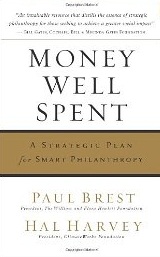
Money Well Spent: A Strategic Plan for Smart Philanthropy by Paul Brest and Hal Harvey
During these tough economic times, appeals to the heart may replace quantitative metrics in successfully appealing to donors.
The author breaks down how public funding of the arts should be put towards performance, exhibition, and education leaving the artists and their creative process to private patronage.
As the economy continues to shrink, individuals will need to make a more conscious effort to give.

In a climate resistant to government spending on social causes, the focused donations of billionaire philanthropists may be the greatest force for societal change in our world. So says journalist Matthew Bishop in this Stanford Center for Social Innovation sponsored talk. Discussing his recent book, Philanthrocapitalism, Bishop shares anecdotes, analysis, and profiles of a small group of people who are influencing the lives of many by bringing their success in capitalism to giving, rather than to making money.
Recent surveys on giving by corporations and high-net-worth individuals look promising for the nonprofit sector. The author submits how to best obtain these resources in a competitive fundraising environment.
The author suggests that nonprofits seek lobbying help from corporations that are limited in the cash they can offer.
Nonprofits should focus inward and get their organization's fundraising strategies in order before they go "rush[ing] to grab a piece of the government's financial bailout package."