


The Parent of Invention
RAMP nurtures local inventors in India, Peru, and Indonesia.

RAMP nurtures local inventors in India, Peru, and Indonesia.

Investors screen for entrepreneurial passion when making funding decisions.
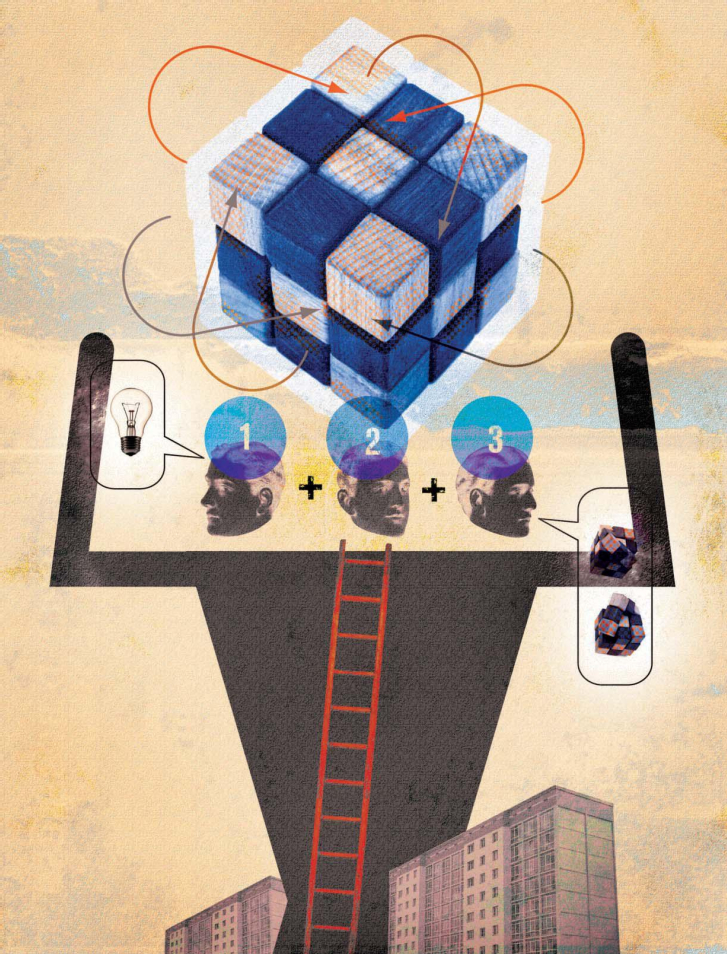
Some of the brightest ideas for social change grow in the spaces between organizations and sectors. Yet few organizations have systems that make collaboration happen. To foster innovation, organizations need to develop places where they can come together and work creatively—that is, platforms for collaboration. In this article, a management expert identifies three kinds of collaboration platforms—exploration, experimentation, and execution—and then outlines what organizations can do to put these platforms to work for them.

Social entrepreneurship is one of the most alluring terms on the problem-solving landscape today. The question is not whether social entrepreneurship is a term in
good currency, but what it actually means.

Companies can indeed make money while operating in socially responsible and environmentally friendly ways. It just takes what supply chain expert Hau Lee calls the Triple-A approach—having agility, adaptability, and alignment. Closing the Stanford 2008 Responsible Supply Chains Conference, Lee describes how small to mid-sized companies in China, India, and Israel boosted profits while shrinking waste and pollution and providing a fair workplace for employees.


Social entrepreneurship is attracting growing amounts of talent, money, and attention, but along with its increasing popularity has come less certainty about what exactly a social entrepreneur is and does.

By working closely with the clients and consumers, design thinking allows high-impact solutions to social problems to bubble up from below rather than being imposed from the top.

Fair Trade-certified coffee is growing in sales, but strict certification requirements are resulting in uneven economic advantages for coffee growers and lower quality coffee for consumers.

Social entrepreneurship and social enterprise have become popular and positive rallying points for those trying to improve the world, but social innovation is a better vehicle for understanding and creating social change in all of its manifestations.

Understanding these six important differences will both facilitate better conversations and help channel funds appropriately.