


Philanthropy
What’s Next: A Kickstarter for Creative Types
Artists, musicians, writers, and other creative types are asking the public to underwrite their dreams via an online fundraising platform.

Artists, musicians, writers, and other creative types are asking the public to underwrite their dreams via an online fundraising platform.
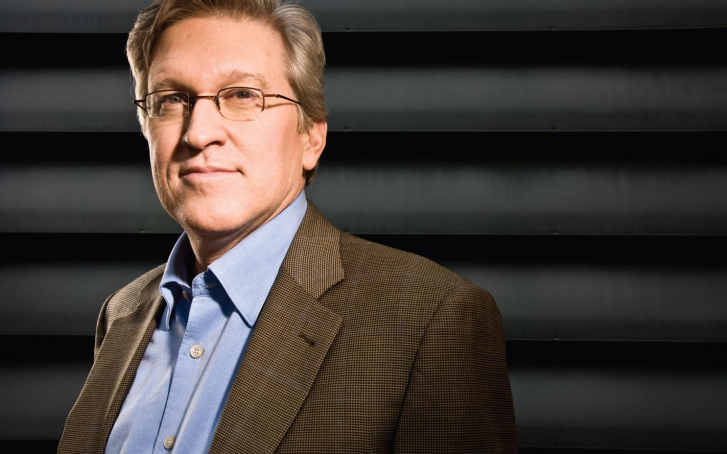
Jeff Raikes takes over the Gates Foundation at a turbulent time when philanthropic resources are down and social needs are up.

International development is increasingly dependent on the entrepreneurship of local citizens. But has the U.S.-caused global recession robbed American business and government of the ability to persuade other countries to partake of the capitalistic entrepreneurial model? In this panel discussion, part of a conference convened by the Hoover Institute at Stanford, experts discuss the role of entrepreneurship in economic growth worldwide.
Microfinance has become a staple of international development. In this audio interview, Chetna Gala-Sinha talks with Stanford Center for Social Innovation correspondent Sheela Sethuraman about how her micro-enterprise development bank and foundation are economically empowering rural women in India. She describes the various tools and services that allow women to become financially independent, provide more adequately for their families, and drive international development.

Hagar was the biblical woman who became the victim of neglect and violence when she was cast out of the fold of Abraham and Sarah. In Cambodia, Afghanistan, and Vietnam, thousands of "Hagars" and their children suffer poverty, trafficking, and other human rights abuses. Janet Tafel, who was invited by the Center for Social Innovation at Stanford, discusses how her organization, Hagar USA, helps individuals restore their lives through holistic healing, community integration, and social entrepreneurship.

Kiva has created an online marketplace that allows ordinary citizens to help specific entrepreneurs around the world to thrive with as little as $25. In this Stanford Center for Social Innovation sponsored audio interview, Kiva President Premal Shah discusses how the social enterprise relies on bazaar management techniques to carry out the organization's everyday functions. He describes the benefits of cost reduction and execution time and talks about the possibilities bazaar management opens for social entrepreneurship and the for-profit sector in general.

Let there be light! That's Sam Goldman's motto, and he's taking it around the world. The founder of d.light design talks with Stanford Center for Social Innovation correspondent Sheela Sethuraman about how he is bringing affordable, ecologically sustainable electricity and lighting to billions who are now operating in the dark. In this audio interview, he details aspects of the design, function, marketing, and distribution of the organization's products, as well as the kind of impact the social enterprise is having in some of the most remote, poor areas.

How can a country like China, which is still relatively poor, balance economic and environmental concerns? In this audio lecture, Peking University Professor Lu Zhi, who was invited to Stanford by the Center for Social Innovation, offers thoughts on conservation and some of its broader implications. Her message is that reversing the negative effects of rapid industrialization is possible, even in a developing country.
India has one of the highest child mortality rates in the world. This points to an underlying economic problem: poverty. Most poor women in that country simply cannot afford adequate health care. In this audio interview with Stanford Center for Social Innovation correspondent Sheela Sethuraman, Anant Kumar talks about how Lifespring Hospital in India provides quality care to women and children, regardless of their level of income. He talks about how the effort was launched, how it is sustained, and future goals.
In the late 1980s, when Barry and Andrea Coleman noticed that motor bikes intended for use in the delivery of health care in Africa were not being used because they had broken down—in some cases needing mere $3 oil filters—they knew they had to put their own pedal to the metal. Speaking at the 2009 Responsible Supply Chains Conference at Stanford, they share some of the successes and challenges associated with running Riders for Health, which administers vehicles to keep health supplies flowing efficiently throughout the continent.