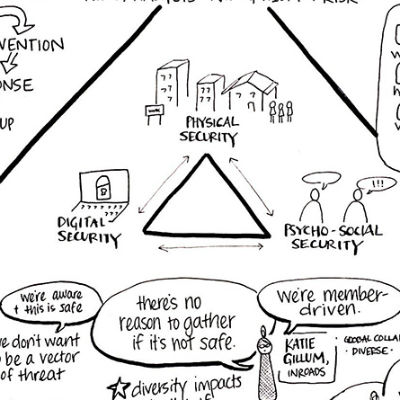
Tackling Digital Security Across Civil Society
Four steps civil society organizations and their funders can take to begin addressing digital risk.
Innovations in technology that serve the world (more)
Four steps civil society organizations and their funders can take to begin addressing digital risk.
The Anti-Defamation League’s Brittan Heller discusses her work tracking cyber-hate, and her partnership with tech companies and law enforcement agencies to reduce bigotry and promote justice and fair treatment in online environments.
Autonomous technologies can support social services programs, but delivery must always be centered around people.
Planet Inc.’s Andrew Zolli explains how big data paired with big indicators will help us predict and respond to global crises.
How private data sources, when leveraged responsibly and collaboratively, can provide insights for addressing the challenges and opportunities of migration.
Stanford's Lucy Bernholz moderates a discussion on how social sector organizations can utilize the power of data while integrating critical concerns of security, transparency, and responsible governance into their culture.
Blockchain technology will not solve all government problems, but it can help curb corruption and instill trust in government.
A new approach to measurement has the potential to surface quicker, cheaper, better data about notoriously hard-to-measure social change.
Small data can transform opportunities and quality of life for underserved communities, and help address the biases of big data.
Humanitas AI has created a smartphone app to enable young people to coordinate social projects.