


Leadership
Navigating Double Jeopardy in the Social Sector
Four leaders discuss the racial and gender stereotypes that stymie black women and offer advice on how to create more inclusive work environments.

Four leaders discuss the racial and gender stereotypes that stymie black women and offer advice on how to create more inclusive work environments.
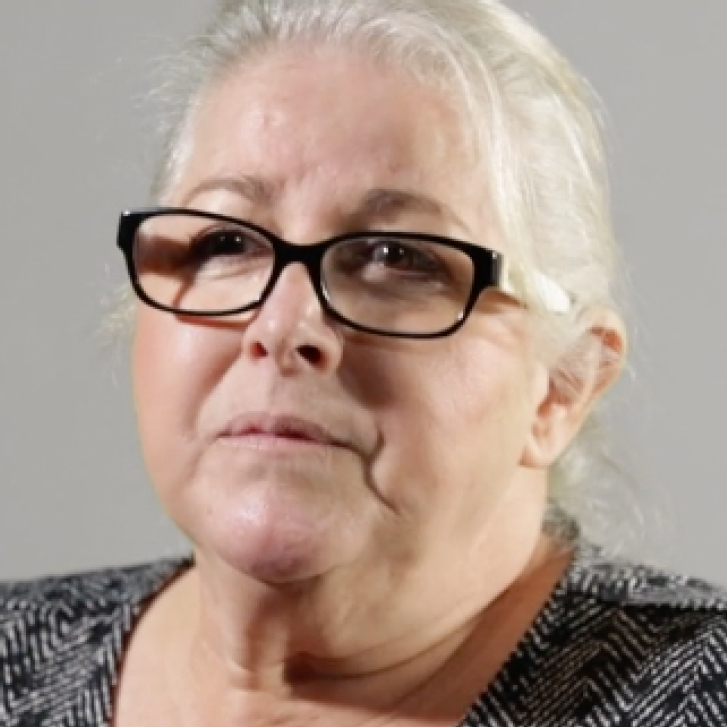
Growing up, Paula John didn’t feel her voice counted, motivating her to give her children a different experience by listening to them closely. She expected the same consideration from her Houston community health agency. When its services fell short, her harsh feedback became a catalyst for change. Part of a series produced for SSIR with the support of the Hewlett Foundation.

Leaders from three San Francisco Bay Area arts organizations discuss how they are shaping both their organizations and their performances to make them more diverse and welcoming to all.
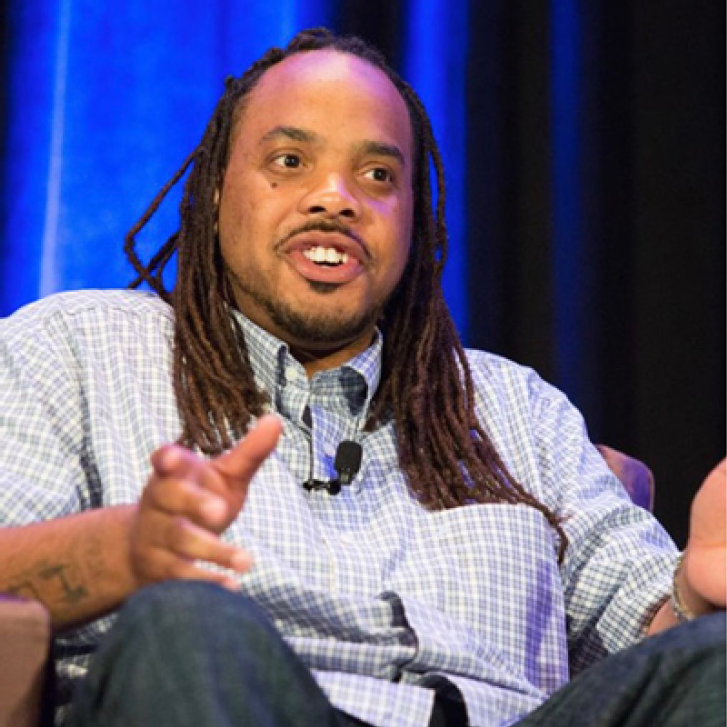
Shannon Revels met a teacher in prison who listened to his ideas, demonstrating a willingness to engage that Revels paid forward at his employment agency and on the job. Part of a series produced for SSIR with the support of the Hewlett Foundation.
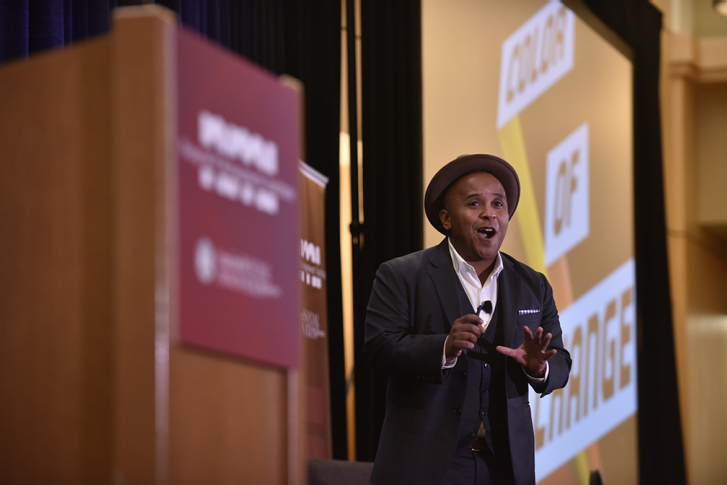
Rashad Robinson, president of Color of Change, speaks about the nature of political and cultural power and the importance of continually assessing the nonprofit sector's efforts to bring about change.


Rob Reich, a Marc and Laura Andreessen faculty co-director of Stanford PACS, moderates a conversation about the promise and peril of technology in civil society. Reich is joined by Kelly Born, a program manager at the William and Flora Hewlett Foundation’s Madison Initiative, and Arisha Hatch, managing director of campaigns at Color of Change.

Fei-Fei Li, chief scientist of artificial intelligence at Google Cloud and director of the Stanford Artificial Intelligence Lab, advocates for an approach to AI that emphasizes human psychology, augmentation rather than replacement, and social and human impact.

Katherine Milligan, who directs the Schwab Foundation for Social Entrepreneurship, interviews leaders from organizations harnessing tech tools like drones and e-readers for social good.

Human trafficking, modern slavery, and child labor remain pressing concerns in many industries’ global supply chains. Harvard’s Siddharth Kara leads a discussion on how each sector can play a role in finding solutions.

Emily Arnold-Fernandez, executive director of the nonprofit Asylum Access, makes the case that better policies in host countries can enable refugees to rebuild their own lives and contribute to host economies.

The Anti-Defamation League’s Brittan Heller discusses her work tracking cyber-hate, and her partnership with tech companies and law enforcement agencies to reduce bigotry and promote justice and fair treatment in online environments.

Planet Inc.’s Andrew Zolli explains how big data paired with big indicators will help us predict and respond to global crises.

Stanford’s Kathleen Kelly Janus provides insight into how the best nonprofits succeed and scale through a data-driven culture.

Stanford's Lucy Bernholz moderates a discussion on how social sector organizations can utilize the power of data while integrating critical concerns of security, transparency, and responsible governance into their culture.

Rob Reich moderates a discussion with Reed Hastings and Darren Walker on the tension between individual or institutional philanthropy and democratic societies.