





In this episode
Housing in America is a complex social issue. It intersects with poverty, education, public health, climate resilience, racial equity, and more. Funders who work in each of these areas struggle to address housing and homelessness on their own, but together, they may be able to impact the wider systemic issue of housing justice. The Fund for Housing and Opportunity is a collaborative fund designed to do just that through grants that support housing policy, advocacy, and organizing work.
In this episode, we talk with Jeanne Fekade-Sellassie, FHO’s executive director, about how the fund’s work is catalytic, how collaborative funds enable funders to take risks, and how listening to and learning from grantee partners, experts, and fellow funders creates a stronger collaborative approach to solving the housing crisis. Giving With Impact is developed with the support of DAFgiving360®
Guest
Jeanne Fekade-Sellassie
Guest
Jeanne Fekade-Sellassie
Jeanne Fekade-Sellassie
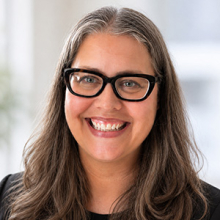
Jeanne Fekade-Sellassie is the executive director of the Fund for Housing and Opportunity.
Resources
-
Housing Justice and Systems Change Through a Funder Collaborative, an article in Stanford Social Innovation Review co-authored by Jeanne.
-
Maximizing the Value and Impact of Funder Collaboratives: Lessons from Funders for Housing and Opportunity, a report from the Fund for Housing and Opportunity that expands on Jeanne’s SSIR article.
-
The Collaborative Effect, a grantee-centered study from Philanthropy Together on what makes collaborative funds impactful.
Transcript
Jeanne Fekade-Sellassie
I think in philanthropy, there's a rightful push to try and understand outcomes and impact. And we as a field really need to shift to look at what kind of, like, long-term outcomes and impacts we can have and to be patient. Because especially when we're working with grassroots groups that are working on changing systems, that's not something that happens overnight.
———
MUSIC
———
Barbara Wheeler-Bride
I'm Barbara Wheeler-Bride, an editor at Stanford Social Innovation Review, and this is Giving with Impact, a podcast featuring conversations with leaders from across the social sector about what's at the heart of achieving more effective philanthropy. We're produced by SSIR with support from DAFgiving360®.
Last week we did a deep dive into collaborative funds and their potential for not only pooling philanthropic funding, but their unique ability to fund solutions to systemic challenges with a top-to-bottom collaborative approach. In this episode, I speak with Jeanne Fekade-Sellassie, the executive director of the Fund for Housing and Opportunity, a collaborative fund focused on protecting renters and preventing homelessness.
Where you live affects where you go to school, what jobs are available, what food and health care you can access. Racial discrimination and historic policies contribute to inequities and affordability concerns that continue to make stable housing unavailable for many. The funders who came together to found the Fund for Housing and Opportunity were working in different social issue areas, but they recognized how collaborating to fund housing policy, advocacy, and organizing work could have an outsized impact on solving the society crises they were trying to address individually. Their collaborative fund would prove to be greater than the sum of its parts, as Jeanne explains in the interview.
Both Jeanne and Rebecca Darwent — from last week's episode on collaborative funds — talked about the idea of contribution versus attribution, so making a contribution to longer-term impact through a collaborative approach rather than attribution for short-term outcomes with traditional grantmaking.
Now here's my conversation with Jeanne.
———
Barbara Wheeler-Bride
Jeanne, what would you say is on the line if we don't address the affordable housing crisis in communities across the United States right now?
Jeanne Fekade-Sellassie
Housing is hugely intersectional, so it touches every aspect of a person's life. Without a safe and stable place to call home, it becomes really much harder to stay healthy, or to succeed in school, or to build your financial security and keep a family together, to recover from climate disasters, or even to just fully participate in community life. It all starts with housing as the foundation. And if we don't address the housing crisis in this country, then we are really limiting the future opportunities for millions of people, and we're also weakening the communities that they belong to.
Barbara Wheeler-Bride
What are your biggest concerns about America's housing system right now?
Jeanne Fekade-Sellassie
Well, there's several tensions, I think, in the field right now. And one is just that we don't have enough supply, meaning we don't have enough homes that people can afford in communities where they can thrive. And this is really all across income levels, but it's particularly acute for those at the lower end of the income spectrum. You know, this country is finally coming to terms with that truth. And there's a lot of momentum right now around increasing supply. And my concern is that the folks at the lower ends of the income scale, those folks who are disproportionately impacted by this country's undeniable history of discriminatory housing practices, those are the ones who will be left behind further if we don't intentionally include their interests and their voice in any of our supply side strategies.
Barbara Wheeler-Bride
How did the Fund for Housing and Opportunity get started?
Jeanne Fekade-Sellassie
We were started by Susan Thomas, who's now the president and CEO of the Melville Charitable Trust, about 13 years ago. When she was a program officer at the trust, she was trying to figure out how, within her grant portfolio, she could end homelessness in America with, you know, like $4 million dollars a year. And she quickly realized that's not something that one funder can do alone.
So she reached out to her peers and her colleagues in other foundations around the country, and she tried to talk with them about what they could do together to really address the upstream causes of homelessness. And she was able to pull together nine funders, and they're not all housing funders, but they're funders that knew that housing impacted the issues they cared most about, whether that was health or climate or education or family stability. And together they decided that they wanted to do something to support housing solutions in a way that was much, much bigger than they could do individually on their own.
And the first thing they did was listen to folks across the country. They listened to practitioners who were developing affordable housing. They listened to academics. They looked at the research. And what they learned was that funders are more likely to fund direct services when there's, like, a particular intervention that leads to results in like a year or two's time. But if an organization was engaged in trying to change systems that required that intervention in the first place, so like the policy work, the advocacy work, the organizing work that really undergird systems change, if they were trying to get money to support that type of work, they were having much more trouble convincing funders.
And so FHO was born really to address just that, to make grants that support systems level change and also to create a community that could help funders learn from and with each other, with our grantee partners and with other experts in the field about what solutions really do work.
Barbara Wheeler-Bride
Can you talk a little bit about the intersectional nature of housing and how that relates to the fund's approach to supporting organizations and initiatives?
Jeanne Fekade-Sellassie
Sure. So, like I said earlier, housing isn't just one issue, right? It's the foundation upon which so many other life outcomes are built. And so when FHO was created, we had sort of a collection of funders who understood that housing was the foundation for the issues that their organizations cared most about. And so we had folks who cared about climate at our table because they understood the connection between housing and climate impact, and others who cared most about life outcomes for children, or others who cared about health. And so our funding strategies are responsive, and they also recognize that housing access in the U.S., really to date has reflected generations of discriminatory policies. And these inequities continue to shape outcomes and opportunity today.
So for us, housing and equity are fundamentally related. And we invest in systems change to treat the root causes, not just the symptoms, recognizing that kind of durable change requires changing the conditions that produce housing instability.
Barbara Wheeler-Bride
What are your funding priorities and what types of organizations and initiatives do you fund?
Jeanne Fekade-Sellassie
At FHO, we fund three interconnected priorities that we think really work well together to move systems change. The first is policy advocacy and organizing, which is really meant to kind of change the rules of the game. And in that space, we funded some national organizations and also some statewide organizations. An example of the national organizations that we fund would be Opportunity Starts at Home, which is a national cross-sector coalition that brings together stakeholders to address structural barriers to housing security. Some examples of the partners at Opportunity Starts at Home are Children's HealthWatch, the National Women's Law Center, National Resources Defense Council, AARP, NAACP. There's literally a hundred more. And they've all come together to really try and understand how housing impacts the issues that they care most about, and then to have a shared common platform of priorities. And they started out by identifying eviction prevention and universal vouchers or rental assistance as being two priorities that cut across all of these different sectors that can make a difference for the constituents that they care most about. And they've been working together on those two issues, plus a few others for some time now.
We've also funded some statewide organizing networks so that tenants can really have agency and voice in their own housing stability. They're advocating for tenant protections, things like right to counsel or just cause eviction or source of income protection, anti-retaliation protections, so that the landlord tenant power imbalance can begin to shift a bit because we know that when tenants are stably housed, it's really better for everyone.
And while we don't fund lobbying, last year alone our grantee partners had a role in leveraging over $1.4 billion in public funding for housing. Like the State of New York's $50 million five-year pilot project, which is providing housing access to a voucher program, or securing dedicated funding sources for state and local housing trust funds across the country. You know, philanthropy can't just think about the dollars that we specifically grant out, because we are a drop in the bucket compared to what government can and should provide. And so funders really have to think about the resources that their grant dollars can unlock.
Our second funding priority is narrative change. FHO made some of philanthropy's early investments in housing narrative change. Our grantee partners treat narrative as a movement strategy. It's not just an add-on to strategic communications. What we're really trying to shift here is what people believe about themselves, the world around them, and what's possible. And so we're really looking at two tracks here. One is moving out of a commodity mindset where housing is something that's bought and sold and good for me and my family and our wealth accumulation, which it is, but it's so much more. It's really a human need and a human right. And the second track we're working on is to move people out of a deservedness mindset related to homelessness to help people understand that homelessness is not caused by an individual's choice or failure, but really to get to the place where a person loses their home, multiple systems have already failed that person. So those are … that's kind of what we're trying to achieve in narrative change. And we've funded some groups like Invisible People, which uses storytelling by people experiencing homelessness themselves who connect their own stories with the system failures we just talked about and help people understand what solutions work. They have great content and they're on social media, they have podcasts and short films, and they reach tens of millions of people each month.
We also support the Housing Narrative Lab, which both conducts research and public opinion polls, but also provides very tactical, technical assistance to campaigns and organizations across the country that are trying to move public and political will. And, you know, it really works. We're seeing changes in how people are thinking about housing. According to the Narrative Lab's research, the share of Americans who see housing as a basic need rose from 63% to 71% between 2021 and 2025. That's a pretty significant increase.
We also work with a group called the National Homelessness Law Center. And they tracked a shift in public discourse and media coverage of homelessness with growing attention to systemic factors like rising housing costs and stagnant wages over mental health and addiction. So folks are seeing the upstream causes of homelessness differently than they were even like three or five years ago.
Our third funding priority is what we call “elevating what works.” And that's where we fund cross-sector work at the local level. Our grantee partners all together have worked with over 500 non-housing organizations on housing justice. And I think the best example to use here would be the Piedmont Collaborative in Charlottesville, Virginia. It's one of our grantee partners that's made up of seven cross-regional, cross-sector regional partners, and they're all working to prioritize eviction prevention through various diversion mechanisms. And they've created a financial opportunity center and wraparound services while holding racial equity as really central to their work. And one of the leaders of that collaborative is a group called the Piedmont Housing Alliance, which is building dozens of new affordable homes near downtown, with a portion of those units prioritized for adults with intellectual and developmental disabilities.
So I think the combination of having, like, developers at the table and folks who are working with residents directly in terms of eviction prevention demonstrates that those two things, tenant protections and the production and operating of affordable housing, don't need to be at odds.
Barbara Wheeler-Bride
You're a collaborative fund, so how do you make decisions about what you're funding, and how is that decision-making process different from, say, individual donors or foundations who are making decisions about funding on their own?
Jeanne Fekade-Sellassie
As a new funder collaborative, we started at a place where we wanted to make decisions by consensus. So our members together helped us do everything, like set our funding priorities, strategize around what it was that we wanted to actually impact with the funds that we have. That was all consensus-driven. But as time has gone by, we're still a table where everyone's opinion is heard and valued, but we're relying more on staff and the field to help us understand what that strategy should look like.
And so we develop grant plans at the beginning of each year, and that takes into consideration what our members have given us in terms of input, what we've heard from some strategy advisors that we've enlisted, and what our staff have heard from being in the field and listening to our grantee partners. And we get that agreement with our members on the plan, and then we kind of run with it throughout the year, checking back in here and there to make sure that what we're doing is still in line with the strategy and also responsive to new things that we're seeing in the field. Each year we revisit the plan, and of course we correct or make adjustments based on what we've heard is working, what isn't working, and what the current political and environmental and social context is.
Barbara Wheeler-Bride
Why do you think collaborative funds are well-suited to work on systemic solutions to social problems like racial justice and housing justice?
Jeanne Fekade-Sellassie
There's a couple of schools of thought about how funder collaboratives are positioned to work in this way. I think that, you know, we're sort of an antidote to this kind of senseless politics of destruction almost that's tearing down housing solutions that we know have proven to work. Sometimes a foundation acting on its own doesn't feel like it can step out to talk about or against policies that harm Black and Brown communities, for example. And so what a funder collaborative can provide is a sort of platform to speak on behalf of a whole field of funders who care about housing justice. And so our voice has a particular power that's different. And I also think the risk analysis is different for us speaking out together than it would be for one foundation on its own. And together we sort of have this permission to really imagine what a new system could look like that meets the housing needs for everyone.
You know, all of us can feel isolated or disconnected or powerless. And we're made to believe our individual voices don't matter and that working together is either impossible or too risky. So, what a funder collaborative can do is help break down that isolation that some foundations or program officers might feel by bringing them together. And even though we have different missions and priorities and perspectives at the FHO table, we're really all together, believing that protecting renters and solving homelessness is actually possible. Each of our members may approach it differently at their home foundations, but I think when we're all together with different perspectives at the table, we can exercise that voice and influence in a different and more powerful way.
And the other differentiator that a collaborative fund brings is shared learning and alignment. No single funder can address the complexity of our housing systems alone. But by pooling resources and from really spending time learning from each other, we can support a broader range of solutions and responses to challenges in ways that individual foundations simply can't.
We poll our members every year about what they think we do well. And this last year, our members said that building national philanthropic alignment was the most influential thing we did this year and something they couldn't have done on their own. An example of that is probably how we worked in response to protecting immigrant families in particular, because when we look at the housing situation across our country and who is being most harmed in the current moment, it's really immigrant families — in particular, mixed status immigrant families who will have a really hard time accessing housing assistance if a proposed rule that HUD put out for comment becomes final. And so in preparation for that, we funded groups like PIF — Protecting Immigrant Families — and the Alliance for Housing Justice, and the National Housing Law Project, which together built a commenting portal so that people could make sure that HUD was aware of the incredible harms that could happen if the rule changes. And we worked with colleagues at Funders Together for Housing Justice and GCIR, which is Grantmakers Concerned with Immigrants and Refugees, to educate philanthropy about the implications of the proposed rule and made it really easy for funders to take action. So together we submitted a public comment letter, which was signed by 23 foundations and philanthropy-serving organizations.
And our role was both, I think, you know, supporting groups on the ground and also organizing funders through working in partnership with other philanthropy serving organizations to make sure that philanthropy understands how the sort of political environment we're living in will impact immigrant families.
Barbara Wheeler-Bride
The Fund for Housing and Opportunity and your partners wrote a series of articles for Stanford Social Innovation Review in 2022 about collaboration for housing justice. We'll link to that in the show notes so that listeners can explore that series. In one of those articles that was specifically about collaborative funds and a more collaborative approach to philanthropy, you wrote that funder collaboratives should be a leading edge of knowledge and practice for members. And you touched on learning together as a collaborative fund as well. So could you talk more about that?
Jeanne Fekade-Sellassie
You know, particularly for funders who are new to housing, a learning collaborative can be an incredibly valuable way to get up to speed quickly while at the same time developing a deeper understanding of the issues and really building trusting relationships with each other. So instead of having to navigate a complex field alone, they can learn from their peers and from experts kind of across the housing landscape. For us, the learning community has been really important because the folks that sit at our table, again, are not always housing funders. But they know that housing is really important for the issues their foundation cares most about. And housing in particular is a really complex issue to understand, even for people who've worked in housing and have for decades. And so what we can bring is a place where people can come together and learn together and ask questions that they don't feel like they can ask, kind of in a more public space, because we've built a real foundation of trust among our members.
So we try to meet folks where they are, we ask them what they want to learn about, and we'll find the grassroots experts who are doing that work and bring them together with the experts who are studying the work. So we can answer the questions that our members have and we can learn about what's really working and kind of press the boundaries a little bit.
And we don't stop there. We then do a lot of work kind of wrestling with what we're hearing and trying to figure out how that impacts what we should be funding at FHO and what they could be doing differently back at their home foundations as well. You know, the vast majority of our members report to us that the learning they do together at FHO does inform the grantmaking that they do back at their home foundation, which I think is a really strong testament to the power of that collective learning, that kind of collective mindset.
Barbara Wheeler-Bride
Can you talk about the sense of collaboration or community that the fund has created, both from the funder perspective and also from the grantee perspective or your grantee partner perspective? And even across the two?
Jeanne Fekade-Sellassie
Every year, our members report to us that one of the most valuable aspects of their involvement in our collaborative is the relationships that they build with one another. And those are relationships of trust that's built over long periods of time. They're sitting at our table and learning together and developing those relationships. They're learning about the strategies of their peers, what they're putting in place at other foundations, they're checking for alignment, they're seeing around the corners. They're able to outside of FHO even make grants together or work on and enhance or leverage their foundation strategies. We have a practice that we call “asks and offers” where funders come to the table and say, “Hey, you know, this is a puzzle I'm working on, and I could really use some help. Have you ever, any of you ever done your XYZ before?” And others will say, you know, “Hey I've developed over the last year a real expertise in ABC.” And we connect members to each other in that way so that even outside of FHO's sort of funding and learning agenda, we create real opportunities for them to collaborate on their own.
Recently we were nominated by our peers as one of about two dozen high-performing collaborative funds that were studied by Philanthropy Together, the Redstone Strategy Group, and Vital Impact, in a report they put out called “The Collaborative Effect.” And they looked at grantees' experiences with funder collaboratives and how they differ from their experiences with traditional foundations. And you know, it really boils down to the idea that collaborative funding is deeply relational. It's built on trust and reciprocity and shared purpose. And collaborative funds try really hard not to be transactional. And over the course of that study, we also received some particular feedback about our fund. And our grantee partner said that FHO deeply understands their strategy and is committed to equity, as committed to equity as they are, and is someone they can call when problems come up.
And that last piece is really important to me. Because if grantees are comfortable telling you something's wrong, it tells us that they really trust us. They trust that we'll be able to understand and to help. And I think that's a real indicator of true partnership.
Barbara Wheeler-Bride
Can you tell us a little bit more about how you incorporate local expertise in your grantmaking decisions or your strategy setting? What approaches do you use or have you found helpful to gather grantee partners’ input?
Jeanne Fekade-Sellassie
Sure. We do that in a number of ways. We have a grantee experience survey that we send out every other year. So we get direct feedback from all of our grantees that way. And we aggregate that information and we try and improve upon it from year to year. We also have very deep relationships with most of our grantee partners where we, you know, have regular phone conversations with them. We have check-in conversations with many of our grantee partners instead of asking them to write us interim reports. And those conversations really serve both to build the relationship, but also to get a real-time understanding of what they're struggling with and what their successes are so we can support them better. And we have in the past brought grantee partners together for meetings where the sole purpose of those meetings is for them to hear from each other and develop connections and kind of understanding what each other is doing across our portfolios.
And then last year, we created what we call a community of advisors. And these were six leaders that were nominated by our grantee partners that give us input on how funders can advance housing justice and provide support kind of beyond the grant check. And their insights are really shaping our strategy and informing how we work. And in return, we provided them a stipend for their time, but we also had a facilitator who worked with the six of them, and we gave them a pot of money that they could decide how they wanted to use to advance their own leadership acceleration. So we're trying to support, you know, their professional development as well. And the facilitator worked with them to identify both individual and group goals and things they wanted to learn more about. And then we were able to use that pot of money to fund those professional leadership acceleration activities.
Barbara Wheeler-Bride
So it sounds like you were able to fund more capacity building as you targeted some of that funding to your grantee partners.
Jeanne Fekade-Sellassie
Yeah, and it was funding that they had control over. We didn't say, “Hey, we think you need to learn about leadership succession. So we're here to give you some money to do that.” It was really, you know, they decided how they wanted to use that money. And I think that's also an important way that collaborative funds generally operate, allowing some more kind of bottom up style grantmaking and decision-making.
Barbara Wheeler-Bride
How do you see collaborative funds shifting longstanding ideas about how philanthropy makes grants and really the predominant role of donors in decision-making?
Jeanne Fekade-Sellassie
I would say collaborative funds tend to be more likely to engage in trust-based philanthropy. And the collaborative effects study that I referenced earlier does show that collaborative funds are way more likely to be, to be relational with their grantee partners. The way traditional philanthropy works, you know, it's been criticized for being heavily top-down, bureaucratic, maybe not listening to community as much as partners would like them to in terms of strategic direction. And so collaborative funds, you know, they're newer and they don't already necessarily have an established group of grantee partners when they begin and they can set up their systems however they want to. So, you know, when we were starting from scratch, normally where we start is by listening to what's going on in the field. And in that way, we can be more nimble and more responsive than traditional philanthropy.
FHO has awarded more than 145 grants, totaling over $31 million to organizations from our pooled fund that support those three priorities that I talked about earlier. And we're so much bigger than that. Like that money is catalytic. Our members have added at least 16 and a half million more in aligned funding to those same organizations and efforts. So although our pool is about three to four million a year, it really has outsized impact because our member foundations also support those groups with funding from their own foundations, which then multiplies the impact that we can have ourselves.
Barbara Wheeler-Bride
What are some of the challenges you're facing right now? And this can be internal challenges that you feel as a collaborative fund or even external challenges, or challenges that you see across your grantee partners.
Jeanne Fekade-Sellassie
There's probably three big challenges that I think about a lot. One is, of course, collaboration is a lot more work than going it alone. And honestly, I guess that's exactly why it works. But it just takes longer to build consensus and to get input from the field and to let that input really meaningfully impact your strategies. It just takes a lot more time. But it's worth it. And I guess what you get in return is buy-in and shared ownership and strategies that can outlast any singular grant cycle. But you know, it does take longer, and that's a challenge.
A second challenge would be kind of resisting the pull towards the lowest common denominator. With member foundations, you know, they all have different risk tolerances, like different geographies or priorities they care about. And the easiest path is funding only what everyone is really comfortable with. And so I think that's a challenge because you still want to have real impact. And I guess when members learn together and comfort grows and trust grows, that common denominator sort of rises. And there's lots of ways that FHO has worked to do that. But I do think that there is this temptation to kind of fall to what everyone can agree on instead of pushing people a little further.
And I think the third real challenge that collaboratives have is at this point in time, the field is maturing. There's program staff transition, founding members retire and move on to other foundations. And as that happens, new program officers can inherit participation in the collaborative fund kind of as just like one line item in their job description. And so I think there's a real risk in newer members seeing collaborative funds more as sort of a grant to manage rather than a community to belong to. So we try to really build in a strong onboarding and orientation process, but I do think it's a real risk that many collaboratives are facing as the field matures.
Barbara Wheeler-Bride
I wanna follow up and ask you a question about how you think, or what do you think, are the ways we can shift people's views about time and how, you know, how collaboration takes more time. How do you think or what are some ways that collaborative funds or philanthropy as a whole can think differently about time?
Jeanne Fekade-Sellassie
I think in philanthropy, there's a rightful push to try and understand outcomes and impact. And we as a field really need to shift to look at what kind of, like, long-term outcomes and impacts we can have and to be patient. Because especially when we're working with grassroots groups that are working on changing systems, that's not something that happens overnight. And I think we have to adjust how we think about tracking impact and appreciate more the sort of interim steps that it takes to build power and build momentum and create change. So for philanthropy, I think we need to adjust our expectations and timelines and what we see as sort of the horizon for change.
For example, we've been around for 10 years, and five years ago we really took some intentional time to think about where we as a collaborative could make contributions and systems-level change in the long term. So we asked ourselves, what's the ultimate goal that we hope to be achieved related to housing justice, like, 25 years from now? And then instead of holding ourselves to, like, outcomes in one and two-year increments, we came up with some five-year measures that will show that we're making progress toward that long-term goal. And these are measures that our grantee partners could realistically achieve based on what they'd already been reporting to us. And each year we do measure how we're working toward those five-year outcomes. But you know, we're not holding our grantee partners to the exact measures, but we're asking them how their work contributes to those measures so that we can tell a story of impact. But it's a story of impact that's more geared toward contribution, toward a long-term outcome rather than attribution for a very short-term outcome.
Barbara Wheeler-Bride
Jeanne, from your vantage point at Fund for Housing and Opportunity, what gives you hope right now?
Jeanne Fekade-Sellassie
I am so hopeful, because our grantee partners in the field are not giving up hope. We see wins all the time in terms of grassroots groups who are expressing their agency, who understand the systems that are impacting their living conditions and are motivated to do something about it. And you know, there's also nonprofit housing developers who are really working against all odds to put together deals which will really impact the amount of new homes, rental homes, and for sale homes that folks with lower incomes will be able to afford. And so I kind of see it from both the tenant and the developer perspective. And our grantee partners aren't afraid to name equity and justice as the motivation for their work. There's just so much momentum right now and the public and political will to make change that I can't help but believe that we will.
————
Barbara Wheeler-Bride
Thanks to Jeanne for speaking with me. A few years ago, Jeanne and some of the funders and grantee partners at the Fund for Housing and Opportunity wrote a series of articles on collaboration for housing justice that's available on SSIR.org. We'll link to it in the show notes.
If you're a philanthropist, nonprofit leader, grassroots organizer, or researcher working on solutions to the housing crisis or other systemic social issues, I encourage you to become an SSIR subscriber so you can read about the latest innovations across the social sector. Like the series on housing justice I just mentioned, SSIR features expert viewpoints and big ideas that inspire and inform leaders of social change.
And a reminder to please subscribe, rate, and leave a review of Giving With Impact wherever you get your podcasts. This helps people discover the show.
Giving With Impact is produced with support from Jordan Turgeon, Marcel Malekebu, and Bryan Maygers.
A special thank you to DAFgiving360® for their financial support to make this podcast possible. DAFgiving360® is an independent 501c3 with a mission to increase charitable giving in the United States. DAFgiving360® provides the tax-smart and simple giving solution of a donor-advised fund or DAF account. Visit DAFGiving360.org to learn more.
Stanford Social Innovation Review is published by the Center on Philanthropy and Civil Society at Stanford University. Visit SSIR.org to learn more and subscribe today.
Giving With Impact is hosted by Barbara Wheeler-Bride and produced with support from Jordan Turgeon, Marcel Malekebu, and Bryan Maygers. Artwork is by Peter Grant. Thank you to DAFgiving360® for their financial support to make this podcast possible.
DAFgiving360 is an independent 501(c)(3) public charity with a mission to increase charitable giving in the U.S. DAFgiving360 does this by providing the tax-smart and simple giving solution of a donor-advised fund (DAF) account to donors and financial advisors. Since our founding in 1999 as a 501(c)(3) public charity, DAFgiving360 donors have recommended over $50 billion in grants to 300,000 charities. Visit dafgiving360.org to learn more.