





In this episode
Collaborative funds are more than pooled resources. Rebecca Darwent, a philanthropic advisor and co-founder of the Foundation for Black Communities, discusses how collaborative funds are giving donors new ways to fund solutions to systemic problems, how they flip the power dynamics and decision-making models of many traditional philanthropic institutions, and why the field is growing. She challenges donors, funders, and philanthropy as a whole to think more deeply about collaboration and building trust with grantee partners. Giving With Impact is developed with the support of DAFgiving360®
Guest
Rebecca Darwent
Guest
Rebecca Darwent
Rebecca Darwent
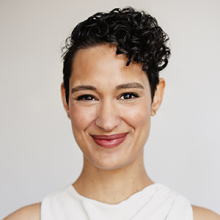
Rebecca Darwent is the founder and principal of Rebecca Darwent Global.
Resources
-
Wealth Currents, an independent, quarterly, digital publication for women navigating what it means to steward wealth in a time of transition
-
“You Don't Need to Have the Answers” a piece by Rebecca in Wealth Currents about effective capital stewardship
-
The Collaborative Effect, a grantee-centered study from Philanthropy Together on what makes collaborative funds impactful
-
The Philanthropic Collaborative Landscape, research from The Bridgespan Group that highlights the growing impact and potential of philanthropic collaboratives
Transcript
Rebecca Darwent
I think in North American culture and society, we want things to be linear and to fit into a nice box and to have like a checkbox that we can check off. And collaborative funds, by their nature, inherently kind of push against that, because they're saying, “We're all going to work together. We're gonna have shared decision making. We're gonna grapple with how we even make decisions. And sometimes we're gonna grapple with what decisions have actually been made. And so it's gonna take more time.” But that doesn't necessarily mean that it's bad. And it doesn't mean that it's inefficient.
—
Barbara Wheeler-Bride
Hi everyone, I'm Barbara Wheeler-Bride, an editor at Stanford Social Innovation Review. This is Giving with Impact, a podcast featuring conversations with leaders from across the social sector about what's at the heart of achieving more effective philanthropy. We're produced by SSIR with support from DAFgiving360.
In this episode, we talk about collaborative funds and how they approach philanthropic giving a bit differently. I spoke with Rebecca Darwent, a philanthropic advisor and also a co-founder of the Foundation for Black Communities, Canada's first national Black-led philanthropic foundation.
Rebecca challenged donors, funders, and philanthropy as a whole to think more deeply about collaboration and discusses how collaborative funds are a unique opportunity for funding solutions to systemic social problems across different issue areas. She talks about bringing funders, individual donors, and grantee partners together around a table where decision making is shared and large-scale social change can happen.
Here's my conversation with Rebecca.
—
Barbara Wheeler-Bride
Before we get into talking about collaborative funds specifically, I wondered if you could talk a bit about the concept of collective giving and what that means to you.
Rebecca Darwent
Collective giving for me means doing something beyond yourself that's bigger than yourself and doing it with other people for a benefit that you may not be able to attribute your exact participation to, but that it's beyond the need to do that. That's what I think about at the baseline of collective giving.
Barbara Wheeler-Bride
Now to focus in on a more specific example of collective giving, how would you define a collaborative fund?
Rebecca Darwent
So a collaborative fund really has three main things that we would want to see. One is that there's pooled resources, and we often think about the financial resources that are pooled, but it's also networks and access and relationships. All kinds of things are going to be pooled into one area, and it's coming often from different sources. So it could come from individual donors, it could come from philanthropic foundations, corporate foundations, even government bodies can participate in pooling the resources.
The second piece is that there's multi-level collaboration. So there's collaboration happening on the side of the funders of the collaborative fund, as well as collaboration happening with grant partners. And so it really pushes what we see as the traditional philanthropic setup which is typically the funder at the top giving dollars out. And what we see in a collaborative fund is like collaboration is kind of the way that these funds operate day in and day out.
And what I would say is another layer of difference is that it's not just the decisions about where the dollars are going that is collaborative, it's also decisions about what we're funding in the first place, what the priorities and the strategy is, so multiple layers of collaboration is happening even before dollars go out the door.
And the third piece that we see that makes collaborative funds unique is that they are often moving towards a scaled and systems-level impact. So it's kind of taking it one step beyond what you might see in on-the-ground granting. You'll see policy initiatives, you'll see research being taken up as well as providing opportunities for collective work to be happening. So it's not just to one organization, it's to multiple organizations doing multiple strategies.
Barbara Wheeler-Bride
What do you think is some of the appeal of collective giving or collaborative funds to donors, specifically?
Rebecca Darwent
Donors are often time-strapped. They may not have the ability to build up one-to-one relationships with multiple grantee partners at a time. They might be new to an issue area and so they're looking for a partner or an entry point, like an on-ramp into a new issue area. I'm seeing a lot with my clients a recognition that being one funder and funding organizations directly isn't going to meet the scale of the challenges that we're facing in our societies today, especially when we're looking at things like climate and democracy and equity and justice. These things are really interconnected, and as a result, I'm seeing more and more donors looking to have interconnected solutions to those challenges that we're facing.
Barbara Wheeler-Bride
Can you give an example of how a collaborative fund focused on climate or democracy or another issue, how they would think, step by step, about that approach that is more systemic?
Rebecca Darwent
So collaborative funds, what makes them unique to traditional philanthropy is the vast majority of them are built and created by people who were either living with the issue themselves or had dedicated their careers to facing or, like, addressing these problems. So it's coming from practitioners themselves and community members themselves. So they have seen and lived the day-to-day of what these challenges might look like, and they are looking to build practical solutions. And one of the things that we often see, many nonprofit leaders will say it, there's always a crunch around funding. And so a collaborative fund, by pooling the funds, are able to kind of get one step above and see the landscape from, like, a higher vantage point. And so I would say from the funds that I've worked with and the research that's available, a lot of collaborative funds are looking at issue areas in that intersectional way, and they're asking their grantee partners what they're seeing, and they're being responsive to those needs on the ground.
Barbara Wheeler-Bride
Can you say a little bit more about those opportunities — so learn from experts, from other funders even, or grantees and people working in the field that you're funding — and how collaborative funds really kind of play on those dynamics more so than traditional philanthropy?
Rebecca Darwent
So the interesting thing about a collaborative fund is they are kind of working in an alchemy space. On one hand, they're raising funds, and so they know what it is like to be a grantee partner, and they know the rigor that goes into reporting mechanisms and what donors are looking for, and they have their narrative that they're trying to share and get buy-in on.
And on the other hand, they're also funders themselves, and they have these funding relationships with partners on the ground. And what they often do in that messy middle is create alchemy. When they see that there is a funding gap, maybe in their grant partners, they might see severe burnout with nonprofit leaders and a real push for restorative practices and sabbaticals and really getting some retreat time so that these nonprofit leaders can get the space to kind of come up for fresh air.
And collaborative funds are in a space where they might see, “Oh, you know, out of our portfolio of 50 grantee partners, five of them or 10 of these leaders are really struggling. Let's create a new program or a new offering for that need.” And we can go to our funders, and say, “We're being responsive to this need that we're seeing with partners that you really care about. We've created this new program. Are you willing to match funds? Can you come in?” And so they kind of can see the needs on the ground with the partners, and they're able to advocate with their funding partners to say, “Hey, this is something that we can all come in on together. Will you join?” It's kind of like a multi-layered effect on both sides.
Barbara Wheeler-Bride
What would you say are some of the other benefits of collaborative funds for grantees and grantee partners specifically?
Rebecca Darwent
So there is some really promising research that was done by Philanthropy Together, and it showed that in comparison to traditional philanthropy, collaborative funds are much more responsive to their grantee partner needs and have very high outcomes when it comes to the impact that they're delivering. So they're seen by their grantee partners as really being able to push policy conversations that their grantee partners may not be able to lead on their own, but they see themselves as part of a larger collective. So you see bigger policy wins. They are really trusted by their grantee partners to create spaces that are unique so they can bring people together and have multi-stakeholders at the table. They can bring government together, they can bring other funders together, individual donors together, and really create new tables — tables that weren't necessarily being established before.
Our sector, like many sectors, work in silos, and so collaborative funds can be that bridge. And the thing that really gave me hope and excitement around this research was that it's demonstrated that these funds are more impactful. So it's not just, you know, sometimes we see trends in philanthropy and it's like, “Oh, this is the hot new thing. It gets very buzzy, let's hop on it.” And there isn't necessarily the database or the evidence base under that. And that's not the case with collaborative funds. We're really seeing that it is a truly promising practice to invest in these funds.
Barbara Wheeler-Bride
So you talked about the evidence that shows impact. How do you see collaborative funds shifting longstanding ideas about how philanthropy operates? You touched on some of this earlier, but I wonder if you could say more about that.
Rebecca Darwent
So Bridgespan has done some research that showed that collaborative funds are typically led, the makeup of the leadership of the funds, look very different as well from traditional philanthropy. So there are significantly more women leaders of these funds as well as people of color. And so what ends up happening is that lived experience is also brought into the day-to-day work of collaborative funds. And in addition to that, there's also accountability. So what is a little bit different than traditional philanthropy is these leaders come from movements, they come from doing the work for years and often decades. And so those relationships that they've built up over the course of their time and their careers also have a thread of accountability. So if something is not going well, they are accountable to their peers. And that is something that we don't often see within traditional philanthropy. If traditional philanthropy closes its doors on an issue area or changes its mind, changes its direction, there isn't always that relational tie that can say, you know, “We have a misunderstanding here,” because those relationships don't necessarily or they're not always in play.
Barbara Wheeler-Bride
So the relationships are really important, and I think that's something you've seen in trends like trust-based philanthropy and other practices throughout philanthropy. And correct me if I'm wrong, but there are more traditional funders that are joining collaborative funds, or what we think of as a collaborative fund. And so that seems like it is kind of … it shows maybe a shift in traditional philanthropy and some of the larger philanthropic institutions moving more toward the collaborative approach.
Rebecca Darwent
Yes. So what I will say is that there is a spectrum of collaborative funds. There's hundreds of collaborative funds that are operating globally. I don't necessarily always want to put things in kind of like a spectrum or a dichotomy, but there is one that exists within this field. So in some cases you have on one end of the spectrum a donor-led collaborative where, say, 10 donors or however many donors come together and they make the decisions about where the grants go, but they don't necessarily have any community input.
In the middle, you have a staff-led approach. So that might be a staffed foundation where the donors are pooling their funds and they're saying to the staff, “We trust you to make the decisions about where these grants go.”
And on the other end of the spectrum, you have community-led and community-rooted collaborative funds, and that's where participatory grant making practices are the norm. And from what Bridgespan has put out in their most recent report, about 40% of the collaborative funds that they research use those participatory practices. So in this case, they're putting the decision making about where the funds are going and again the strategy and the priority setting is happening by nonprofit leaders themselves. It's happening by their grant partners themselves. And that dynamic is what is really changing the game, because ultimately they're choosing new funding partners because of the relationships that they have, because of the depth of their knowledge and expertise, and because of how proximate they are to these challenges.
And what I think is really kind of driving the full circle is that's what's leading to the outsized impact. It's because we have different people making the decisions. And oftentimes I hear my clients kind of say, “I don't really know where to start with trust-based philanthropy,” or “I hear about proximate leadership, but I don't actually know what that means tangibly.” And collaborative funds can be an on-ramp into that domain of ceding some of your control as an individual donor and even as a foundation, to say, okay, you know, “We want to explore what it looks like to work with other people and not have all of the decision-making power around where these grant dollars go.” And so we are seeing big philanthropy is getting more interested in collaborative funds as well as individual donors.
Barbara Wheeler-Bride
Are there any examples of community-led and community-rooted funds that you've worked with or that you know of? You talked about this field giving you some hope? Are there any of those funds that you'd like to mention?
Rebecca Darwent
Yeah! So there's hundreds. And of all of the collaborative funds that have been researched, the vast majority of them are coming from this community-led approach. And so I wanna kinda give a flavor of what's out there, but being sure to say that pretty much any issue area that comes to mind, there are gonna be dozens of collaborative funds working in those spaces. So me highlighting a few at this moment is not necessarily to kind of shine a light on one vs. another, but I will kind of highlight some different issue areas.
So on a global stage, you have Resourcing Refugee Leadership Initiative, and this is a refugee-led collaborative fund that works globally and uses a participatory approach to having the grant dollars go out, and they're reaching some of the most vulnerable communities and the most vulnerable people. And it's refugees themselves making decisions about where those dollars go.
If you're interested in international giving, there are collaborative funds like the African Collaborative, working obviously across the continent of Africa. You have that in Dasra, working in India. And so those are some examples of some funds that are working in a geographic area.
So if you're a U.S.-based donor or a donor who's looking to give internationally, that might be an on-ramp into a geography that you're not necessarily used to. And it gives you an opportunity to build relationships and work with other funders in a way that kind of minimizes the risk for international giving. So that's an example.
There's many climate funds, one being CLIMA Fund, and they are working with hundreds of farmers around the world. They have a very sophisticated strategy. There's also Hive Fund for Gender and Climate Justice that's working across the US South, also using participatory approaches. There's many women's funds as well.
And really I encourage anybody who's interested in collaborative funds, if you have an issue area that you are passionate about in kind of, like, these big overarching spaces, there's surely a collaborative fund that is in your midst. And I will say that in working with clients, I have had several, actually, not realize that they were funding collaborative funds, even though they had collaborative funds in their portfolios. Many cases, they have the same makeup. They have a 501c3 status. They have a website, you know, they have all the same things. You just may not know that they have these multiple granting relationships to advance their overall mission.
And so I encourage folks to kind of take a look at your existing donations where you already have relationships and ask yourself: One, am I already funding a collaborative fund and I don't even realize it? Two: Of the issue areas that I care about, can I take five, 10 minutes to research and see what collaborative funds are in that issue area and explore increasing how much you're giving.
It's really an “and” strategy. It's not moving or deserting the one-to-one partnerships that you already have. It's about complementing and introducing and seeing where a collaborator fund might actually benefit your overall strategy. Again, just to move beyond what you're doing as an individual donor, as an individual foundation.
Barbara Wheeler-Bride
I want to ask you a related question. You've talked about participatory grantmaking a bit. Could you explain what that is, what it entails?
Rebecca Darwent
So participatory grant making does come in different forms. Where I see the most promising practices is a foundation or an organizational fund will set up either an advisory council of leaders that they've been working with or that have been nominated into having the opportunity to be in this decision-making role. And then that body is kind of making the decisions about where the grants go. So they're the ones reading the applications, they're the ones making, assessing the selection criteria, and they're ultimately the ones making the decision about who gets funded and who doesn't get funded.
Now for example, I co-founded the Foundation for Black Communities. And in the Foundation for Black Communities, we have these circles, community circles, that are doing the reviewing and ultimately deciding where the dollars go. And it means that your projects and your organizations are being assessed by peers. And so they're gonna understand the terrain a little bit better than some of the traditional funders who are several steps removed from what's happening on the ground. And so we see a lot of collaborative funds being the first ones to ever grant to an organization, giving them that step of credibility. Oftentimes they're the ones also providing technical support to the grant partners. But the main thing is that the decision making about where the dollars is going is largely in the hands of these advisory councils or community circles.
Barbara Wheeler-Bride
What are some of the challenges in standing up and maintaining collaborative funds? Or what kind of dynamics are different? I think you, in describing them, they definitely sound different than, as you said, big philanthropy, but what kind of dynamics are different than traditional grantmaking?
Rebecca Darwent
So traditional grant making in a way can be quite linear and straightforward if you want it to be, right? So you have your issue area, you have your strategy, you find your partners and you grant to them, and you have kind of like a typical cycle. I think in North American culture and society, we want things to be linear and to fit into a nice box and to have like a checkbox that we can check off. And collaborative funds, by their nature, inherently kind of push against that, because they're saying, “We're all going to work together, we're gonna have shared decision making, we're gonna grapple with how we even make decisions. And sometimes we're gonna grapple with what decisions have actually been made. And so it's gonna take more time.” But that doesn't necessarily mean that it's bad. And it doesn't mean that it's inefficient. And so I think that those are some things to kind of, like, wrestle with.
And for donors and clients who really want to be able to have attribution — I think attribution is something that in our field people desire — but if you're going into a collaborative environment, it's really about contribution. What are you contributing to this bigger field? What are you contributing beyond the dollars? Sometimes there's gonna be requests of, you know, “Can you share our work with your networks? Can you lend your voice to this campaign? Can you make introductions?” There is a desire to not be transactional in these collaborative funds.
They're not one size fits all. That's another thing that I would say. It's like as nonprofits are not one size fits all, your every collaborative fund that you're gonna come across is going to do things differently. And so really asking, you know, “What is your governance structure? How am I being invited to participate in this collaborative fund? What are the expectations?” Those are some questions that I recommend my clients ask. And that way people can kind of have more eyes wide open when they're going into these new relationships and new partnerships.
Barbara Wheeler-Bride
Are there any other challenges that you'd cite to collaborative funds?
Rebecca Darwent
Collaborative funds face the same challenge that many, many nonprofits face, and that is to have the funds necessary to grant out. And so most collaborative funds are oversubscribed in how many applications that they have coming in. And what is unique for them is they can often partner with others to see how they can increase the pie of funds. But I would say that the vast majority of collaborative funds, Bridgespan has cited, are funded by institutional philanthropy. And so this is an opportunity for individual donors, if they want to step into a collaborative opportunity, this field is ripe for that. And collaborative funds as a field, they're currently moving about $4 to $7 billion dollars a year. And without hiring any staff, they could actually move up to $20 billion a year. And so that's a huge kind of space, and the limitation is how much they're able to fundraise. And so can we get more dollars moving to collaborative initiatives? That's kind of I guess the billion dollar question.
Barbara Wheeler-Bride
It is a billion dollar question. Rebecca, can you tell us more about the Foundation for Black Communities and how you've come to work in philanthropy?
Rebecca Darwent
So the Foundation for Black Communities was started in 2020, and it was started by leaders who came from both sides of the philanthropy coin. Two of us came from the side of working in traditional philanthropy, and two of us came from the side of being nonprofit leaders, all of us Black leaders in the philanthropic space, whether on either side of that coin. And we'd all seen the real gap in getting dollars to Black-led nonprofits and charities, and we really wanted to come together to use the tool of philanthropy to get more dollars to Black-led organizations. We commissioned a report that showed that for every hundred dollars that was going out of philanthropy, less than seven cents was going to Black-led organizations. And so we were like, “Let's use the mechanism of a foundation, but change all of the layers of decision making so that it's Black-led at every step of the way.” And what we've been able to achieve in a very short period of time is a community-stewarded endowment that is all of the decisions that are being made on the granting side is participatory. And then, we're able to put out strategic initiatives. When we're seeing gaps in access to medical school, we were able to create a fellowship around that. When we were seeing gaps in food security, we're able to create a granting program around that. And so the ability to see the landscape from a higher level allows for creativity and kind of meet the moment for what organizations and people need on the ground.
Barbara Wheeler-Bride
Can you say more about the strengths of a collaborative fund to address systemic challenges?
Rebecca Darwent
A collaborative fund has the opportunity to leverage multiple tools at their disposal. So many foundations also have the similar kind of tools, but you have the ability to advance public policy, you can invest in research, you could invest in narrative change and fund documentaries. There's a power, though, with collaborative funds where they're able to pull together unique players in an ecosystem and set kind of a common space, set a common table for conversations to happen that might not otherwise happen without the collaborative fund. They have the trust of their grant partners, and they also have the trust of their funders. And, you know, when we're talking about trust-based philanthropy, I think there's the adage that, you know, social change happens at the speed of trust. Collaborative funds are steeped in taking the steps that it takes to build trust over time. They're not fleeting. They are durable. They have full-time dedicated staff that are working day in and day out to bring people together to address these challenges. And so I think that they have a unique role to play, and they take it very seriously. And their default setting is collaboration. It's not gatekeeping.
Barbara Wheeler-Bride
What are your hopes for the future of collaborative funds?
Rebecca Darwent
My hope for the future of collaborative funds is that they as a field have an opportunity to raise their profile, so more people understand what it means when you say the word collaborative fund. In raising their profile, more dollars are going to collaborative funds, and that the field itself has more of an evidence base over time to show the work that they're able to produce. It's kind of in a space that yes, these collaborative funds have existed for a couple of decades, and there has been like a real increase in recent years. And so my biggest hope is that the ones that are community-led and community-rooted have the opportunity to demonstrate their impact. And that happens with more capital flowing to those funds.
Collaborative funds can also use multi-entity strategies. And so for those who are interested, some collaborative funds will have their 501c3, some will also have a 501c4, and some even provide impact investment opportunities such as loan loss reserves and other tools on the impact investment side. So what I would encourage those who are interested in funding collaborative funds is to really ask questions and seek out ones that might be able to leverage not just your philanthropic capital, but also your investment capital.
I think that this is an opportunity for everybody to be more creative. We know that the traditional models that we've been using for for decades are not meeting what we need today. And so I encourage anybody to just really lean into the opportunity that's at hand and to try to be collaborative and know that it's not always gonna be comfortable. You know, power dynamics exist wherever there's money. That's just the way it is. And so can we lean into those power dynamics in a way that you're giving more than just your money, maybe you're giving, like I said, your relationships, your networks, your different types of capital. It's an opportunity to kind of roll up your sleeves and participate in new ways.
And then the last thing I will say is that this field is emerging. And so for any emerging field, um, we ask for a little bit of patience because it's not all gonna be perfect. In fact, it's guaranteed not to be perfect. And so remember that the collaboration is happening on all levels, and so it just takes time and let's see what happens with this field over the next five years.
Barbara Wheeler-Bride
Are there any traps that you see donors falling into?
Rebecca Darwent
A couple that come to mind is that people ask me, “Well, isn't that just more overhead that could have gone directly to the work?” And what I would say to that is that collaborative funds again have these staff that are on the ground and are constantly building relationships. It's spending a hundred percent of their time, and it's an opportunity to build the leadership within the field as well. So I would look at an investment in the collaborative fund’s overhead, in the efficacy of the dollars going out the door, and also know that collaborative funds are almost always providing technical support to their grantee partners. They're providing a sounding board. They're providing convening and, you know, bringing together conversations that wouldn't have happened before.
And another trap that people kind of fall into is saying, “Well, I already have a clear strategy and a clear vehicle. And so I'm not interested in collaborative funds because I'm only giving locally.” And what's interesting about that is when you really break down a lot of even national collaborative funds tend to have a footprint maybe in your community. So that's something to just really interrogate. Is it that you're abandoning local? No, it's that you're adding in this international or national lens that you might not have had before. And so when it comes to having your strategy and your vehicle, that same vehicle and same strategy may benefit from adding a little collaboration into it and just bringing in more partners. And so I don't advocate — unless a donor or foundation is interested in moving to — a hundred percent collaborative approach, which I have worked with partners who have done that. But if you're looking to explore what does it look like to have 15% of your annual giving or 15% of your portfolio go into collaborative approaches.
The thing about collaborative funding and collaborative funds and collaborative philanthropy overall is I hear a lot from donors that they have a stress that they need to know all the answers, that they need to be a subject matter expert themselves, that they need to be able to go into a meeting with a grantee partner or go into a meeting with other funders and know what to say. And the thing about collaborative philanthropy, it is a gift. You do not have to have all of the answers. You can lean into other people. And some of the best ideas are generated through conversation, through working with other people, through rolling up your sleeves. And yes, you have to be vulnerable to do that, but the outcome is going to be far greater than what you could do on your own, thinking and overanalyzing and thinking and overanalyzing and having the same conversation around the board table over and over and over again. This is an invitation to step out of that.
Barbara Wheeler-Bride
Thank you for talking with us and for pushing us to think a little more deeply about collaboration and collaborative funds, and also that idea that collaboration and change take time, and so being in a rush to see an impact is probably not going to serve anyone in the long run. And so I think that that notion of things taking time is something we can hold on to.
Rebecca Darwent (33:58)
Thank you very much.
——
Barbara Wheeler-Bride
Thanks to Rebecca for speaking with me. You can read more insights from Rebecca in Wealth Currents, a new digital publication for women navigating what it means to steward wealth in a time of profound transition. We'll link to it in our show notes.
Next week we'll continue discussing the impact of collaborative funds with Jeanne Fekade-Sellassie, executive director of the Fund for Housing and Opportunity, a collaborative fund working to protect renters and solve homelessness, and funding solutions to the housing crisis across the social sector.
If you enjoyed my conversation with Rebecca, I hope you'll visit Stanford Social Innovation Review online at SSIR.org to read more articles about collaborative funds. We recently published a series of articles about the rise of collaboratives and how they fund in regions such as Africa and India and issues like global health and development.
Please consider subscribing to SSIR. Your subscription ensures we can continue producing articles on the changing philanthropic landscape and podcasts with experts from across the social sector. And a reminder to please subscribe, rate, and leave a review of Giving with Impact wherever you get your podcasts. This helps people discover the show.
Giving with Impact is produced with support from Jordan Turgeon, Marcel Malekebu, and Bryan Maygers. A special thank you to DAFgiving360® for their financial support to make this podcast possible. DAFgiving360® is an independent 501c3 with a mission to increase charitable giving in the United States. DAFgiving360® provides the tax-smart and simple giving solution of a donor-advised fund, or DAF, account. Visit DAFgiving360.org to learn more.
Stanford Social Innovation Review is published by the Center on Philanthropy and Civil Society at Stanford University. Visit SSIR.org to learn more and subscribe today.
Giving With Impact is hosted by Barbara Wheeler-Bride and produced with support from Jordan Turgeon, Marcel Malekebu, and Bryan Maygers. Artwork is by Peter Grant. Thank you to DAFgiving360® for their financial support to make this podcast possible.
DAFgiving360 is an independent 501(c)(3) public charity with a mission to increase charitable giving in the U.S. DAFgiving360 does this by providing the tax-smart and simple giving solution of a donor-advised fund (DAF) account to donors and financial advisors. Since our founding in 1999 as a 501(c)(3) public charity, DAFgiving360 donors have recommended over $50 billion in grants to 300,000 charities. Visit dafgiving360.org to learn more.