Technology & Design
Mobile: Increasingly on Call
Mobile technology has become increasingly crucial within the field of international development, for issues ranging from private equity in Africa to crisis response.
Over the past 17 years, the Forum for African Women Educationalists has delivered high-quality education to millions of girls across 35 African countries.
In the late 1980s, when Barry and Andrea Coleman noticed that motor bikes intended for use in the delivery of health care in Africa were not being used because they had broken down—in some cases needing mere $3 oil filters—they knew they had to put their own pedal to the metal. Speaking at the 2009 Responsible Supply Chains Conference at Stanford, they share some of the successes and challenges associated with running Riders for Health, which administers vehicles to keep health supplies flowing efficiently throughout the continent.
Neither markets nor philanthropy alone are sufficient to help the world's poorest people. In this audio interview with host Sheela Sethuraman, Jacqueline Novogratz, founder of the Acumen Fund, describes how a combination of patient capital plus management support is making a difference in tackling poverty in Africa and Asia. Novogratz shares experiences and anecdotes from her recently published book, The Blue Sweater: Bridging the Gap Between Rich and Poor in an Interconnected World.
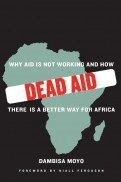
Dead Aid: Why Aid Is Not Working and How There Is a Better Way for Africa by Dambisa Moyo
In India and Africa, syringes are frequently reused, despite the obvious dangers of cross infection and death. Marc Koska talks about his involvement with Star Syringe, which designed and licensed an auto-disable syringe that prevents syringe reuse. He discusses how single-use syringe adoption is progressing in India, and also talks about the activities and aims of his charity SafePoint Trust.
What fuels the creation of a nonprofit organization? In this panel discussion, sponsored by the Stanford Center for Social Innovation, panelists talk about their experiences founding an education-related nonprofit in the United States and a microenterprise in Africa. They explore how they came up with the ideas for their enterprises, how they focused and manifested those ideas, and what smart and not-so-smart choices they made along the way. A portfolio manager adds her insights on what elements make a startup appealing to potential funders.
Can we change the world by engaging in corporate citizenship one hour per week? Al Jisr, and its founder, Mohammed Abbad Andaloussi, are convinced that we can. In this audio interview, host Sheela Sethuraman interviews Analoussi about his efforts to improve education in Moroccan schools by involving businesses. So far, more than 100 corporations have "adopted" some 200 schools, providing volunteers, support, and a real world perspective to students.
Chinese investment in Africa could mean new opportunities in goods, services, and employment.