


Individual Giving
The U-Shaped Giving Profile Explained
Most Americans give roughly the same percentage of their incomes.
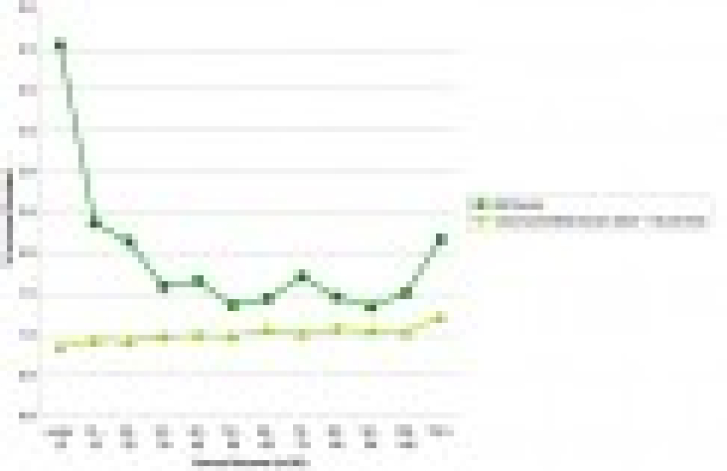
Most Americans give roughly the same percentage of their incomes.

To ensure that baby boomers' wealth does not fall short of its philanthropic potential, Randall Ottinger suggests applying portfolio theory to make wiser social investments.

A growing number of foundations are offering low-interest loans, buying into green business ventures, and investing in other asset classes to advance their missions. To bring about real change, foundations need to make strategic mission investments that complement their grantmaking and leverage market forces.

How can philanthropy have a greater impact on social problems? In this audio lecture, Katherine Fulton, Monitor Institute president, envisions a new era in which philanthropy will reclaim the American dream for communities that have been left behind. In a talk sponsored by the Stanford Social Innovation Review, Fulton reviews how philanthropy has changed over the last 10 years, and how the public and private sectors can work together to create social change.

Based in Silicon Valley, Kiva is an innovative social enterprise that uses the internet to connect lenders with small businesses around the world. In this audio interview, Jessica Flannery talks with Design for Change host Sheela Sethuraman about starting the organization, and reflects on some of the reasons for its rapid growth and success.

Some books ought to be read as pairs. Joel L. Fleishman’s and Martin Morse Wooster’s recent offerings are such a duo, offering sometimes diametrically opposed perspectives on philanthropic successes and failures.
Why winning foundations' special awards is difficult, and how it can be made easier.

Grantees of foundations have little control over which program officer takes their case. Yet program officers make or break grantees’ experiences with foundations. To trigger social change, foundations must give program officers better training, clearer expectations, and regular performance feedback.