


Philanthropy
The Wrong Risks
By paying so much attention to managing their own risks, philanthropists are no longer attending to the marginalized people who risk so much to make change happen.
Understanding why people are poor and innovative ways to alleviate poverty

By paying so much attention to managing their own risks, philanthropists are no longer attending to the marginalized people who risk so much to make change happen.
In the social enterprise sector, community development financial institutions have become important vehicles for advancing the well-being of communities through market-based mechanisms. In this audio interview with Stanford Center for Social Innovation correspondent Sheela Sethuraman, CEO Mark Pinsky talks about what his organization, the Opportunity Finance Network, does to support such institutions in improving people's lives in urban, rural, and reservation-based markets.
The mystery is over: A 10-city comparison of greenhouse gas emissions per capita pinpoints the sources of those emissions.

To enrich the bottom of the pyramid, bankers to the poor should make saving money easier by using the latest findings from economics and psychology.

Let there be light! That's Sam Goldman's motto, and he's taking it around the world. The founder of d.light design talks with Stanford Center for Social Innovation correspondent Sheela Sethuraman about how he is bringing affordable, ecologically sustainable electricity and lighting to billions who are now operating in the dark. In this audio interview, he details aspects of the design, function, marketing, and distribution of the organization's products, as well as the kind of impact the social enterprise is having in some of the most remote, poor areas.
India has one of the highest child mortality rates in the world. This points to an underlying economic problem: poverty. Most poor women in that country simply cannot afford adequate health care. In this audio interview with Stanford Center for Social Innovation correspondent Sheela Sethuraman, Anant Kumar talks about how Lifespring Hospital in India provides quality care to women and children, regardless of their level of income. He talks about how the effort was launched, how it is sustained, and future goals.
Neither markets nor philanthropy alone are sufficient to help the world's poorest people. In this audio interview with host Sheela Sethuraman, Jacqueline Novogratz, founder of the Acumen Fund, describes how a combination of patient capital plus management support is making a difference in tackling poverty in Africa and Asia. Novogratz shares experiences and anecdotes from her recently published book, The Blue Sweater: Bridging the Gap Between Rich and Poor in an Interconnected World.

Why Kiva chose to be a 501(c)(3), what this tax status buys the organization, and how being a nonprofit poses challenges.

We must break the stereotype that low-income communities are unable to help themselves.
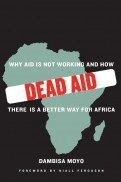
Dead Aid: Why Aid Is Not Working and How There Is a Better Way for Africa by Dambisa Moyo