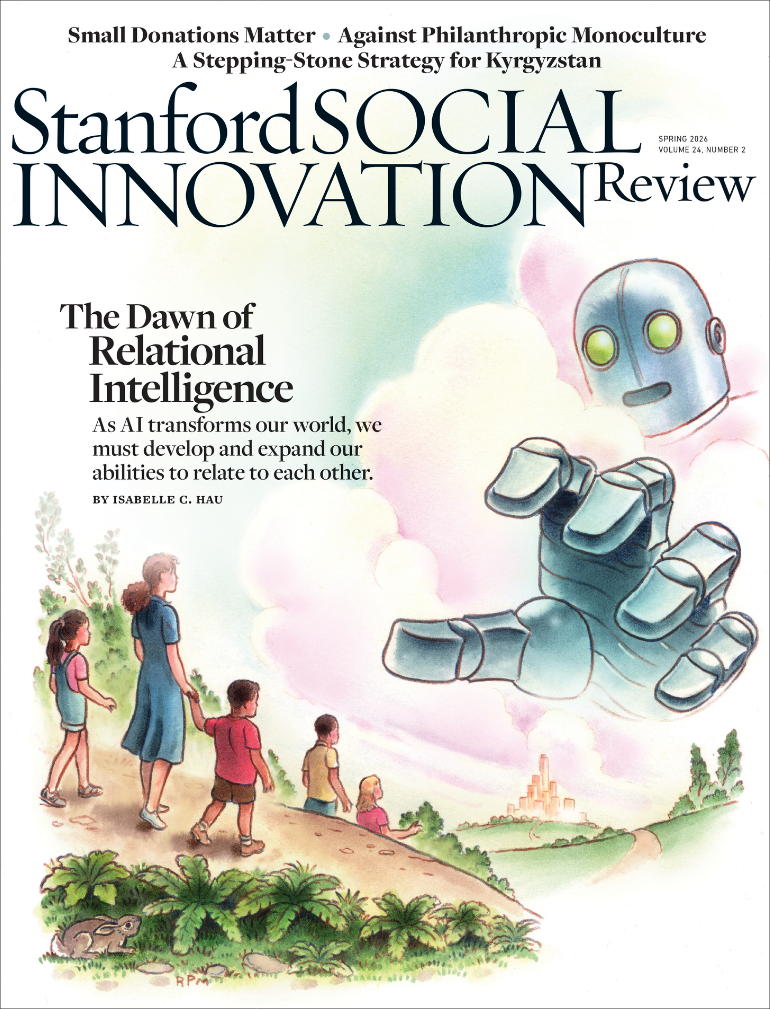


Three Tips for Effective Family Philanthropy
Three tips to make family giving easier.
Three tips to make family giving easier.
It is well worth our time to explore the potential of deviant ideas to positively impact the practices of our field.
Self-governing societies can’t operate on noblesse oblige, and societies that do aren’t truly self-governing.
Google DotOrg launched in 2004 with bold ambitions and almost $1 billion in seed funding. But the results have been less than stellar.

People are more likely to engage in moral behavior when they are in a clean-scented room.


Nonprofits rely heavily on volunteers, but most CEOs do a poor job of managing them. As a result, more than one-third of those who volunteer one year do not donate their time the next year.

Despite spending vast amounts of money and helping to create the world’s largest nonprofit sector, philanthropists have fallen far short of solving America’s most pressing problems. What the nation needs is “catalytic philanthropy”—a new approach that is already being practiced by some of the most innovative donors.

From pink ribbons to Product Red, cause marketing adroitly serves two masters, earning profits for corporations while raising funds for charities. Yet the short-term benefits of cause marketing—also known as consumption philanthropy—belie its long-term costs. These hidden costs include individualizing solutions to collective problems; replacing virtuous action with mindless buying; and hiding how markets create many social problems in the first place. Consumption philanthropy is therefore unsuited to create real social change.

Our economy is in bad shape and will only get worse. So what can fundraisers do to minimize the impact of this difficult period on our organizations, and at the same time maximize income?
Google DotOrg launched in 2004 with bold ambitions and almost $1 billion in seed funding. But the results have been less than stellar.