Design for Change Interviews

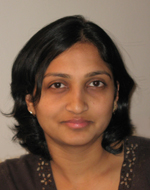
Sheela Sethuraman

Host Sheela Sethuraman, a Stanford Center for Social Innovation correspondent, asks accomplished social entrepreneurs how their organization is designed and managed to create change. As Stanford Center for Social Innovation correspondent, she conducts interviews with accomplished social entrepreneurs around the world about the innovations that are transforming the way people learn.

Sheela Sethuraman has over 14 years of experience in educational design, multimedia production and technology management. As Founder and Executive Director of Eduweave, Sheela has collaborated with local and international organizations, like UNESCO, in adapting and using the digital storytelling curriculum with youth in diverse settings. Sheela was also Project Director for a recently concluded study by Pearson Education to evaluate technologically innovative assessment items based on Common Core State Standards.

Sheela is an accomplished multimedia producer and has created numerous short form videos for various clients. She is currently working on a startup idea - an internet platform for students to create and curate their learning strategies.

Prior to this, Sheela was Director of Technology at CAST (Center for Applied Special Technology), a premier R&D organization focusing on diverse learner needs. She has been a member of various consortiums such as Web Access Initiative (WAI), National Instructional Materials Accessibility Standard (NIMAS) and Open eBook Forum. She is also a seasoned trainer and workshop facilitator.

Sheela has a bachelor’s degree in Engineering from Government College of Technology (India), a master’s degree in Film and Video Production from Mass Communication Research Center (India) and a master’s degree in Educational Technology from Michigan State University (USA).

Latest

Anant Kumar - Healthcare for All at Lifespring Hospitals

India has one of the highest child mortality rates in the world. This points to an underlying economic problem: poverty. Most poor women in that country simply cannot afford adequate health care. In this audio interview with Stanford Center for Social Innovation correspondent Sheela Sethuraman, Anant Kumar talks about how Lifespring Hospital in India provides quality care to women and children, regardless of their level of income. He talks about how the effort was launched, how it is sustained, and future goals.


The Colemans - Improving Healthcare Distribution in Africa

In the late 1980s, when Barry and Andrea Coleman noticed that motor bikes intended for use in the delivery of health care in Africa were not being used because they had broken down—in some cases needing mere $3 oil filters—they knew they had to put their own pedal to the metal. Speaking at the 2009 Responsible Supply Chains Conference at Stanford, they share some of the successes and challenges associated with running Riders for Health, which administers vehicles to keep health supplies flowing efficiently throughout the continent.

Jeff Mason - Improving Philanthropy Effectiveness

How do we know that the nonprofit organizations we support are actually effective? In this audio interview, host Sheela Sethuraman converses with Jeff Mason about his efforts, along with key organizational leaders, to develop an assessment tool that evaluates nonprofit management performances. Their work could become a major contribution to the world of philanthropy.

Jacqueline Novogratz - Patient Capital in International Development

Neither markets nor philanthropy alone are sufficient to help the world's poorest people. In this audio interview with host Sheela Sethuraman, Jacqueline Novogratz, founder of the Acumen Fund, describes how a combination of patient capital plus management support is making a difference in tackling poverty in Africa and Asia. Novogratz shares experiences and anecdotes from her recently published book, The Blue Sweater: Bridging the Gap Between Rich and Poor in an Interconnected World.

Mohammed Abbad Andaloussi - Corporate Citizenship Supporting Education

Can we change the world by engaging in corporate citizenship one hour per week? Al Jisr, and its founder, Mohammed Abbad Andaloussi, are convinced that we can. In this audio interview, host Sheela Sethuraman interviews Analoussi about his efforts to improve education in Moroccan schools by involving businesses. So far, more than 100 corporations have "adopted" some 200 schools, providing volunteers, support, and a real world perspective to students.

Most Popular

Jeff Mason - Improving Philanthropy Effectiveness

How do we know that the nonprofit organizations we support are actually effective? In this audio interview, host Sheela Sethuraman converses with Jeff Mason about his efforts, along with key organizational leaders, to develop an assessment tool that evaluates nonprofit management performances. Their work could become a major contribution to the world of philanthropy.

Rafael Alvarez - Preparing Students to Succeed

While volunteering at a charter school, Rafael Alvarez was confronted with some shocking information—hardly any students in the senior class had plans to attend college. So, in true social entrepreneurial fashion, he decided to match up this under-served market with another under-served market, entry level IT. Talking with Design for Change host Sheela Sethuraman in this audio interview, he explains how Genesys Works prepares students technically and professionally to enter a corporate environment and change their lives.

Brij Kothari - Literacy Through Entertainment

What do you get when you combine a love of Bollywood music videos with widespread illiteracy? Brij Kothari sees an opportunity to make the world a better place. By subtitling popular entertainment, he helps millions learn to read in a fun way. He's also creating multiplatform stories that will be seen on TV, read on mobile phones, and printed in books. Talking to Design for Change host Sheela Sethuraman in this audio interview, Kothari describes how he improves lives by incorporating education into everyday entertainment.

Anant Kumar - Healthcare for All at Lifespring Hospitals

India has one of the highest child mortality rates in the world. This points to an underlying economic problem: poverty. Most poor women in that country simply cannot afford adequate health care. In this audio interview with Stanford Center for Social Innovation correspondent Sheela Sethuraman, Anant Kumar talks about how Lifespring Hospital in India provides quality care to women and children, regardless of their level of income. He talks about how the effort was launched, how it is sustained, and future goals.

Chetna Gala Sinha - International Development Through Women

Microfinance has become a staple of international development. In this audio interview, Chetna Gala-Sinha talks with Stanford Center for Social Innovation correspondent Sheela Sethuraman about how her micro-enterprise development bank and foundation are economically empowering rural women in India. She describes the various tools and services that allow women to become financially independent, provide more adequately for their families, and drive international development.