

Poor in Body
Toxic environments knock impoverished kids’ systems out of kilter.
Toxic environments knock impoverished kids’ systems out of kilter.

In remote rural areas in India, 18 million people suffer isolation and poverty due to their inability to work. In this audio interview, Jennifer Roberts, associate editor of the Stanford Social Innovation Review, converses with D.R. Mehta, whose NGO gives mobility to 20,000 people a year through the fitting of a high-tech prosthetic limb known as the Jaipur Foot. Mehta discusses the genesis of his organization, which makes the prosthesis freely available to the poor.

In developing countries, many tests for infectious diseases never reach the market because there is little financial incentive to pharmaceutical companies to get them there. In this audio interveiw, Alana Conner, senior editor at the Stanford Social Innovation Review, converses with Helen Lee, whose research department at the University of Cambridge has developed tests that allow for the rapid detection—and thus treatment—of diseases in rural settings around the world.

The Population Media Center mixes science with soap operas to protect public health.



Our understanding of community can help funders and evaluators identify, understand, and strengthen the communities they work with.

Two veterans of consumer psychology, marketing, and entrepreneurship provide a guide to using social media for social change.

Instead of pressuring already-stressed individuals to fix themselves, true wellness requires organization-level interventions.
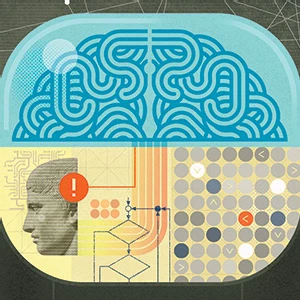
Using artificial intelligence to predict behavior can lead to devastating policy mistakes. Health and development programs must learn to apply causal models that better explain why people behave the way they do to help identify the most effective levers for change.

Two years ago I quit my nonprofit CEO job. I’ve just had the two most productive years of my career.