


Ten Nonprofit Funding Models
With an understanding of these 10 funding models, nonprofit leaders can use the for-profit world's valuable practice of engaging in succinct and clear conversations about long-term financial strategy.

With an understanding of these 10 funding models, nonprofit leaders can use the for-profit world's valuable practice of engaging in succinct and clear conversations about long-term financial strategy.

If you haven't bought a flat-screen TV yet, chances are you're waiting for the prices to drop. Technologies get cheaper by virtue of the "experience curve," a phenomenon where, as companies get better at what they do, costs become lower. In this Stanford Social Innovation Review sponsored audio lecture, Robert Searle argues that nonprofits also can have experience curves, achieving a greater volume of outcomes for the same cost. He discusses the types of outcome metrics on which nonprofits should focus.

Voluntary carbon offsets allow people to invest in projects that allegedly counteract their greenhouse gas emissions. But can voluntary offsets help slow global warming? Or are offsets a way for consumers to buy their way out of bad feelings?
Research shows that men may be more effective than woman at utilizing microfinance investments.
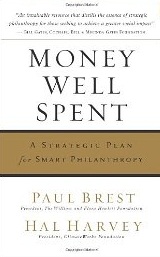
Money Well Spent: A Strategic Plan for Smart Philanthropy by Paul Brest and Hal Harvey


Funders are calling for more program evaluation, but nonprofits are often collecting dubious data, at great cost to themselves and ultimately to the people they serve.

For NGOs, impact comes in different forms and to track the cycles of social change work, we must think across the tangibility and the speed of emergence of change.
With an understanding of these 10 funding models, nonprofit leaders can use the for-profit world's valuable practice of engaging in succinct and clear conversations about long-term financial strategy.

Conventional wisdom says that scaling social innovation starts with strengthening internal management capabilities. This study of 12 high-impact nonprofits, however, shows that real social change happens when organizations go outside their own walls and find creative ways to enlist the help of others.

Unethical behavior remains a persistent problem in nonprofits and for-profits alike. To help organizations solve that problem, the authors examine the factors that influence moral conduct, the ethical issues that arise specifically in charitable organizations, and the best ways to promote ethical behavior within organizations.