


The Future of Family Philanthropy
In a time of complicated transitions and historical opportunities, philanthropic families must reflect on their purpose, pace, power, and practices.
In a time of complicated transitions and historical opportunities, philanthropic families must reflect on their purpose, pace, power, and practices.

As the movement to expand public use of nonprofit data collected by the Internal Revenue Service advances, it’s a good time to review how far the social sector has come and how much work remains to reach the full potential of this treasure trove.
A list of articles for NMI attendees on finding common ground to address pressing social issues.

Attempts to scale a successful, community-based nonprofit may have failed, but what the founder learned in the process is instructive for social entrepreneurs and philanthropists alike.
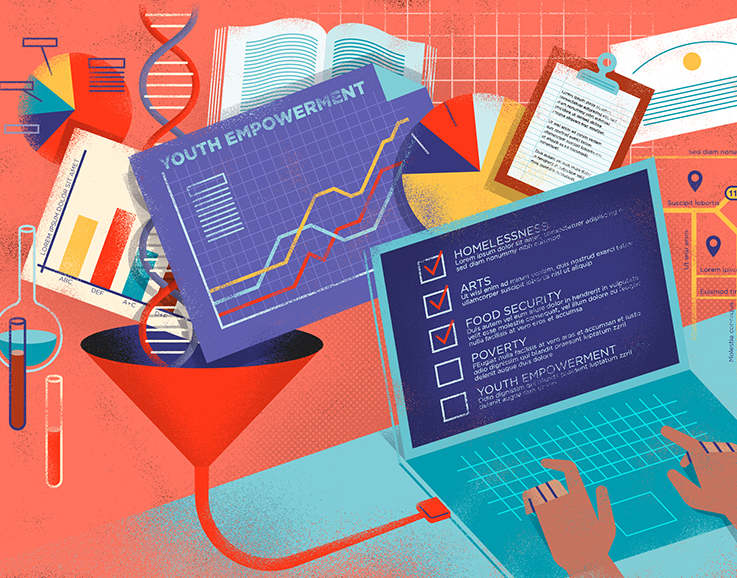
Wouldn’t it be great if you could simply report your program results and get them externally verified by a trusted third-party registry? It’s not as impossible as it sounds—in fact, we’re close.


Funders are calling for more program evaluation, but nonprofits are often collecting dubious data, at great cost to themselves and ultimately to the people they serve.

Large-scale social change requires broad cross-sector coordination, not the isolated intervention of individual organizations.
For NGOs, impact comes in different forms and to track the cycles of social change work, we must think across the tangibility and the speed of emergence of change.

With an understanding of these 10 funding models, nonprofit leaders can use the for-profit world's valuable practice of engaging in succinct and clear conversations about long-term financial strategy.

Social entrepreneurship is attracting growing amounts of talent, money, and attention, but along with its increasing popularity has come less certainty about what exactly a social entrepreneur is and does.