

Developing New Models for Collaboration in Conservation
Three innovative ways groups can work together across organizational fiefdoms and disciplinary siloes to meet conservation challenges locally and globally.

Three innovative ways groups can work together across organizational fiefdoms and disciplinary siloes to meet conservation challenges locally and globally.
Corporate social responsibility is about more than giving money. It’s ultimately about how businesses engage with people.
The integration process following a merger agreement is essential to achieving success.
With its professional management class and army of consultants, the nonprofit sector can sometimes seem isolated from the messiness of civil society, and a new Philanthropic Beltway may have sprung up. But it wasn’t always that way, and it may be time to reclaim an earlier identity as the “volunteer sector,” which is inherently democratic.

How a business built on shared values between company and consumer can use those values to help navigate difficult social justice discussions and drive progress.
Like all of civil society, the American nonprofit sector is a living thing. Its recent evolution has created a large and diverse force for good, but faces distinct challenges ranging from identity to sustainability.
The history of America’s Hispanic community shows how civil society can create a refuge for those excluded from society at large. But allowing such demarcation lines is never good enough. For a civil society to be effective, sustainable, and worthy, it must tie together all who reside in that society.
In both the conservative and progressive imagination, civil society is valued—for opposite reasons—as an arbiter between the individual and the national state. But by viewing civil society as the core of America’s social life, we can see our way toward a politics that might overcome some of the dysfunctions of our day.
Driven by a confluence of powerful secular trends, Americans’ trust in civil society has declined to alarming levels. Without addressing these trends and reversing the loss of trust, the ideal of private action for the public good could be at risk.
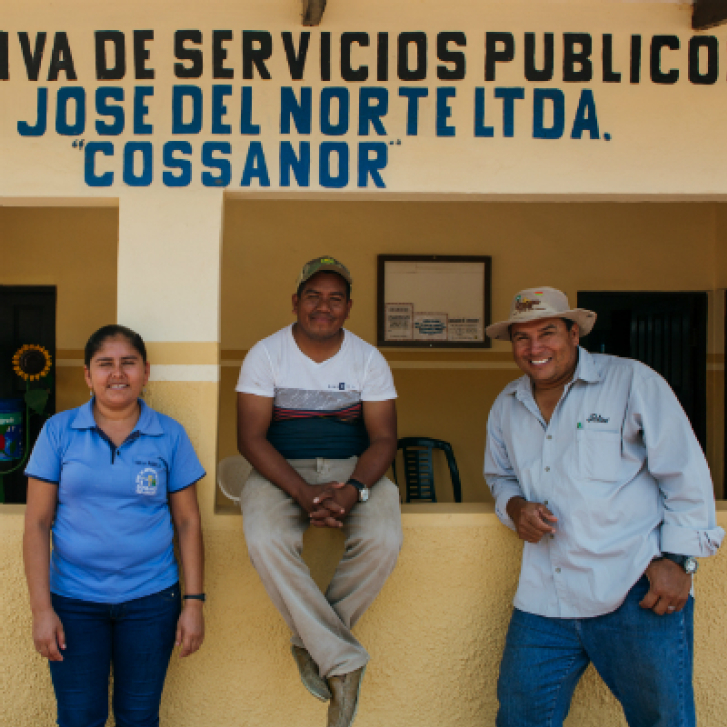
When designing and implementing exit strategies, nonprofits need to put the focus on impact and sustainability, rather than timelines and money spent.