


 (Illustration by iStock/erhui1979)
It is hard to overstate the scale of the biodiversity crisis. Extinction rates are estimated to be 100–1,000 times the natural background rate, threatening up to a million species. Vertebrate wildlife populations have fallen by 73 percent since 1970. And the economic consequences will be profound: The World Economic Forum found that over half of the world’s GDP—or over $44 trillion in value—is moderately or highly dependent on nature. Seventy-two percent of Euro‑area companies are exposed to nature degradation risks and the unaccounted‑for costs of nature destruction. Globally, the unaccounted‑for costs of nature destruction—including impacts on biodiversity, water, health, and climate—are estimated at $10–25 trillion per year. Agriculture depends on pollinators and nutrient-rich soils; energy and fishing rely on intact ecosystems; insurers face mounting losses from climate‑amplified natural disasters. Because biodiversity loss and climate change amplify each other—destroying forests and peatlands releases carbon while warming temperatures push species beyond their climatic limits—it is vital to address these crises together.
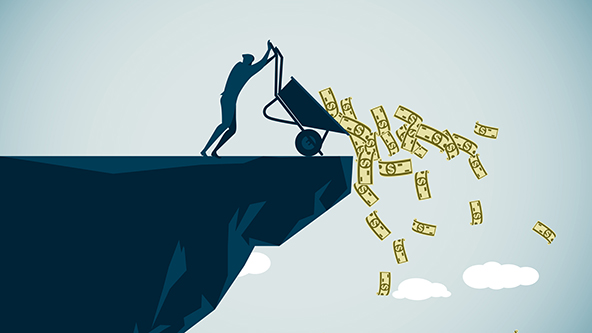
Yet while people everywhere are investing in nature, global philanthropy is failing to meet the challenge. The money is there, but too often it is spent in the wrong places and on the wrong species.
Everyone distributing funds needs to ask a simple question: Where will my funding have the biggest impact?
Historically, philanthropy tends to stay close to home. Donors and foundations prefer local projects where they can see the trees they funded and where investments also boost local quality of life. This is understandable. We want to plant those trees. We want to enjoy their shade.
However, when confronted with a genuinely global problem like species extinction, this kind of localism leaves the most important causes woefully underfunded. Even worse, as Science recently warned, well‑meaning conservation projects in wealthy countries can backfire by pushing land‑use pressure into more biodiverse (and more critical) regions abroad. Researchers from the University of Cambridge and colleagues call it “biodiversity leak” when productive farmland or forestry is rewilded in temperate nations with relatively low species richness, thereby displacing demand for food or timber to tropical areas where ecosystems are far richer. According to their analysis, reclaiming typical cropland in the UK could be five times more damaging for global biodiversity than the local benefits it provides, because production would be relocated to countries with far more threatened species.
Simply put, when viewed against any map of internationally recognized global conservation priorities—highlighting biodiversity hotspots, endemic species, or irreplaceable habitats—it becomes obvious that Western philanthropists must not only invest in their own backyards.
A Better Way
Imagine if funders asked themselves, “Should I invest in a ‘critically endangered’ species, or one of ‘least concern’?”
The easiest way to gauge conservation importance is found in the International Union for Conservation of Nature’s (IUCN) Red List of Threatened Species and the Red List of Ecosystems, the world’s most comprehensive inventory of the global conservation status of species and ecosystems. Yet while the question seems simple, somehow, hundreds of millions are spent annually on species and landscapes listed as “Least Concern,” even while the world’s most rare and unique animals and places remain woefully under-funded.
Science goes further than classifying rarity, however, and provides clear guidance on achieving the greatest conservation impact per dollar. Researchers have identified 16,825 “Conservation Imperatives”—unprotected sites that contain rare, range‑restricted, or threatened species—covering just 1.22 percent of Earth’s land. Protecting them would cost about US $34 billion per year over five years, though 38 percent lie adjacent to existing protected areas, meaning costs could be lower. Another study maps “EDGE Zones,” those covering less than 1 percent of the planet, yet hold a third of its threatened evolutionary history. If you are investing in biodiversity, what better cause is there?
Funding biodiversity where it matters most yields the greatest return on investment. A donation that only plants a few trees in the United States could instead pay a ranger to protect vast tracts of tropical rainforest—safeguarding quantifiably far more carbon, water, and countless species while sustaining local livelihoods. Choosing to protect a critically endangered animal with only a few hundred left in the wild has a far more profound impact than supporting a species commonly found across Europe. In short, investing in global biodiversity hotspots delivers exponentially greater conservation gains.
Across Asia, Critically Endangered reptiles, especially turtles, have been devastated by the demand for their meat and increasingly the pet trade. Some populations now number only in the dozens or low hundreds. Many are highly genetically unique EDGE species (another great, technical barometer to consider your philanthropy) that can quickly rebound with basic protection—especially effective ranger patrols. Several such reptiles, including the Siamese crocodile, are strong candidates for cost-effective rewilding, with projects already underway. What better legacy than halting the extinction of an incredibly unique animal for the cost of an urban greening project in the USA?
Southeast Asia’s rare primates offer the same opportunities. Vietnam’s Cat Ba langur has edged up from roughly 50–60 individuals in the late 2010s to ~80 today; the Tonkin snub-nosed monkey remains at fewer than 250; Myanmar’s Popa langur has ~250 adults; and China’s Hainan gibbon clings on with about 40 individuals. These small, isolated populations can—and should—be protected through intense patrolling, effective habitat management, and community partnerships. On the other side of the planet, the golden lion tamarin shows what’s possible here. With only ~200 individuals left in the 1970s, the species has rebounded to more than 4,000 today. We can save these species.
Species and specific locations aside, at the heart of these opportunities are rangers—the essential planetary health workers who safeguard everything that makes our planet livable and unique. Funding and professionalizing rangers in biodiversity hotspots is often the best dollar-for-dollar investment in nature: Every patrol that prevents poaching, logging, or encroachment protects entire assemblages of species and the ecosystem services people depend on. Investing in rangers is local job development, species protection, community liaisons, carbon sequestration, ecosystem services protection, and more.
It Isn’t Either Or
It isn’t hard to imagine what a more globally minded conservation philanthropy would look like. Take, for example, the generosity of philanthropist Gregory Carr, whose roughly $100 million over 35 years was instrumental in transforming Mozambique's Gorongosa National Park, home to over 100 mammal species, including elephants (Endangered), lions, hippos, and reintroduced species such as African wild dogs (Endangered), as well as more than 500 bird species. One of the most diverse avian areas in southern Africa, the park is a stronghold for critically endangered animals, including the highest density of breeding pairs of White-headed Vultures in the world and several African pangolin species.
In terms of dollars spent, Carr’s investment in Gorongosa is comparable to the currently under-construction Wallis Annenberg Wildlife Crossing in California. But that is where the similarities end. This large green infrastructure project rides the local celebrity status of Griffith Park’s notorious P-22 cougar, helping to connect one isolated population of cougars (classified as “least concern”) to a larger habitat and prevent road collisions. Is this good? Yes. Do I love cougars? Yes. But is it worth the money when we consider the global need to protect significant populations of critically endangered wildlife?
Or, take the example of my fellow Hoosier J. Irwin Miller, the former head of Cummins Inc. and founder of the Cummins Foundation. At a time when most corporations were racing to offshore production and cutting costs by any means, Miller chose instead to double down and invest in his small hometown of Columbus, Indiana. His commitment to responsible corporate citizenship is evinced in the town’s world‑class architecture, public spaces, and public schools. But Miller also understood that businesses cannot wall themselves off from broader societal challenges: While he funded schools and hospitals in his hometown, he fought apartheid abroad. “It is ridiculous ever to forget that you and your business are each implanted in the society of the moment…We cannot ignore the world of our time,” he wrote, “We had better understand it."
Experience has taught me that donors want—and indeed deserve—to feel connected to the results of their support. Investment requires trust, and though I work with nonprofits in Southeast Asia to create compelling reports and provide personalized updates with beautiful images, it is hard for someone halfway around the planet to really feel the impact, or to truly trust the results. This is the great challenge of all nonprofits operating in the global south: to gain trust and share the power of their impact with distant funders. Large foundations hire local or regional staff to help monitor their on-the-ground impact, but most philanthropists don’t have sufficient staff for this. However, I have personally seen time and again how one vacation and site visit can be a transformational experience for a funders’ priorities. Why not choose your next vacation around a global biodiversity hotspot and see firsthand all that your funds could protect?
For too long, the West’s consumption patterns have had an outsized impact on the world’s biodiversity hotspots. Our philanthropy must reflect that responsibility. Ask your fund advisors, your board, and yourself: Where can we make the most impact? If we do that, we can avert extinctions, sustain the ecosystems that support our global economies and climate, and ensure that life’s marvelous tapestry remains intact for future generations.
Read more stories by Ben Valentine.