


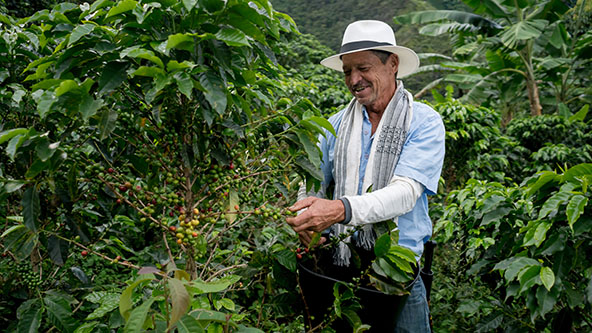
 (Photo by iStock/andresr)
The current global economic system has failed to foster a livable society for all. Today’s capitalist model largely prioritizes the interests of external investors enabling exploitative models that have widened wealth gaps and degraded our natural ecosystem. Even where there is overall economic growth, continued concentration of ownership prevents ordinary working people, and marginalized communities in particular, from reaping the benefits of their contributions, reinforcing power imbalances and social inequalities.
Transform Finance’s recent SSIR article “Investing in Enterprises That Work for Everyone” and accompanying report threw a much-needed spotlight on how Alternative Ownership Enterprise (AOE) models can help redistribute economic value, looking at the landscape in the United States. These business models rebalance economic (and often governance) rights away from outside investors to other stakeholders, such as workers and producers who drive value creation in the business. By shifting power in this way, AOEs aim to create a more equitable distribution of wealth and foster inclusive economic growth.
The Global South
We should not assume that the potential of these models is confined to the United States and other advanced economies. In fact, the Global South is where some of the most stunning, large-scale success stories in alternative ownership have played out, particularly in the agri-food sector. Some of these span multiple decades, others are new enterprises that have been set up with alternative ownership at the core. Indeed, AOE models across the Global South have proven successful in shifting entire sectors toward greater inclusion, particularly of smallholder farmers and other groups that have been historically marginalized.
In Kenya, many decades of colonial exclusion of smallholder tea growers were reversed with the creation in the 1960s of what would become the Kenya Tea Development Agency (KTDA), the world’s second-largest tea exporter and one of Kenya’s top foreign exchange earners, owned by over 600,000 tea growers. This enabled native Kenyan smallholders to move from being dependent laborers working on plantations owned by large colonial enterprises to becoming masters of their own destiny and reaping the rewards appropriately. Research suggests that the growth and success of KTDA over the decades has provided a strong boost to rural economic and social development in Kenya, complementing the role played by more inclusive banks (such as Equity Bank).
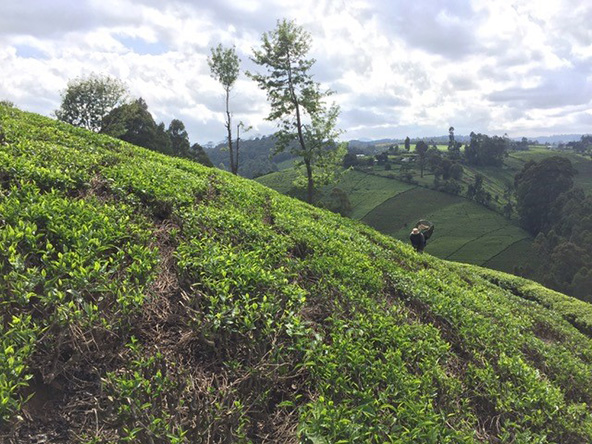 Tea smallholdings that supply KTDA factories in Kenya. (Photo courtesy of Harvey Koh)
Meanwhile, one of India’s top consumer food brands, Amul, belongs to the Gujarat Cooperative Milk Marketing Federation (GCMMF). From humble beginnings as a single cooperative in newly independent India in the 1940s, GCMMF has become India’s largest dairy processor with revenues of over $4 billion in 2016. Unlike in typical agricultural value chains, this has brought substantial rewards in terms of higher and more stable prices, and profit distributions, for the 3.6 million dairy farmers who own the business.
In Colombia, Promotora de Cafe Colombia (Procafecol), the company behind the iconic Juan Valdez brand, has turned a highly fragmented coffee sector into an international export success story benefiting the 95 percent of coffee growers that are smallholder farmers. Set up in 2002 by the National Federation of Coffee Growers of Colombia (FNC) to promote Colombian coffee, Procafecol has expanded the scope of Colombia’s coffee industry from commoditized beans to value-added products sold in domestic and international markets. The company is over 90 percent owned by the FNC, which itself is owned by more than 500,000 smallholder farmers. This structure has implications for the company’s governance, which combines a professional management team with a board in which two of five seats are allocated to FNC farmer representatives. It also implements better market practices that reflect those encouraged by the FNC, including fair trade practices, technical assistance to farmers, and an enhanced focus on youth and female farmers.
Similar efforts to advance these ideas continue today driven by individual enterprises, philanthropy, and government. Babban Gona is a Nigerian business that has more than doubled earnings for some 70,000 smallholders involved in maize, rice, and soybean production. In 2015, Babban Gona gave those smallholders a 30 percent ownership stake in the company through a Farmer Trust (each Trust Group comprises of three to five farmers with a leader who receives business and agronomy training). A farmer representative now sits permanently on the company’s board with full voting rights, including the ability to veto any changes that take Babban Gona away from its inclusive and equitable agribusiness model.
In Rwanda, 5,000 smallholders are now 100 percent owners of the country’s largest tea factory in Mulindi, supported since 2012 by the Wood Foundation and Gatsby Africa who have invested in factory modernization, field expansion with high-yielding clones, upskilling farmers and local management, providing corporate governance support, and diversifying the end-market base into premium markets. Within a decade, this work led to greenleaf production growing by a third and a doubling in farmer gross incomes, including $3.1 million in bonuses paid over and above their greenleaf income.
However, we must also note recent efforts that failed to get off the ground, such as two (in Southeast Asia and Latin America) that the authors advised on. In Southeast Asia, an “inclusive economic zone” scheme was proposed that would attract private investment into the country’s poorest regions on condition that workers were given substantial ownership stakes. Despite positive early soundings with investors, the initiative foundered when the minister championing this idea abruptly resigned from his post. In the Latin American case, several regional conglomerates championed a model for community ownership of renewable energy assets in off-grid zones. Although a version of the initiative has progressed, the focus shifted toward a more traditional public-private partnership as the donors involved were uncomfortable with deploying grant funding outside of their existing models and with the perceived risks of community groups lacking business experience.
Key Lessons Learned
These stories powerfully demonstrate the potential of AOE models across the Global South, where they can transform entire sectors for greater inclusion and stronger economic success, while also highlighting some challenges. From these we can draw some key lessons:
1. Strong business acumen and professional management teams are drivers of success. An alternative ownership enterprise success story is, first and foremost, a business success story. KTDA and GCMMF both have strong track records of R&D, manufacturing, logistics, and marketing innovation that have enabled them to excel in the marketplace.
At a pivotal point in GCMMF’s formative years, a bright young manager named Verghese Kurien (later hailed as the “milkman of India”) arrived and went on to lead the federation through decades of innovation and growth. At the beginning of the KTDA journey, colonial tea companies were contracted to provide management and—crucially—train native Kenyan talent in the first decade of operations, making up for exclusion from management in the colonial era. This stands in contrast to the experience in Kenyan smallholder coffee and Tanzanian smallholder tea efforts of the same era that failed in large part due to the absence of competent, professional management (though this is not the whole story—see #5 below).
2. The alternative ownership structure should reinforce the key business drivers of success, as well as tie it back to intended impact. Giving substantial ownership to smallholder growers entrenches the impact purpose of these inclusive agribusinesses, but what is less obvious is that these mechanisms can also help the business outperform.
In the tea sector for instance, grower practices in tea husbandry and picking are critical to producing high-quality tea that fetches higher market prices, thus creating a strong linkage and powerful feedback loop for the smallholder grower-owners of KTDA. This is heightened by the fact that growers actually own shares in their local tea factory (which in turn own KTDA as a whole), and that each factory sells its finished product separately at the Mombasa export auctions, with weekly reports on the tea prices achieved by all factories then circulated to all grower-owners. This creates a strong feedback loop between local quality production and local financial rewards.
Likewise, GCMMF and Procafecol were able to achieve in their structures a combination of local dynamism in production and scale advantage in marketing. For example, in the case of Procafecol, the winning strategy was to balance a strong focus on enhancing local production quality (by equipping farmers with technology to maximize output) with a simultaneous expansion into international markets. Competition and performance are just as essential to businesses of this kind as they are to all other businesses.
3. Access to flexible capital at the right points is key to supporting the AOE model. At Babban Gona, concessional debt from donor-funded lenders had been instrumental in growing their smallholder base fivefold between 2013 and 2015, without excessive pressure for returns. This then set the stage for the Bill & Melinda Gates Foundation to provide $4 million grant in 2015 that funded the issue of shares to smallholders, giving them a 30 percent ownership stake in the business.
At KTDA, patient capital investments from the World Bank and CDC (now British International Investment) were key to building a smallholder-centric steward ownership model from inception, with the transition to grower ownership in 2000 through the issuance of shares to growers as part of an inclusive privatization process.
Meanwhile, Procafecol was able to leverage ongoing state funding derived from a small export tax on Colombian coffee to establish and maintain the enterprise in its early years. Additionally, an investment from the International Finance Corporation helped the company launch its coffeehouse retail outlets in Colombia.
4. Historically, game-changing moves have been supported by larger societal shifts and state intervention. Our emphasis on the business aspects of success should not obscure the reality that these big wins were hard-fought in the face of unfavorable established norms and power structures. Social movements and political leadership often assist with success and effectively reset the rules of the game.
For example, Jomo Kenyatta’s “Africanisation” agenda in post-independence Kenya (in which KTDA begins its journey) was an uphill struggle in a national and global economy under continued colonial domination. In KTDA’s first decade, native Kenyans were brought in to train as new managers, but they endured racist attitudes and vitriol from their superiors even as they did so.
GCMMF’s success has also clearly been aided by state intervention, such as the ban on butter imports in the 1960s following a currency crisis, effectively a form of infant industry protection that allowed Amul to gain an initial foothold in the butter market in India. And inclusion in the GCMMF model gradually widened to encompass the lower Hindu castes and minority religious groups over time, in line with shifting societal norms.
It should be noted, though, that championing by a single political leader without a wider base of support carries the risk of disruption due to leadership reshuffling and may also weaken the overall likelihood of success.
5. While strong political support can help, direct state control and interference have been a recipe for failure. It is always worth asking: Which efforts failed and why? As mentioned above, the Kenyan smallholder coffee and Tanzanian smallholder tea initiatives failed even as KTDA thrived. These stories were characterised not only by lack of management competence (as described above) but by high levels of unhelpful political interference, and these factors were very much related: Governments are generally not well-placed to directly manage businesses. In Kenyan coffee cooperatives, the government appointed managers for political, not business, reasons. Direct administration by government bodies also meant that farmer payments were delayed and investments stalled whenever there was pressure on public-sector finances. A World Bank report on Tanzanian tea from 1983, when the sector was near its (modest) peak, recounts a litany of problems, including non-replacement of broken machinery, power failures, feeder roads left in disrepair, inadequate use of inputs and new seed varieties, and even likely falsification of payment records.
Smallholder Production (1965-2000)
 Click to enlarge (Source: Beyond the Pioneer)
Recommendations
AOEs have the potential to enable economic development in a more inclusive and equitable way across the Global South. We see a tremendous role for philanthropy, impact investors, international development actors, and governments to drive these potentially transformative changes. Here are a few ideas for what could be done:
- Consider the potential for AOEs (e.g., worker ownership, grower ownership) when embarking on enterprise-led economic inclusion initiatives. For instance, instead of focusing only on creating jobs for local communities, initiatives could give local workers a stake in the businesses they contribute so much to. As shown in the cases described above, and in line from research evidence in the Global North, AOE structures can actually strengthen business resilience and performance, while deepening economic inclusion and equity impacts.
- Tailor investment instruments and grant mechanisms to achieve this. Appropriate investment can help build and grow more AOEs, and flexible and patient catalytic capital could be especially helpful where there are new models, markets, or geographies involved, allowing them to tolerate high risk and ensure that impact aspects are prioritized. There may also be scope to support conversion of mature businesses to AOE models facilitated by specialized investment funds such as is being done in the United States, which could also simultaneously address the problem of limited exit routes for business owners in much of the Global South. Meanwhile, philanthropic grants could directly support the issuance of shares to workers and communities where appropriate, as we see in the example of BMGF and Babban Gona. This requires going beyond traditional grantmaking models to develop creative solutions that can support AOE models while responding to funder requirements. Funders with more experience in these areas should share their learning with others so that the field can advance more broadly.
- Support the development of effective management and governance to enable business success, bringing in new people and fostering new capabilities where needed. While the ownership model itself is crucial, effective business management is essential to enabling the level of scale necessary to ensure long-term success. Experienced professional management with strong business acumen is needed to help AOEs (like any other business) navigate complex business environments, scale operations, and achieve sustainable growth. Where such management talent exists within AOEs, they should be empowered; where they are absent, they need to be brought in so they can lead as well as nurture future cohorts of management. Specific capacity building may also be needed to support needs ranging from management skills at different levels, to effective governance mechanisms and structures. When tailored to the specific needs of an enterprise, this support can be critical in accelerating the success of AOEs, as seen most recently in the case of the Rwandan tea factory supported by the Wood Foundation and Gatsby Africa.
- Collaborate with governments and other societal stakeholders to embed inclusivity in the “rules of the game” where possible. Strong political leadership, supportive policies, and a conducive economic environment have been instrumental in the large-scale success stories. Collaboration with governments can help secure favorable regulatory frameworks, access to necessary resources, and protection against external threats. Additionally, engaging with societal stakeholders, including local communities and civil society organizations, can ensure that AOEs are aligned with broader social and economic goals, thereby enhancing their legitimacy and impact. Building a wider base of support for initiatives, rather than relying on an individual champion to push things through, could be very helpful not only in getting efforts started but also in fostering the conditions for this kind of systemic change to succeed.
These stories from the Global South demonstrate that achieving business growth and commercial success while centering inclusion and equity is possible. Alternative ownership enterprises have already proven that they can be successful at scale, and it is not a question of whether but rather where and when we should be enabling the next wave of transformative AOEs, with the right talent, support, and investment. We look forward to working with others to advance this work across the Global South in the months and years to come.
Read more stories by Harvey Koh & Laura Amaya.