


 (Illustration by Formative)
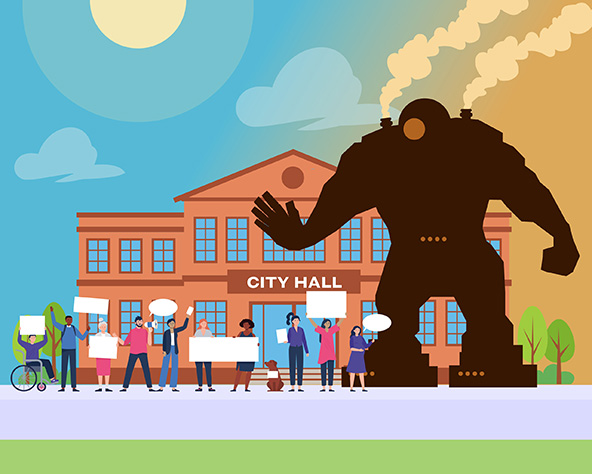
The Trump administration's rollback of environmental regulations and shameful pandering to the oil and gas industry pose significant harms, from rising greenhouse gas emissions to the degradation of lands and public waterways (including the water we drink) and worsening public health. But anyone who cares about American values should be equally troubled by the underhanded ways in which this government is executing its pro-fossil fuel agenda, often with zero input from the public and apparent disregard for the rule of law. It’s become clear that the fight to protect our communities and the environment is also a fight to uphold our democracy.
Robust public participation in government decision making is a pillar of a healthy democracy and self-governance, and it benefits all Americans regardless of their political leanings. By giving individuals a say in decisions affecting their lives, the government is more equipped to enact the desires of the American people. It’s a process that, at its best, recognizes the rights of individuals and incorporates local expertise to produce outcomes that are more equitable and that better meet the needs of their communities. This extends to environmental decisions that impact public health, like where energy infrastructure should be built, how much pollution is allowed in our water and air, and what controls to put in place to ensure companies follow the rules. The Trump administration, in collaboration with the oil, gas, and petrochemical industries, is further entrenching America's reliance on fossil fuels and endangering the health of millions by undermining public participation in environmental decision making at every level.
The Democracy Emergency
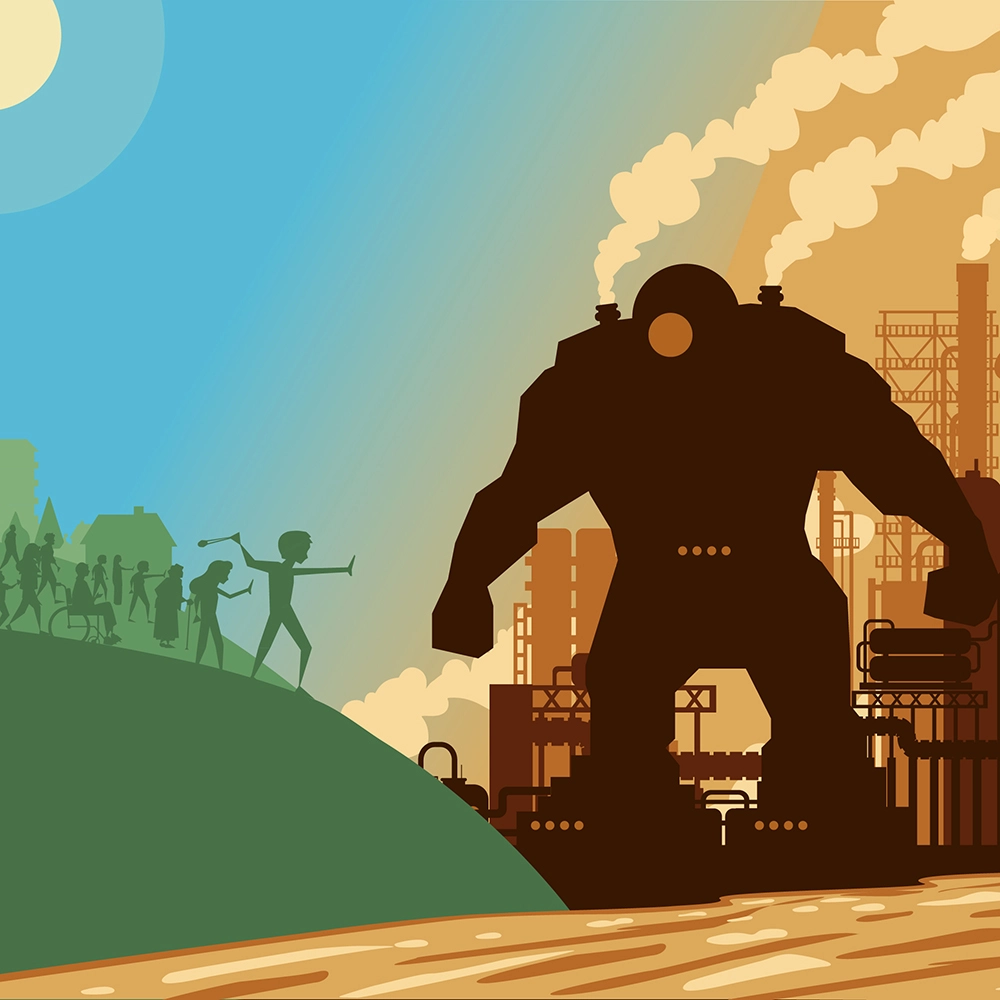
In January, President Trump issued a declaration of a sham “energy emergency,” which the government is using to justify efforts to bypass environmental laws and public engagement to fast-track fossil fuel projects, while simultaneously attacking and blocking clean energy projects. This has been followed by a systematic dismantling of the bedrock National Environmental Policy Act, which for 55 years has required government agencies to conduct detailed environmental reviews on federal projects or policies and to consult the public before making decisions. Over the years, there have been hundreds of NEPA success stories. The NEPA process has protected the Colorado River watershed from radioactive waste, stopped coal mines from being built near culturally and environmentally significant areas, and preserved wetlands from expansive highway projects.
Recent changes revoking the White House Council on Environmental Quality’s NEPA rules by the Trump administration mean that federal agencies are likely to dramatically limit transparency around the real impacts of new projects and the ability of impacted communities to comment on them. For example, the Department of Interior recently announced that fossil fuel energy projects will be reviewed and approved within 28 days under new “emergency” procedures, compared to one to two years previously. And the GOP’s “One Big Beautiful Bill Act,” signed into law in July, allows developers to pay to speed up the NEPA review process.
In addition to these attacks on NEPA, the administration is making it harder for Americans to weigh in on other permit decisions. For example, the Army Corps of Engineers marked hundreds of fossil fuel projects across the country that will impact America’s wetlands for fast-track permitting, which could dramatically limit the amount of time for public review of these projects. Unfortunately, these examples barely scratch the surface of the actions taken in just a few short months that could silence our voices.
These changes have been branded as a win for “permitting reform,” and indeed, improvements to permitting procedures are possible. But it shouldn’t be at the expense of the democratic process. The Trump administration’s actions cut the American people out of important decisions that affect them directly, while protecting polluters from public scrutiny. And we’re already seeing the impacts at a local level. For example, companies can now simply email the Environmental Protection Agency if they want to be exempt from rules that regulate toxic air pollution, without undergoing any kind of public review. So far, President Trump has granted exemptions to more than 160 coal-fired power plants, petrochemical plants, and other industrial facilities, giving them permission to delay reducing emissions of mercury and known carcinogens that downwind communities are forced to breathe.
Public participation can’t be truly meaningful unless there is easy access to, and transparency around, the information the government relies on to support a decision. This is why we’re seeing attacks at both the state and federal level on climate science and restricted access to scientific data that might contradict the administration’s pro-fossil fuel policies. The EPA eliminated its key research and development arm and shuttered its office of Environmental Justice and External Civil Rights. The agency also scrubbed from its website several climate and environmental justice data and mapping tools that illustrate that disadvantaged communities and communities of color are disproportionately affected by fossil fuel-driven harms to health and the environment. While oil and gas expansion threatens all Americans, it is these communities that will continue to suffer the most.
Companies can now simply email the [EPA] if they want to be exempt from rules that regulate toxic air pollution, without undergoing any kind of public review.
For a taste of what the crackdown on science and data looks like at a state level, consider what’s happening in Louisiana: Republican Governor Jeff Landry signed the Louisiana Community Air Monitoring Reliability Act (CAMRA), which effectively bans communities from monitoring and sharing air quality pollution data unless they use EPA-approved monitors that cost tens or hundreds of thousands of dollars per monitor. CAMRA goes well beyond just hampering public participation. We believe it is a clear violation of the First Amendment. And it will let petrochemical and fossil fuel giants off the hook while more people across Louisiana’s notoriously polluted Cancer Alley breathe toxic air.
The CAMRA law was signed last year, before Trump’s second term began, but could have come straight out of the administration’s playbook. Landry has called climate change a “hoax,” praised Trump’s energy policies, and elevated fossil fuel executives to key environmental roles in government. This outsized oil and gas business influence has had a chilling effect on science and speech in the state, with one university researcher seemingly silenced for exposing how the petrochemical industry’s activities pollute Louisiana’s natural resources and another saying she was banned from speaking about her work on the industry’s racial bias in hiring and disproportionate health impacts on Black residents. This could be a preview of what’s to come in other states.
Looking beyond US shores, the administration’s fossil fuel kowtowing could also weaken international efforts to rein in the industry. We saw this recently with the failed United Nations talks on limiting the production of plastic, which the oil and gas industry sees as an important source of future growth as the world moves toward renewable energy.
Fighting Back
There are several effective ways to fight back. First, environmental advocates can use the courts to challenge the legality and constitutionality of government actions. Trump’s record in court during his first term was dismal, and he has racked up a staggering number of early losses in the past several months. Already 15 states have filed a lawsuit against the Trump administration’s “energy emergency” executive order, calling it “unsupported and unlawful.” Another lawsuit challenges the EPA’s air pollution exemptions for coal-fired power plants. Louisiana’s CAMRA law faces a legal challenge from a coalition of environmental and community groups.
Ordinary Americans have the right to enforce our environmental laws in court when the government fails to do its job. These “citizen suit” enforcement actions can hold oil, gas, and petrochemical companies that break the law accountable and stop illegal pollution. One such suit against ExxonMobil was recently successful, and the oil giant was ordered to pay $14.25 million for violating the Clean Air Act at its Baytown, Texas, oil refinery.
While our democracy was far from perfect … this new wave of attacks threatens to take our country backwards.
Another way to resist is by supporting grassroots community engagement efforts that put pressure on decision makers. Local organizations are showing real courage during these challenging times and are continuing to fight to protect their neighborhoods. Fossil fuel proponents hope concerned residents will give up and stop insisting on compliance with the law, but we can’t let that happen. Keep showing up and making noise–at permitting meetings, regulatory proceedings, and beyond. This includes voting at all levels and protecting voting rights. Local organizations are critical partners to mobilizing communities to taking these actions, but they need more partners and resources to do that work at the scale we need. The administration may try to shut us out, but we can create spaces in our towns that uphold democratic values by exercising our constitutional rights and demanding the government listen to the will of the people. For example, just last fall in St. Rose, Louisiana, more than 200 people showed up to a public comment hearing to oppose a massive ammonia plant after substantial efforts by local advocacy groups to mobilize the community. The meeting location, chosen by the Louisiana Department of Environmental Quality, only held 60 people, and the outsized public presence forced the state agency to shut the meeting down.
Philanthropists should prioritize these local resistance efforts at the pace and scale necessary to respond to the democracy emergency. Taking the government or a wealthy corporation to court when they break the law is an expensive endeavor, after all. And local organizers can use every last penny when cultivating robust spaces for public participation in their communities. Significant financial resources could also help level the playing field for communities that are courageously standing up to industrial giants. For example, funding could allow residents to retain their own technical experts to secure stronger environmental permits that reduce pollution or invest in an alternate vision for their town that promotes the health, safety, and well-being of community members.
America’s democracy is a work in progress. Nearly 250 years since our nation’s founding, we continue to grapple with the enduring legacies of injustice and oppression that plague our systems of governance. While our democracy was far from perfect before Trump came along, this new wave of attacks threatens to take our country backwards, whether that’s by silencing speech and science, watering down public participation, or further disempowering vulnerable communities in the name of industrial gain. Now is the time to demand more equity and inclusivity, more public influence over important decisions that impact the health and well-being of our communities. When those in power actively undermine the rule of law and abandon their responsibilities to the people they serve, civil society must step up to claim our rights and uphold democracy.
The Funder Collaborative on Oil and Gas partners with the Environmental Integrity Project, The Descendants Project, and other groups dedicated to protecting the democratic rights of all Americans and standing up to the oil and gas industry. To learn more or work with us, contact Sarah Brennan at [email protected].
Read more stories by Jen Duggan & Joy Banner.