


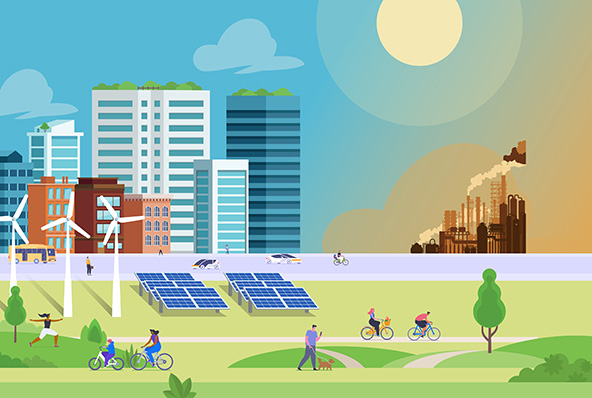
 (Illustration by Formative)
At first glance, Texas and Puerto Rico appear almost nothing alike. They are thousands of miles from one another, and have vastly different economies, cultures, languages, and political landscapes. But they do have at least one thing in common: Both are hotspots for the renewable energy revolution that is well underway, despite recent regulatory rollbacks and growing anti-renewable rhetoric in Washington. What’s happening in Texas and Puerto Rico shows the potential for renewables to meet the United States and its territories’ electricity demand and to improve the lives of residents and businesses in the process.
The United States’ grid is struggling to keep up with energy demand. Decrepit fossil fuel-dependent infrastructure is failing at a time when severe weather events are becoming more frequent and, in many places, energy demand is rising. All of this means higher energy bills for consumers and increased chances of power outages. Adding more fossil fuel-powered plants is neither an affordable nor a speedy fix. Parts for gas-fired power plants are in short supply with wait times for turbines topping five years. This equipment crunch has sent construction costs for new gas plants skyrocketing. Proponents of nuclear energy are pushing for new small modular reactors, but those are extremely expensive to build, present important safety risks, and aren’t expected to come online until the 2030s at the earliest. It doesn’t make sense to consider these as an alternative.

Meanwhile, wind, solar, and dispatchable battery storage are growing fast enough to meet the challenge. Their infrastructure is quick to deploy, cost-effective, and better for the climate, addressing both national and global environmental concerns. Crucially, renewables can improve the overall quality of life for all Americans because they’re more reliable and affordable compared to their oil- and gas-powered alternatives. It’s these clear benefits that have helped renewables make big gains in both Texas and Puerto Rico despite political headwinds.
Success in Texas
Texas is the energy capital of the country, producing and consuming more oil and gas than any other state and serving as a hub for the fossil fuel industry. As its population expands, the deeply conservative Lone Star state’s energy demand is rising. Yet for the last decade, nearly all of that increased demand has been met with new renewable energy. Wind and solar alone accounted for more than 40 percent of the electricity generated in Texas during the first half of 2025.
Some anti-renewables politicians and pundits have tried to single out solar and wind as being to blame for power outages that have downed Texas’ grid in recent years when, in fact, renewables have made Texas’ grid more reliable and resilient during extreme weather. Case in point: The state’s main grid operator, the Electric Reliability Council of Texas (ERCOT), recently projected the chance of rolling blackouts during this summer’s peak energy demand was just 0.3 percent, down significantly from last year’s 12 percent, thanks largely to new battery storage installations that make it possible to store solar and wind power and deploy it when needed.
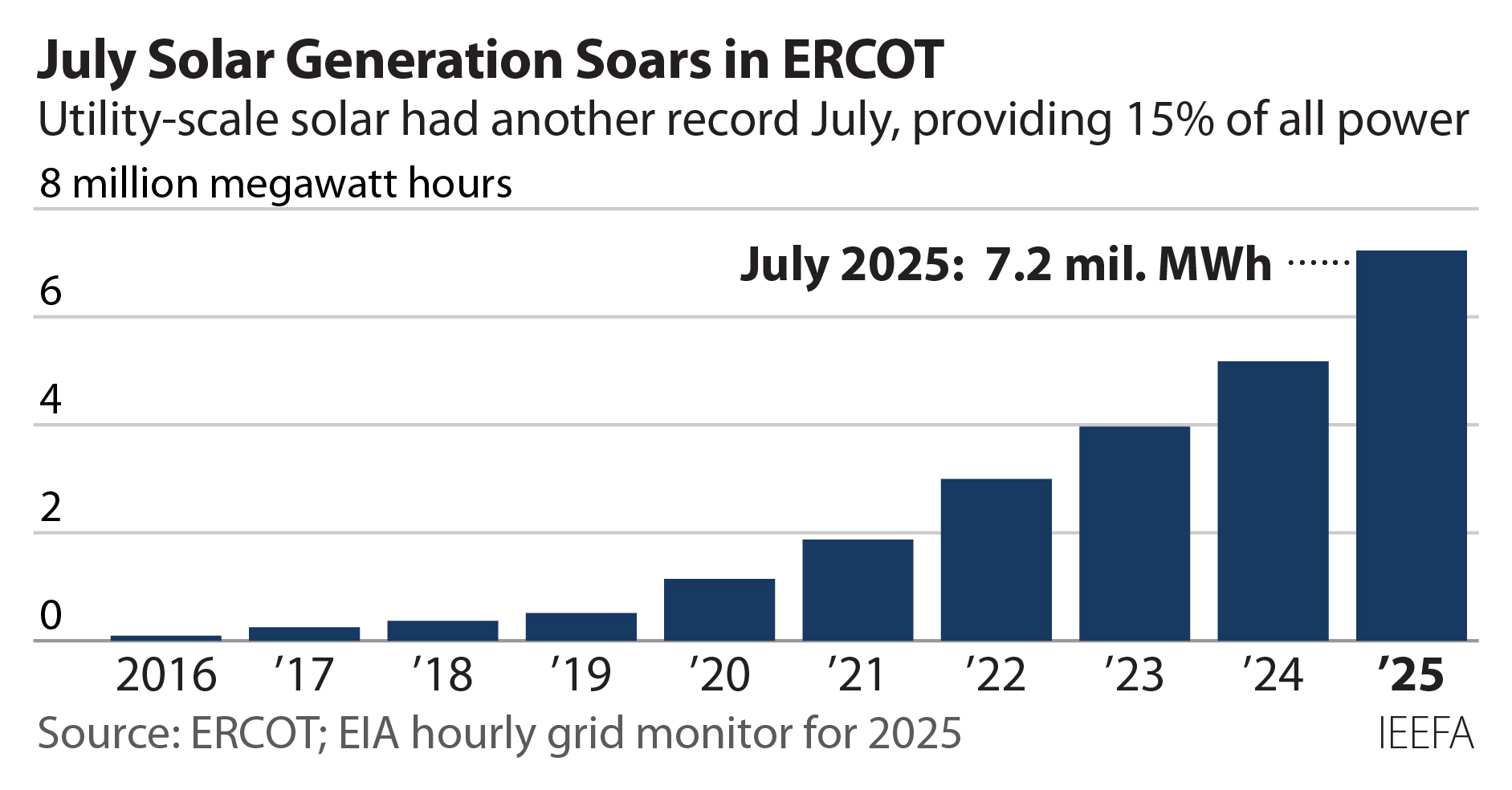
Renewables are also saving Texans money: The state’s electricity prices are 24 percent lower than the national average. Is it any wonder the majority of Texans, regardless of political party, are now in favor of renewables as part of an “all of the above” energy mix? The state’s legislature is on board, too: In June, lawmakers across party lines resoundingly defeated a package of three bills that would have kneecapped renewables’ growth. If this kind of transformation is possible in Texas, it’s possible in any state.
Puerto Rico’s Solar Boom
Puerto Rico has one of the least reliable central energy systems. The archipelago’s power grid, which is heavily dependent on fossil fuels, is failing due to a chronic lack of investment, crippling debt load, incompetent management, and repeated hits from powerful hurricanes. The government handed control of its power plants to a subsidiary of private gas firm New Fortress Energy in 2023, deepening the commonwealth’s long-term reliance on fossil fuels and exacerbating the grid crisis. The result? Puerto Rico’s population is plagued by regular, widespread, life-disrupting blackouts including island-wide outages in December 2024 and April 2025.
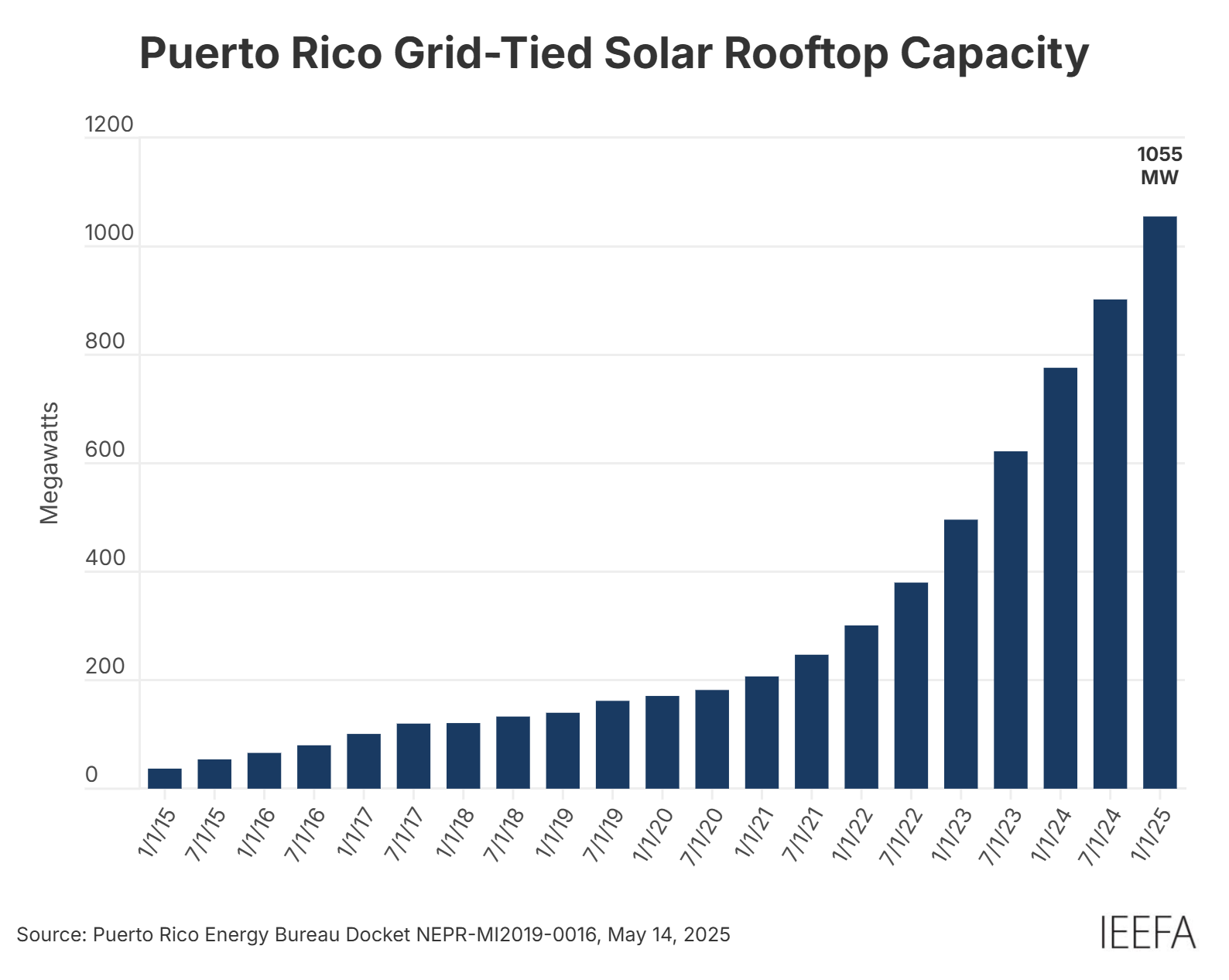
Many Puerto Ricans have responded by taking matters into their own hands, adopting rooftop solar at a rapid pace, even without any kind of government support or incentives: On average, 4,700 systems are installed each month, and most of those include battery storage. As of March 2025, about 10 percent of households across the island had rooftop solar, representing over 1,100 megawatts of installed capacity, a five-fold increase since 2021. Although rooftop solar has been adopted mainly by households that can afford the cost, communities and organizations have also come together to facilitate rooftop solar and storage installation in marginalized sectors and homes with elderly or medically compromised residents. This has already benefited Puerto Ricans whose lives may well depend on access to reliable electricity during grid outages and hurricanes. Indeed, decentralized rooftop solar and storage are helping to bolster community resilience and equity throughout Puerto Rico.
Although this progress is remarkable, it is just the beginning. Analysis shows Puerto Rico’s renewable energy potential could meet—and exceed by more than tenfold—the commonwealth’s current and projected total annual electricity demand through 2050. Distributed solar and storage paired with larger solar installations at commercial spaces and brownfields could do the job, completely dismantling the government’s narrative of the need for the so-called “natural gas bridge.” Moreover, there is potential for cost savings for residents. As a result of the hurricanes that have affected Puerto Rico since 2017, the federal government allocated over $16 billion to rebuild the energy sector. If part of this money were to be directed toward expanding distributed solar and battery systems across Puerto Rico, energy costs could come down to less than 15 cents per kilowatt hour in 15 years (compared to about 25 cents per kWh now).
The Roadblocks Ahead
The Trump administration has already taken a series of actions overtly aimed at bolstering fossil fuel production and hindering renewables development. These have included scrapping fundamental environmental regulations, cancelling grants that had previously been awarded for community solar projects, and rolling out new permitting policies that unabashedly target solar and wind. While it is true the energy transition is underway, these roadblocks threaten to slow it down dramatically, to the detriment of Americans’ health and prosperity.
Just one example as it applies to Texas: The GOP’s One Big Beautiful Bill Act, signed into law in July, will make it easier to lease new oil and gas projects and harder to roll out new renewables. One credible estimate projects that this reconciliation bill could result in the cancellation of 77 gigawatts of planned renewable generation capacity and 3 GW of battery storage capacity in Texas over the next 10 years. The result will be higher power prices as the grid is forced to rely more heavily on gas-fired generation. On top of that, domestic gas prices are being driven higher as a result of the boom in gas exports. Specifically, Texans are likely to end up paying $220 more per year for their electricity bills by 2030, and nearly $500 more by 2035.
In Puerto Rico, the Trump administration has diverted millions of dollars in federal recovery funds originally intended for solar deployment toward fossil fuel infrastructure. The territory’s new governor, Jenniffer González Colón, recently eliminated Puerto Rico’s goals of reaching 40 percent renewable energy by 2025 and 60 percent by 2040 and has been pushing for more gas-fired power plants. Meanwhile, the federally-appointed Fiscal and Oversight Management Board for Puerto Rico is threatening to dismantle net metering, the policy that compensates solar owners at the retail rate for electricity exported to the grid. These moves, along with proposals for a 400 MW gas plant and multiple gas conversion projects, stand as the greatest threats to renewable energy in Puerto Rico right now.
The benefits of clean energy are well documented and have become manifestly evident for many Americans, but it is no longer enough to simply promote renewables and hope policy catches on. The energy transition may well be inevitable on a global level. But here in the United States, the world’s largest economy, the oil and gas industry in partnership with the Trump administration is fighting tooth and nail to slow it down to a pace that will make it impossible to address the deadly health, economic, and environmental damages of climate change.
Those best placed to fend off these threats are the local organizations across the country whose power is rooted in deep knowledge of and connection with their communities. Supporting these advocates will strengthen their abilities to block handouts to the oil and gas industry in Texas that chip away at the cost advantage of renewables and to fight fossil fuel firms and their new polluting and taxpayer-subsidized infrastructure proposals in Puerto Rico and the Gulf Coast. For these and the countless other resistance efforts springing up in cities and states, ongoing support will be critical to success.
The Funder Collaborative on Oil and Gas works with CAMBIO, the Institute for Energy Economics and Financial Analysis (IEEFA), and other organizations advocating for clean, affordable, and sustainable energy that better meets community needs. To learn more or work with us, contact Sarah Brennan at [email protected].
Read more stories by Sandy Buchanan & Ingrid M. Vila-Biaggi.