


 (Photo by istock/Narai Chal)
When the East African Crude Oil Pipeline was proposed across Uganda and Tanzania, grassroots advocates turned to Fossil Fuel Atlas, a global mapping portal, to illustrate its potential impacts. Without being able to show the predicted environmental destruction from the proposed pipeline, the outcries of local environmental groups were too theoretical and difficult to explain. However, together these organizations created maps clearly demonstrating how the pipeline would damage Africa’s largest lake, Lake Victoria, traverse a seismic zone, and violate the international Ramsar Convention on wetlands: these visualizations strengthened the movement against the project, helping to raise red flags with international investors, community groups, and policymakers.
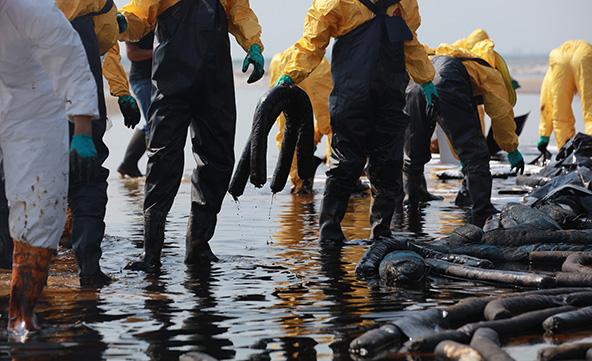
Meanwhile, in the Philippines, the Center for Energy, Ecology, and Development (CEED) has been working to protect the Coral Triangle, a marine biodiversity hotspot known as the “Amazon of the seas.” The region experiences oil pollution from leaky oil wells, tanker shipwrecks, and bilge dumping from transiting vessels—pollution that would remain largely invisible in the vast ocean without advanced monitoring technologies. CEED partnered with Earth Insight and SkyTruth’s Cerulean, an AI-powered tool that tracks marine oil pollution, to analyze the risks of fossil fuel expansion in the region, where 16 percent of the more than 600 marine protected areas overlap with oil and gas blocks that are mostly in the exploration phase. Their analysis revealed how increased tanker traffic and the risk of oil spills could devastate marine life and local livelihoods, bolstering ongoing efforts to oppose new oil and gas development.
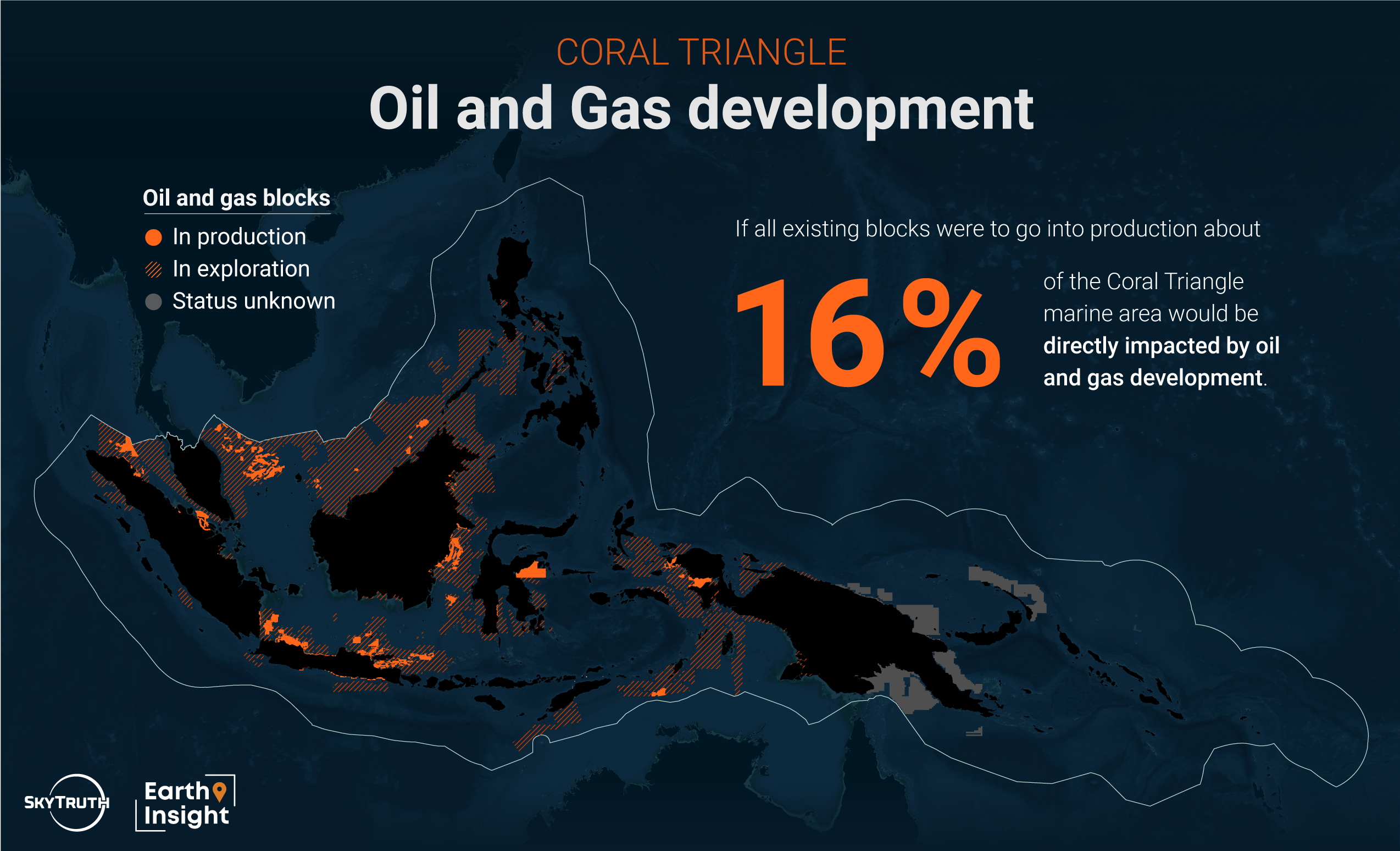 This graphic shows the oil and gas blocks in the Coral Triangle. The solid orange blocks are in production, the striped blocks are in exploration and the status of the grey blocks was unknown as of publication. (Click to enlarge)
For decades, the fossil fuel industry has deployed vast amounts of capital to access the best information technologies, deployed by an army of lobbyists, PR firms, management consultants, and attorneys, putting the industry at a significant advantage over the environmental movement (as with the decades-long disinformation campaign on climate action). But today, a burgeoning movement of data and technology providers are turbocharging climate action to hold polluters accountable, making previously invisible environmental problems not only visible but actionable. And unlike the fossil fuel industry’s proprietary data, this information—from oil spills to methane emissions—is freely available, offered with assistance on how to use it for maximum impact. The environmental movement will never have the same capital as the fossil fuel industry, but as satellites and AI have vastly improved their monitoring capabilities on oil and gas operations, philanthropic investments and advances in data collection and analysis are driving unprecedented transparency, chipping away at the industry’s technology and intelligence advantages.
Revealing Hidden Pollution
Manually detecting a single ocean oil spill used to take experts days, if not weeks. Today, detecting oil spills from offshore oil and gas operations can be nearly instantaneous: Global Fishing Watch (GFW), for example, is mapping all human activity at sea, including offshore oil infrastructure and tankers, enabling users of SkyTruth’s Cerulean to quickly pinpoint sources of spills using GFW data. Advocacy groups like Oceana gather data from tools like these to empower their legal and advocacy efforts to spotlight risks from dangerous oil and gas expansion.
Similarly, although methane accounts for roughly 30 percent of rising global temperatures, it is invisible and odorless and extremely difficult to monitor. Recently launched satellites by Carbon Mapper and MethaneSAT are revealing hidden methane leaks from oil and gas operations around the world, detecting super emitters responsible for a disproportionately large share of global emissions. MethaneAIR, a data collection effort via aircraft, has already revealed a striking contradiction to the fossil fuel industry’s claims that methane emissions are either under control or being significantly reduced.
Making Data and Tech Actionable
Data and technology alone do not guarantee impact, of course. To unlock their full potential, data and technology providers are shifting their focus toward outreach, capacity building, and partnerships to support advocates, particularly in frontline communities disproportionately affected by oil and gas activities. These communities—often low-income and marginalized—face the dual burden of being most impacted by environmental degradation while having the least access to resources to fight back.
Making these resources accessible begins with ensuring that frontline advocates know they exist. Outreach and partnerships with community-based organizations are essential, as many of these communities are unaware of the tools and data available to support their efforts. Providers must proactively engage with frontline communities, ensuring tools are accessible, user-friendly, and available in formats that meet diverse needs. This may involve developing mobile-first platforms, offering multilingual support, or rethinking user interfaces to accommodate limited internet access—all of which can lower barriers to access and amplify the voices of those most affected.
Even when data is accessible, making sense of it can be daunting. For decades, information about oil and gas operations has been buried in regulatory filings, environmental assessments, and technical reports. Transforming this data into actionable insights often requires hands-on expert guidance. Campaigns and individual advocates benefit from direct support to interpret complex datasets and accurately translate insights into meaningful action. This support must be culturally sensitive and community-specific, honoring local knowledge and expertise. Lived experiences provide essential context for data interpretation—insights that no satellite or algorithm can fully capture. Turning data into compelling narratives is another critical step in driving action. Abstract statistics and maps rarely inspire change, but when transformed into compelling narratives and visualizations—by working with journalists, communicators, and community leaders—data can drive action.
Investing in free, open-access data and tools and ensuring interoperability between tools can help advocates seamlessly connect diverse datasets—such as satellite imagery, methane leak detections, and oil spill detections—to create a holistic view of the impacts of vast oil and gas operations.
Finally, the democratization of these technologies offers an opportunity to shift power to impacted communities. But building tools in isolation or solely in tech circles risks unintentionally replicating the harmful dynamics of the industries we are working to hold accountable. Meaningful consultation with impacted communities coupled with partnerships that honor local expertise ensures that these tools can empower those most affected by environmental harm.
Challenges and Future Directions
The Trump Administration is pursuing an aggressive rollback of environmental protections, while fossil fuel production is set to more than double the levels required to limit warming to 1.5°C by 2030. But climate action is here to stay, which means the environmental movement will need accurate and freely available tools to expose and address the harms caused by the fossil fuel industry. Well-resourced environmental philanthropies, NGOs, and technologists must prioritize investing in free and accessible data and technologies; getting these powerful tools into the hands of environmental defenders who need them most; investing in expertise to accurately interpret data; and making these tools actionable in regulatory, legal, and advocacy strategies.
By increasing access to crucial information, we're leveling the playing field and empowering communities to take ownership of their future. At this critical juncture, we must use all of the resources at our fingertips to remain vigilant, speak truth to power, and hold polluters accountable.
Read more stories by Mitchelle De Leon.