


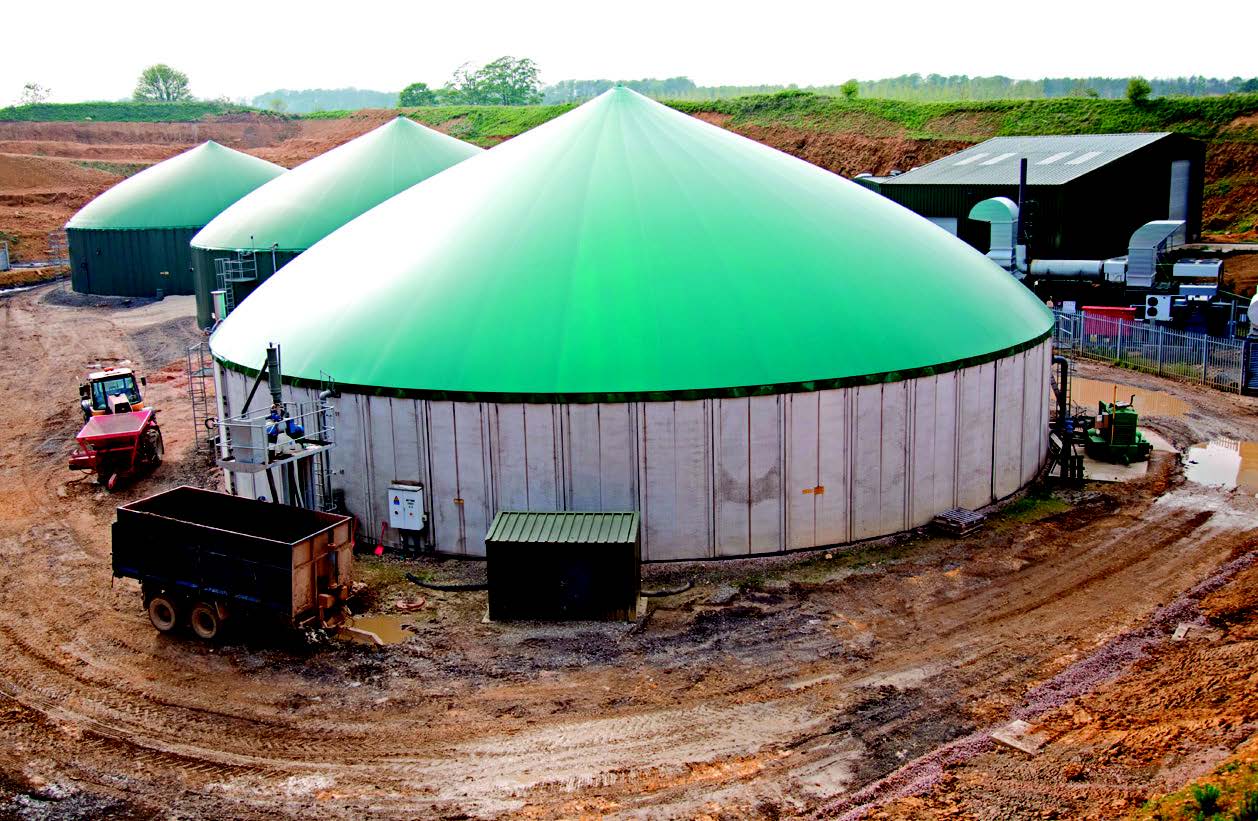
 More than hot air: A biogas waste digester unit in the Cotswolds, United Kingdom.
Whether through neighborhood tree plantings or creek cleanups, community environmental stewardship efforts can help get citizens excited about using collective action to protect the environment.
Now an entrepreneur wants to encourage community stewardship in a new way, by opening a renewable energy plant this spring in Keynsham, a small town in southwest England. The facility, run by the company Resourceful Earth, will be able to produce biogas from the food scraps of local residents, farms, supermarkets, food manufacturers, and restaurants.
“The local provision of energy can engage communities in a very constructive way,” says Nicholas Stubbs, an architect based in the neighboring town of Bath who started researching the possibility of such a plant more than 15 years ago. “You can really help them understand their role in the opportunity to generate renewable energy.”
Biogas is produced through anaerobic digestion, a process in which bacteria break down organic waste such as food or animal manure in an oxygen-free tank. The biogas then can be burned to produce electricity.
Stubbs set off on his journey to create the plant after concluding that curbing emissions of the powerful greenhouse gas methane from landfills filled with rotting food was a more cost-effective way to slow climate change than designing green buildings.
Stubbs estimates that the plant will be able to produce 80 percent of the amount of energy needed to power the homes of Keynsham’s 16,000 residents, while using only about 10 percent of the food waste that the community currently produces but doesn’t compost or convert to biogas. (Rather than directly powering Keynsham, however, the plant will be injecting energy into the national grid, meaning that it can be delivered anywhere in the country.)
Although the growth of biogas plants has been slow in the United States, they are flourishing in the United Kingdom. The number of anaerobic digestion plants (not counting those focused on sewage treatment rather than other waste) has grown from fewer than 50 in 2009 to more than 300 in 2016, according to the UK Anaerobic Digestion and Biogas Association. “We’ve reached the tipping point for anaerobic digestion,” says anaerobic digestion expert Steve Last. He credits this progress to UK government subsidies for anaerobic digestion plants, which allow qualifying facilities to receive money back for the renewable energy they produce, and to recent EU policies that call for a reduction in the amount of municipal waste sent to landfills and increased use of processes such as recycling, composting, and anaerobic digestion.
Choosing to break down food waste to produce electricity rather than letting it sit in landfills does more than just decrease emissions of methane into the atmosphere. After anaerobic digestion converts most of the material into biogas, some leftovers remain. This material—known as digestate—is nutrient-rich and can be reused as fertilizer to spread on farmland.
Using food waste for these purposes also diminishes the risk of leaks from landfills. “About half of the gas coming out of food waste is going into the landfill, and it’s damaging if it leaks into the organic matter below,” says Last. “In addition to methane, there’s also ammonia, which is bad for the environment no matter how long it sits there.” Landfills also can leach these toxic substances into groundwater, which can then run off into lakes, rivers, and streams—and eventually end up in residential drinking water.
Stubbs believes that when Keynsham residents sort through their garbage and separate out leftover morsels that can fuel the plant, that extra step will help them see his vision of a virtual “community grid”—even if the electricity is technically going to the national grid. The plant has the potential to create a sense of “psychological ownership of a local facility by a local community,” he says. “This has been shown to improve people’s engagement with the importance of energy production—and therefore the responsible use of it.”
Read more stories by Kristine Wong.