


 (Photo by iStock/221A)
Debates about greening the economy often focus on what corporations can do to become more sustainable, but that focus is misguided. The rules and incentives that guide the market still reward environmentally destructive enterprise. As a result, the voluntary efforts of corporations to be greener never will lead to a sustainable economy. At best, they can make business less unsustainable. Because the market’s rules and incentives can’t be changed by individual companies, people outside business need to intervene. How can environmentalists work most effectively to green the economy?
In the United States, environmentalists have tried to reform the corporate world since 1970, but their approach has changed over time. At first, they rarely engaged directly with corporations. Instead they sought to pass legislation that would force industry to limit pollution. I call that strategy plan A. Then in the 1980s, during the presidency of Ronald Reagan, the environmental movement faced a backlash. Activists were forced to defend the landmark anti-pollution legislation of the 1970s, and they succeeded. But Reagan changed the terms of political debate. He made government the problem, not the solution. Passing regulatory legislation to address environmental problems became unlikely. As a result, many environmentalists in the late 1980s and early 1990s sought alternative ways to accomplish their goals. Three plan B strategies became prominent—and all involved engagement with business.
One strategy was targeting the practices of specific companies. The trendsetter was a campaign in the mid- and late-1980s by the newly formed Rainforest Action Network that forced Burger King to stop buying beef from Central America, where ranching was a major cause of deforestation. Targets since then have run the gamut from industrial conglomerates to banks that finance environmentally destructive development. Those campaigns usually rely on media shaming, but sometimes seek to mobilize consumers or investors.
Another strategy was partnering with corporations to lessen their environmental impact. In the first high-profile partnership, the Environmental Defense Fund worked with McDonald’s from 1989 to 1991 to reduce wasteful packaging. Though initially anathema to many activists, collaborating with companies has become routine for many environmental organizations, and the goals have become more ambitious. Many partnerships aim to help retailers or manufacturers green their supply chains.
The third strategy was creating voluntary mechanisms for guiding market behavior, especially certification systems. The Forest Stewardship Council provided a template in 1993. Activists and timber traders both sought a way to recognize wood from sustainably managed forests, and they created the not-for-profit council to set standards and certify suppliers who complied. The Marine Stewardship Council was formed four years later. Now several hundred certification systems shape the markets for dozens of commodities and products. Though not one-on-one partnerships, those efforts all involve collaboration between environmental organizations and businesses.
The strategic shift reshaped the landscape of environmental advocacy. In the mid-1980s, a handful of environmentalists established not-for-profits with corporate engagement as their raison d’etre, and those kinds of organizations have become common. Older groups were less sure about the best way forward. Though a few saw tremendous promise in the new strategies, most environmental organizations viewed them as expedients. Plan B might allow some progress until the political climate once again became favorable to regulation. After decades without major new federal regulatory legislation, however, the argument for engaging with business has become harder to dismiss. Now engagement can seem the only realistic approach.
But plan B won’t take us to the promised land. The three engagement strategies are limited in principle. They also have failed in practice to remake the market. Environmentalists need a plan C.
The Limits of Plan B—In Principle and in Practice
The booster argument for plan B basically is three-fold. Organizing a shame campaign, forming a working partnership, or creating a certification system takes time, but once executives make a decision to do something, change can come with a speed almost inconceivable in the political realm. Engagement with multinational corporations allows action at a global scale—and often the results cannot be achieved through international diplomacy. Big brands also have leverage. They can press their hundreds or thousands of suppliers to change, with far-reaching consequences.
All that is true. Environmentalists can point to legions of successful engagements. In response to activist campaigns, jewelry sellers began to look for alternatives to “dirty gold.” Chiquita worked with the Rainforest Alliance to reduce pesticide and water use on its banana plantations. Environmental groups have helped to build the market for a variety of alternative goods. Home Depot now sells certified wood, and Walmart sells Marine Stewardship Council seafood. But the changes go beyond specific practices and products. Plan B has changed some basic assumptions. Many fewer businesses now feel free to ignore the environmental impacts of their supply chains. Ditto for climate change. Thousands of firms publicize their climate emissions through the not-for-profit Carbon Disclosure Project—and they use a methodology worked out jointly by the World Resources Institute and the World Business Council on Sustainable Development.
But the long list of successes is misleading. Even the most transformative efforts haven’t truly transformed business. None of the three plan B strategies compel action. Executives decide what to do, if anything. That’s obviously true with partnerships and certification programs. But even the most aggressive shame campaigns just give corporations new incentives to reform. Because all three strategies depend on voluntary action, they inevitably are limited, although the extent of the limitation varies according to the circumstances. A close look at the strategies makes those limits clear.
Campaigns
Though shame campaigns arose out of the movement tradition of grassroots organizing, they required new strategies and tactics. They weren’t about citizens challenging the politically powerful. Activists needed to convince executives that harming the environment no longer made business sense. Protesting at a company’s headquarters rarely worked. Instead, activists looked for ways to demonstrate that a refusal to reform would have real costs. Sales might decline. The company’s brand might be tarnished. Recruiting and retaining talented employees might become harder. Investors might be spooked—and that might lower the stock price of publicly owned corporations.
Campaigns always tried to draw media attention to harmful conduct. Some campaigns called for boycotts of company products, while others urged shareholders to pass pro-environment resolutions at annual corporate meetings. Bad publicity by itself could be compelling. Campaigns sometimes hit home in the most intimate way. The children of CEOs challenged their parents to stop destroying the planet. But business leaders rarely acknowledged the pressure publicly—and even if they wanted “to do the right thing,” they needed to make a business case. That usually meant arguing that environmental activism might change the behavior of consumers, employees, or investors.
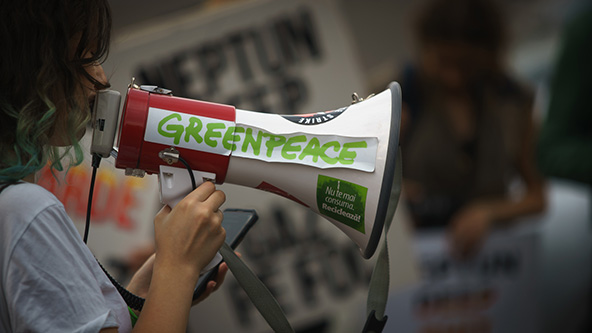 Some companies—and even some sectors of the economy—are beyond shaming. (Photo by iStock/lcva2)
For activists, the choice of target was the first strategic decision. Because the ultimate hope of many campaigns was to change sectors of the economy, not just individual companies, targeting market leaders was common. If the dominant player met a demand, competitors might follow. Another strategy was to attack the most flagrant culprits. The more shameful a company’s conduct, the easier mobilizing opposition might be. But if the target truly was an outlier, a campaign might have limited impact: No one else might feel threatened. Campaign strategists also recognized that some companies might be better positioned to change. Their business model might not depend as much as their competition on a destructive practice—or their executives might be more open to reform because they took pride in a reputation for innovation or social responsibility.
The denouement of a campaign ultimately depended on a business calculus. Though companies sometimes did everything that activists hoped, that wasn’t common. Executives like to act on their own terms. Even if they concluded that they couldn’t ignore a controversy, they often responded indirectly. They might promise to address a different issue. Instead of working with activists, they might form a partnership with a more business-friendly environmental organization. Sometimes companies found ways to turn a potential liability into an opportunity. In every case, they sought to avoid doing anything that would lead to a competitive disadvantage.
The long list of successes is misleading. Even the most transformative efforts haven’t truly transformed business.
The Rainforest Action Network campaign against Burger King inspired environmentalists, but it didn’t demonstrate that direct confrontations with business could lead to industry-wide change. Burger King was the only fast-food chain buying beef from Central America. RAN’s activism might have ensured that no other company would even consider doing that, but the only immediate impact was a concession by Burger King.
The first transformational campaign came a few years later. In April 1990, StarKist promised to sell only dolphin-safe tuna, and Bumblebee and Chicken-of-the-Sea immediately followed Starkist’s lead. Their decisions came just before the 20th anniversary celebration of Earth Day, which drew attention to green consumption. But the real force for change was a hard-hitting campaign by the Earth Island Institute. Because the three companies accounted for almost 80 percent of canned-tuna sales in the U.S., their promises were stunning. But the victory still wasn’t complete: Only the American market changed.
Unfortunately, the save-the-dolphins campaign also was exceptional. All the stars aligned. Tuna was not a necessity, and fear of mercury contamination already had hampered sales. Another controversy could be catastrophic. School children—a key tuna demographic—were horrified by Earth Island Institute’s graphic video of dead dolphins in trawling nets. If the industry didn’t act, federal regulation was a strong possibility, because dolphins already had legal protection. The concentration of the US market increased the chance that targeting a single company could have far-reaching impact, and market leader StarKist was a near-perfect target. Its prominent advertising made an expect-the-best pitch, so executives felt pressure not to fall short of consumer expectations in any way. Unlike Asian-owned Bumblebee and Chicken-of-the-Sea, StarKist was a division of the US conglomerate Heinz, which might fear the dolphin campaign would harm some of its other leading brands. Even the one reason why the company might have refused to change ultimately made the campaign more successful. The cost of switching to dolphin-safe tuna was higher for StarKist than its competitors, but that competitive disadvantage had perverse effects. The company’s executives worried that Bumblebee or Chicken-of-the-Sea would act first. That would undercut Starkist’s reputation as the highest-quality brand. Because the number of eco-minded consumers seemed to be growing, the first to act might gain market share. So StarKist bit the bullet—and because the competitors could make the switch more cheaply, they didn’t hesitate to follow.
The Computer Take Back Campaign was more typical. Launched in 2001, it had the support of a variety of organizations, including the Silicon Valley Toxics Coalition. The aim was to make companies address the issue of electronic waste. If manufacturers were responsible for the fate of old machines, they would have a powerful incentive to design their products for refurbishment and recycling. Dell—the campaign’s prime target—agreed to set up a model take-back system. Hewlett-Packard also stepped up. But other companies were unmoved, including Apple.
Going after Dell was shrewd. Unlike its competitors, Dell only sold directly to computer users. It knew how to contact everyone with its equipment. Institutional buyers also were the company’s core business, and they bought in bulk. So a take-back program was much easier for Dell, logistically. Because the company was the top manufacturer of PCs, activists could hope for a domino effect. The campaign benefitted as well from a stroke of good fortune: CEO Michael Dell had an environmentalist daughter. Once he realized that she cared about waste, he admitted, he did too. Deciding to take the initiative gave Dell a powerful incentive to lobby for mandatory take-back legislation, though his efforts weren’t successful: Because competitors would have to spend more to reclaim their computers, a government mandate would give Dell a competitive advantage.
Apple, in contrast, saw no advantage in addressing the issue of electronic waste. It made a one-of-a-kind computer as well as the trend-setting iPod, and its customers were almost fanatically loyal. Much of its business model came from the world of fashion, with product unveilings that were highlights of the year for the company’s devotees. Why would it do anything to draw attention to the wastefulness of the buy-replace-throwaway cycle? In rankings of the industry by the Take Back Coalition in 2005 and Greenpeace in 2006, it was in the middle and at the bottom. When Apple finally decided to do more to address environmental concerns, it focused on improving the energy efficiency of its products. That was a better fit with the company’s image as a maker of sleek, cutting-edge machines.
The lesson of the take-back campaign is easy to miss. Some companies—and even some sectors of the economy—are beyond shaming. That hard truth is implicit in the strategy of astute activists. They try to figure out which companies are most likely to be moveable. But that decision has a flipside, only occasionally acknowledged: Attacking some targets would be a waste of time. When Greenpeace wanted to push supermarket chains to sell sustainable seafood, they protested at Trader Joe’s and ignored Winn-Dixie. The Trader Joe’s demographic was hip and environmentally conscious, while Winn-Dixie was based in the conservative southeast, where Greenpeace had little cache. The Rainforest Action Network campaign to stop coal companies from removing entire mountaintops was even more explicitly about leverage. The coal companies wouldn’t budge, so RAN went after the biggest banks that provided capital to the industry. At least some banks might stop funding mountain-top mining. But the odds that every bank would agree still were near zero. Because companies don’t all have the same incentives, even the most successful campaigns can’t make across-the-board change.
Partnerships
Partnerships initially were uncomfortable, even fraught, with carefully negotiated terms. A handful of groups were pioneers. The Environmental Defense Fund offered to help corporations solve problems. So did the World Wildlife Fund, Conservation International, and the World Resources Institute. Because business leaders didn’t trust environmentalists, the offers were tough sells. Once partnerships became more accepted, however, the initiative often came from executives. Now many companies consider partnerships a necessity. Walmart, for example, has had help from nonprofits on almost all of its sustainability initiatives.
The main benefit for the corporate partner usually was technical. Though leading businesses now have sustainability staffs, that wasn’t true in the 1990s or the 2000s. Consulting firms also had little experience in helping manufacturers or retailers become greener. If a company decided to try to reduce its environmental impact, a partnership with a nonprofit might be the best way to meet that goal. Environmental groups made the learning curve less steep. Some even provided their expertise for free: They were keen to have a seat at the table, but they wanted to preserve their independence.
Partnerships also gave environmental initiatives credibility. Corporate commitments to become greener often were met with skepticism. What would ensure that promises weren’t empty? Working with environmental groups helped avoid charges of greenwashing. The credibility of partnerships was especially important for initiatives that extended far into the future. Watchdogs were more likely to accept a company’s claims of progress if the reputation of a nonprofit also was on the line.
 Walmart has had help from nonprofits on almost all of its sustainability initiatives.(Photo by iStock/TennesseePhotographer)
At first, the environmental partners mostly suggested alternatives to controversial methods of doing business. They also pointed to eco-efficiency win-wins—ways of reducing impacts while cutting costs or improving productivity. To help companies manage climate risks, NGOs provided tools for measuring emissions. They offered advice about ways to make supply chains more sustainable. Occasionally they helped build markets for greener products. But again, that only mattered if a business already had a compelling incentive to change.
The simplest way to assess the efficacy of partnerships is to consider the work of the Environmental Defense Fund. In the last 25 years, EDF has collaborated with almost a third of the nation’s biggest corporations. Its partners typically are industry leaders, and many are companies that more confrontational environmental groups have targeted. EDF even opened an office in Bentonville, Arkansas in 2007 to allow day-to-day collaboration with Walmart—the dominant force in both groceries and big-box retailing.
The McDonald’s partnership provided proof of concept. The door was open because of a grassroots “McToxic” campaign led by the Citizens Clearinghouse on Hazardous Waste. EDF offered to help the company meet the polystyrene-clamshell challenge in a way that made business sense. In return, it hoped to set a precedent for the fast-food sector and increase the eco-awareness of McDonald’s customers. After a difficult negotiation, the two sides formed a task force to address all aspects of waste generation and disposal. The task force made 42 recommendations. The most far-reaching was a requirement that the company’s suppliers use corrugated boxes made with 35% recycled material: That aimed to create a market for McDonald’s paper waste. To some activists, the recommendations didn’t go far enough. But the media mostly saw “a lesson in environmental progress.” For McDonald’s, the partnership led to win-win efficiencies as well as favorable publicity. In a January 1991 poll, consumers picked the company as the most environmentally responsible restaurant chain. Even the hip magazine Rolling Stone touted “the greening of the golden arches.”
EDF built on that foundation in a packaging-efficiency project with UPS, then a waste-reduction initiative with Starbucks. It helped outfitter Norm Thompson switch to mail-order catalogs with recycled paper. Many partnerships addressed energy use and climate change. With Fedex, EDF developed a hybrid-electric delivery vehicle. That involved collaboratively defining the performance specifications, choosing a manufacturer, testing the prototype, and building a potential market beyond Fedex. EDF also looked for opportunities to green supply chains. A project with McDonald’s sought to reduce antibiotic use by chicken and beef producers, while a supermarket partnership established standards for farm-raised seafood. Because the collaborations needed to be well-known in order to have wide influence, EDF worked aggressively to publicize every company’s innovations.
The Walmart partnership began in 2005, when the company was a target for union leaders, feminists, small-town business owners, and anti-sprawl activists. EDF helped to convince the CEO to launch a sustainability initiative that shook the business world. Walmart committed to relying on renewable energy and creating zero waste, though without a timetable. It also promised to sell greener products. EDF suggested one of the company’s first product initiatives: To speed the replacement of energy-hogging light bulbs, Walmart pledged to sell 100 million compact fluorescents. EDF continues to press the company to go further. In 2010, for example, it worked to reduce the environmental impact of some of Walmart’s leading Chinese suppliers. The organization also was a key partner on Project Gigaton, which aimed to cut a billion tons of climate emissions from Walmart’s supply chain. In the view of EDF’s Walmart staffer, that effort was “corporate America’s ‘moonshot.’”
For all its ambition, however, Project Gigaton suggests the limits of what partnerships can accomplish. Walmart met its goal in 2024, six years ahead of schedule. The project has received gushing media coverage. But only about five percent of Walmart’s suppliers participated, although the participants account for most of the company’s sales. The project also failed to move the retail sector. Only Target followed Walmart’s lead in announcing a supply-chain climate initiative—and its effort was much, much less ambitious. It pledged to get 80 percent of its suppliers to set climate goals. Costco resisted a call from shareholders to press suppliers to reduce emissions, and Amazon lagged so far behind that activist employees called the company out. Both have supply chains that are more difficult to manage than Walmart’s, so trying to keep up would be a competitive disadvantage.
The outcome of all of EDF’s partnerships is similar. The collaborations have shown the feasibility of aspirational goals. Many started—or at least sped up—a still-ongoing process of change. The change in some cases just has been incremental, while in others the achievements are more impressive. But the problems EDF hoped to solve are still problems. Every purchase of a fast-food burger still generates waste. Most delivery trucks still pollute the air and destabilize the climate. Partnerships require a company keen to change—and the circumstances that give some companies incentive to reform never are universal.
Certification
Certification was complicated. The producers of certified goods range from coffee growers to real-estate developers. Individual shoppers might want to buy certified goods, but they weren’t the only buyers. Commodity processors, giant retailers, and even institutions also shaped potential demand.
If consumers were willing to pay more for greener goods, certification often created a profitable market niche. In the language of business, it might be a product differentiator. That could be a game-changer for producers of basic commodities. At least at first, the certified market would not be crowded, so participants could avoid cutthroat competition over price. But the benefits might decline if more producers sought certification. The more certified goods in the market, the less that choice stood out. In any case, the opportunity for producers only was an opportunity if the green premium outweighed the added cost of meeting the sustainability requirements.
For retailers, the issue wasn’t just price. If certification became a mark of quality, selling certified goods might be a way to attract or continue to satisfy high-end shoppers. That also was true for some manufacturers. But even when certification didn’t shape decisions about where to shop and what to buy, retailers and manufacturers might gain. The standards might help to protect supply chains threatened by wanton exploitation of natural resources. In a few cases, market leaders concluded that support for certification might lessen the burden of meeting activist demands: The pressure might shift to the entire industry.
Once certification took hold, the incentives might change. Activists sometimes called on retailers or manufacturers to sell only certified products. Like any other campaign, executives considered a variety of factors in deciding whether to meet that demand. If they agreed, then producers might have to seek certification or lose important buyers. But that still was a choice.
Unlike campaigns or partnerships, certification always was a direct effort to transform an entire industry or sector. It set a standard—it defined a better way to do something—and then supporters tried to get everyone to meet that standard. But no certification comes close to 100-percent participation. The limits of this market-changing strategy are evident in the histories of the Forest Stewardship Council (FSC), the Marine Stewardship Council (MSC), and the U.S. Green Building Council (USGBC), which launched the Leadership in Energy and Environmental Design (LEED) certification in 2000.
The driving force behind FSC was a woodworker with environmental sensibilities, Hubert Kwisthout. Though worried about deforestation, Kwisthout opposed a Friends of the Earth boycott of timber from rainforests. He wanted to be able to buy sustainably harvested tropical wood—and he knew other woodworkers did too. But that required some form of certification: Consumers had to be able to trust sustainability claims. The FSC founders also included several environmental groups and a British home-improvement retailer. Because environmentalists had the greatest voice in setting the FSC’s standards, the timber industry soon created rival certifications, including the Sustainable Forestry Initiative. That led major environmental organizations to rally around the FSC. FSC certification gave activists a compelling goal. Instead of demanding change from forest owners, they could call for big-brand retailers to buy FSC-certified wood. Home Depot agreed. RAN and Greenpeace also used high-profile ads to encourage shoppers to support FSC. Now a third of the world’s productive forests are certified, with industry-sponsored certification almost double that of FSC. But the global total is misleading. Though concern about the fate of tropical forests inspired the FSC, almost all certified wood comes from North America and Europe, not the tropics.
The MSC began when one corporation—the consumer-goods giant Unilever—and one environmental group—the World Wildlife Fund—found common cause. The collapse of the North Atlantic cod fishery in the 1990s had stunned Unilever, which bought nearly one percent of the world’s fish. What would ensure future supply? Unilever also hoped to silence criticism from Greenpeace about the environmental cost of its huge demand for fish oil. The WWF wanted to demonstrate that market mechanisms could promote conservation. The two did not set standards: They created a framework for doing that, and then certifying compliance, whenever the participants in a fishery were willing. Greenpeace tried to boost the MSC by ranking the sustainability of seafood at supermarkets. But MSC remained a niche until 2007, when Walmart promised to sell only certified wild-caught fish. Walmart expected demand for seafood to keep rising—and it was keen to upscale the image of its grocery business. Its decision gave fish suppliers a powerful incentive to join MSC. But the scaling-up of MSC intensified debate about whether certification truly protected ecosystems. Were the standards merely the minimum needed to avoid declines in the catch? Even in purely quantitative terms, MSC has fallen short. It covers only about 15 percent of the global supply.
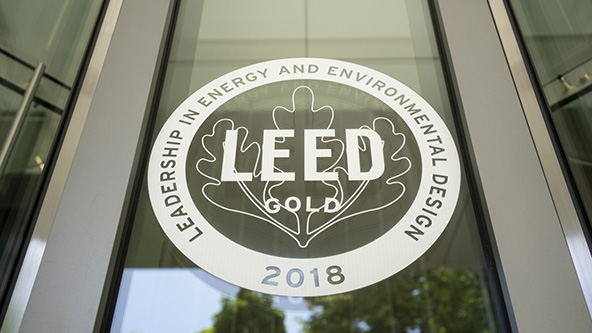 Only a tiny fraction of nonresidential buildings are LEED-certified. (Photo by iStock/hapabapa)
The history of the USGBC is more complicated. The organization was founded by three people, with different backgrounds. One was a real-estate developer who’d had a midlife crisis; one was an environmental lawyer with more faith in collaboration than litigation or legislation; and one was a Carrier executive who’d concluded that green climate-control equipment would become a big market. They saw the EDF-McDonald’s partnership as a model. They also were inspired by professional standard-setting organizations. Then they added a business twist: The USGBC’s LEED certification would encourage a race to the top by offering Silver, Gold, and Platinum levels of recognition. The council initially stressed the environmental benefits. Because green buildings cost more, however, the help-save-the-planet argument had limited appeal. In the organization’s first five years, a majority of LEED-certified buildings were constructed by government agencies or nonprofit organizations, not businesses. The lesson was obvious. If the USGBC wanted to transform the industry, the business case for green building needed to be front and center. That argument was many-faceted. Buildings served many purposes, so the incentives differed depending on the goals of the owner. What might convince executives planning a corporate headquarters might be irrelevant to a retailer erecting a new outlet. The revised pitch worked to a point. But the organization’s growth still slowed, with less than 4 percent of the nation’s nonresidential buildings LEED-certified, according to one analysis.
What’s the Alternative?
Environmentalists are not blind to the shortcomings of the plan B strategies. They have reassessed each one, in different ways. Only partnerships now get a hearty three cheers. But working to give business green incentives still is largely unquestioned.
The second-guessing of certification goes the furthest. In a 2015 manifesto titled Beyond Certification, sustainable-forestry advocate Scott Poynton wrote with anguish about his disenchantment. He knew that many devoted, smart activists would see his critique as the equivalent of “shooting at an ambulance.” They were redoubling their efforts to make certification effective in greening the management of natural resources. But they were fooling themselves. In his blunt words, “certification cannot deliver the deep, transformational change that we require.” His alternative was a new form of partnership. One of the gurus of green building, Jerry Yudelson, made a similar argument about LEED in a 2016 book subtitled Why Certification Systems Aren’t Working and What We Can Do About It. LEED wasn’t transforming the industry, and it couldn’t. Yudelson hoped that government regulation could raise the bar—but he argued for new ways to encourage voluntary action.
With campaigns, the reconsideration is more subtle. Few activists have confessed a change of heart about confrontational campaigns, but the strategy has become less common. That is partly because the novelty has worn off—and because getting sustained media attention is harder in a world of constant competition for clicks. Corporations also have become more adept at deflecting criticism. That all has led many environmental groups to conclude that campaigns have too little impact to justify the effort.
Partnerships, in contrast, have more allure now than in 1990. The biggest difference is the recognition of the importance of supply chains. Multinational corporations have tremendous leverage with their suppliers, and that means they can be—as a Greenpeace leader argued—“extraordinarily dynamic, powerful, and swift allies.” A World Wildlife Fund executive used Coca-Cola as an example. Because the company bought so much aluminum, sugar cane, glass, citrus fruit, and coffee, it could decide not “to purchase anything that isn’t grown or produced in a certain way—and the whole global supply chain changes overnight. And that in a nutshell is why we’re in a partnership.” That argument is compelling even for activists who take for granted the need for government regulation.
With environmental politics still stalemated, what's the alternative? The most sophisticated discussion of that question is Michael Vandenbergh and Jonathan Gilligan’s Beyond Politics: The Private Governance Response to Climate Change. Vandenbergh and Gilligan acknowledge the “genuine weaknesses” of voluntary action. But they argue that those weaknesses aren’t decisive: “Although private initiatives cannot solve the problem, they can appeal to individuals and organizations across the political spectrum and buy time for governments to emerge from gridlock over climate change policies and laws.” As long as the initiatives lead companies to reduce their impact, and as long as they don’t “undermine the prospects for a more comprehensive government response,” they are a compelling way forward.
That conclusion puts the emphasis in the wrong place, however. The takeaway instead should be that engaging with business is useful, even essential—as long as no one forgets that a sustainable economy ultimately requires changing the rules that govern the market. But the boosters of plan B often obscure that essential truth. They argue that business is leading the way to a sustainable future. The Carrier executive who co-founded the U.S. Green Building Council, Rick Fedrizzi, is a prime example. In Greenthink, he argued that LEED proved “profit can save the planet.” That might be true someday, but it’s certainly not true now.
Capitalism has systemic flaws. No one pays the full environmental cost of production or consumption. As a result, the green way of producing or consuming goods often can’t compete with cheaper, more environmentally destructive alternatives. Though the plan B strategies can give businesses more incentive to do the right thing, they can’t make sustainability the default. Government action was plan A for a reason.
But plan C can’t be a retrofitting of the environmental regulations of the 1970s. That isn’t possible politically. It also doesn’t make sense as policy. Though the 1970s anti-pollution acts improved air and water quality, they left business no room for innovation. They required adoption of specific technologies. The expense of meeting pollution-reduction requirements was a cost, not a profitable investment, so few companies did more than comply with the law. Businesses could not gain competitive advantage by going beyond compliance.
Plan C would use policy to direct the dynamism of business toward green goals. Two kinds of policies are critical. Green taxes can force companies to consider the environmental costs of the materials they use. Government also can set standards of performance while allowing manufacturers and retailers the freedom to figure out profitable ways to get over the bar.
Ironically, the most suggestive evidence for the efficacy of green taxes comes from the 1970s, when federal legislation required improvements to landfills and special treatment of hazardous wastes. The effect was tax-like. Getting rid of garbage and toxic materials became more expensive. In the short-term, businesses had no choice but to pay the higher cost. But eventually they looked for ways to produce less waste. Sometimes they already knew how to do better—they just hadn’t before, because the greener alternatives weren’t profitable when waste-disposal was cheaper. Executives also challenged employees to think outside the box: Exploring new ways of avoiding waste could be win-win. The eco-efficiency efforts often had catchy names: Chevron’s Save Money and Reduce Toxics (SMART), Dow Chemical’s Waste Reduction Always Pays (WRAP), Westinghouse’s Achievements in Clean Technology (ACT), Texaco’s Wipe Out Waste (WOW), and Allied Signal’s Allied Signal Against Pollution (ASAP). Though commentators often praised the voluntary programs as proof that corporations could protect the environment, in fact the initiatives only made business sense because government policy had changed the economic calculus. Government action to raise the costs of fossil fuels or plastic similarly would enable businesses to compete to be greener.
For innovation-spurring regulation, a compelling example is California’s effort to reduce air pollution from automobiles. Charles Sabel and David Victor make that argument in Fixing the Climate: Strategies for an Uncertain World. In 1990, the state Air Resources Board (CARB) challenged the industry to develop low-emission and zero-emission vehicles. Because the best ways to meet the emissions goals were uncertain, the deadlines were revised periodically to take account of growing knowledge about what was possible. The board could bar non-complying companies from selling vehicles in the state, and the size of the California market made that possible penalty a powerful driver of change. But the standards also changed the market. Automakers did not want to fall behind in a race to devise profitable solutions to the emissions problem. Suppliers also could prosper by innovating, so the CARB regulations ultimately encouraged the development of better batteries.
Of course, plan C will be a difficult sell. Environmentalists need to be forthright in arguing that voluntary corporate sustainability initiatives never will be enough. They also need to make a stronger case that government can be a constructive force in the economy.
What would plan C look like in practice? One model is the effort of the Ellen Macarthur Foundation to promote a circular economy. The foundation works with corporations, but it argues that government action is necessary to realize its ideal: The rules of the market still favor make-use-and-discard economics. In the foundation’s view, the next steps toward sustainability will be business-driven but policy-enabled. That’s a compelling motto.
A second model is Auden Schendler, senior vice-president for sustainability at Aspen One. His manifesto Getting Green Done is unequivocal about the limits of voluntary corporate action. As long as companies are allowed to ignore environmental costs, many will. But Schendler still sees corporate sustainability work as essential because it might help lay a foundation for wise public policy! He argues that the business world can be a laboratory showing government officials and citizens what sustainability initiatives work—and what initiatives are misguided. He also hopes that corporate leaders will lobby for legislation to correct market flaws, and he argues that they won’t have credibility unless they’ve already acted to green their companies. His bottom line is that “only government action—on a global scale—can drive the level of change at the speed we require,” especially in addressing climate change.
If a corporate executive can say that, why can’t environmentalists?
Read more stories by Adam Rome.