


 (Illustration by iStock/300_librarians)
A decade ago, while traveling across Africa visiting Clinton Foundation projects, I found a replica of a late-19th-century map titled, “Communications and Towns.” It depicts the flow of information along railroad and steamer lines, showing how transportation connected communities with ideas and news, the same as iron ore and grain.
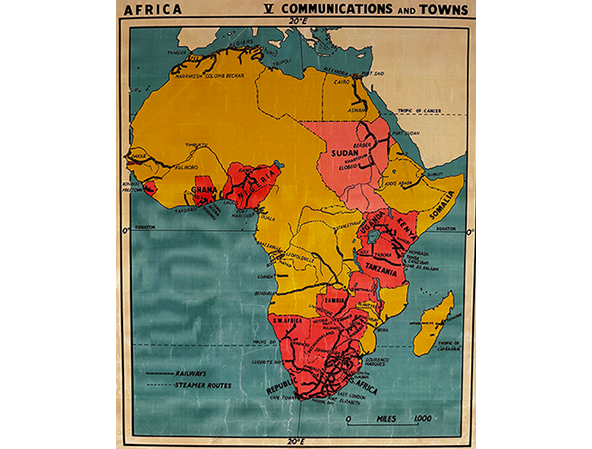 A “communications and towns” map shows late-19th-century transportation routes across Africa. (Image by Gill’s Simplified Wall Map Series)
The map is a reminder of how technology has radically reshaped traditional media structures by allowing people to choose their information sources, become their own publishers, and share stories among their communities via a wide array of social, digital, and even gaming platforms. And while good news and progress have always been tough to sell, these systemic changes—combined with the challenging economics and decline in trust of news media, the forces that drive digital traffic, and rampant misinformation—have made it even tougher. In practice, many nonprofit communicators trying to do positive storytelling are caught in a thunderstorm that has been gathering strength for years. Though nonprofits employ nearly 10 percent of the private sector workforce in the United States, for example, many national news organizations have eliminated unprofitable philanthropy beats, making it even harder for nonprofits to generate attention. All this has put new pressure on social good organizations to evolve their communications strategies to reach, build, support, and mobilize their communities.
When former US President Bill Clinton launched the Clinton Global Initiative Annual Meeting (CGI) in 2005 alongside the UN General Assembly, he aimed to turn the good ideas coming out of thought leadership conferences into concrete actions. He asked “a community of doers” from the private, public, and philanthropic sectors to work together to address a broad range of challenges. Since then, members of the CGI community have responded by making more than 4,000 CGI Commitments to Action—new, specific, measurable projects and programs that now serve more than 500 million people in 180 countries. As author and philanthropy expert Matthew Bishop wrote, “In providing a marketplace where these partnerships could be forged, Mr. Clinton put CGI at the heart of a new movement in international problem-solving.” Our communications strategy to support that work was rooted in the reach, validation, and accountability that traditional media offered.
In 2016, CGI concluded, in part to avoid a perception of conflict of interest in the event that Hillary Clinton was elected president of the United States. After doing more targeted work and virtual convenings, Bill Clinton, as chair of CGI, called the community back together in 2022 to address urgent social needs resulting from the COVID-19 pandemic, existential threats posed by climate change, economic disparity, and assaults on human rights and democracy around the world. The pandemic, he said, “ripped the cover off of longstanding inequities and vulnerabilities across our global community.”
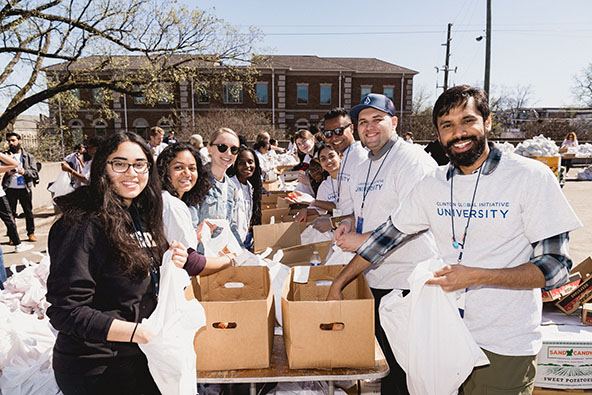 CGI University students from around the world participate in a Day of Action event in Nashville with Vanderbilt University in 2023. (Photo courtesy of Clinton Global Initiative)
Asking the CGI community to take action in such a changed and charged environment also meant asking them how the CGI team could better support them. Community members expressed frustration with the media’s focus on what was broken in society and discouragement with social media algorithms rewarding controversy with clicks. Instead, they wanted credible platforms to show that social progress was possible. This feedback inspired CGI’s new programmatic theme of “what’s working,” as well as a new communications strategy.
Drawing on What’s Working
As part of this strategic shift, we refocused our messaging and content to more prominently feature the CGI community, and produced their stories in cost-effective formats for platforms where audiences go to discover ideas and insights. We also developed content distribution arrangements that reinforced our core programmatic strength of partnership. With the media itself under assault, we rethought how we could help support communities of journalists and creators, and applied lessons we learned in responding to political attacks and misinformation campaigns directed against the foundation throughout the 2016 presidential campaign. Here’s a closer look at these approaches.
1. Turning a conference into a catalyst and a content platform
Philanthropic conferences, idea-oriented festivals, and global forums have experienced a post-pandemic boom—including ones hosted by news organizations hungry for new sources of revenue. There were more than 300 independent, issue-based convenings alone during this year’s UN General Assembly and Climate Week in New York. This sharp increase in convenings, alongside competition for participants and less social sector media coverage generally, means that mission-driven organizations need new ways to make their events relevant to the communities they want to engage.
Working together with our programming team, our communications strategy reinforced CGI’s emphasis on discovery by featuring organizations and emerging leaders working on the front lines, not just CGI’s traditional roster of global figures. We also committed to new ways of telling stories from the community that lent themselves to sharing. These included new features of the live program such as the performance and testimonial-driven Story Studio and Greenhouse, which showcases social impact entrepreneurs, as well as video series such as Doers, which we describe as showing “how the CGI community shows up in times of crisis fighting for full equality for girls and women, feeding their communities and supporting care workers."
In another shift, CGI now convenes a community of creators and influencers with a shared goal to explain solutions to global needs and prompt action. As part of the 2024 annual meeting, for example, we established a creator hub. This included moving some CGI staff from media relations to creator support; giving creators special access to speakers and experts; and offering a toolkit with quick and easy access to sharable graphics, video, and audio assets. To date, this strategy has contributed to 785 million social media impressions and 3.7 million video views of content from the event on social media.
2. Thinking like an entertainment executive and a philanthropic program officer
With limited budgets, creating social media content is central to many nonprofit communication strategies. However, creating durable, long-term engagement requires that organizations pay equal attention to narrative and distribution strategies that will ensure engagement with that content. Here, it can be useful to look at subscription-based streaming services; podcast networks; and OTT services. Many of these platforms embrace fact-based, cost-effective, documentary and interview shows that speak to audiences' desire to learn and keep the audience coming back for more. They also organize content into easily discoverable categories and hubs, such as “documentary” or “history,” that invite exploration, rather than specific topics like “investing in renewables” that are more typical in social sector digital work. And whether long or short form, entertainment platforms prioritize stories with compelling characters, dramatic conflict, high stakes, and a ticking clock.
The CGI community has these kinds of stories in abundance—featuring relatable people fighting against climate change or viruses, or for more access to educational and economic opportunities—all racing against the consequences of inaction. We share their stories in formats that allow audiences to immerse themselves in their work. One example is an Emmy Award-nominated virtual reality film about CGI commitments across Africa that are allowing hearing-impaired children to hear for the first time, helping women sell solar energy to support their families, and using technology in classrooms to help students learn about malaria prevention. Another example is a podcast based on the idea that understanding someone's story is key to seeing each other as people. The show has featured conversations with the CGI community on topics such as civil rights and the opioid crisis, how jazz explains democracy, and how smart design can save lives. Our messaging around these projects emphasize discovery and learning instead of focusing solely on the projects themselves.
3. Making the partnerships the message
The CGI model works best when members of the community partner on social impact work. In fact, independent research conducted by Palantir in 2014 showed that CGI commitments made in partnership were far more successful than ones driven by a single entity. Since partnerships are central to our work, it was natural to consider how content and distribution partnerships could also reinforce CGI’s value.
Paid partnerships with social good organizations such as information grants and sponsored verticals, are an increasingly desirable source of media revenue. These make sense for large, grantmaking foundations trying to ensure that media organizations have the resources to cover unprofitable topics such as global health. But for most, particularly operating foundations like the Clinton Foundation that devote their budgets to implementing programmatic work, paid partnerships aren’t an effective use of resources.
Instead of sponsorship dollars, we co-develop content with media organizations for their news, talk, and debate shows and podcasts. This is often with participation from the Clintons, which allows us to include new voices from the CGI community. This model allows media platforms to maintain editorial control over the content while allowing us to share the work of our community widely, reinforcing the collaborative approach of CGI, and ultimately increasing the awareness of CGI commitments.
4. Being a trusted messenger
Throughout and following the 2016 presidential election, the rise of misinformation and disruption in the traditional media ecosystem helped create perfect conditions for attacks against the Clinton Foundation, harbingers of organized efforts to undermine trust in government, philanthropies, and other democratic institutions.
At first, given our effectiveness in areas such as increasing access to HIV/AIDS treatment, making American schools healthier, and helping communities recover from natural disasters, we assumed our community would recognize the attacks as meritless and politically motivated. However, while we regularly shared information about our programs with donors, partners, and the media, we soon realized our traditional approach didn’t clearly communicate how our programs operated. This made them more susceptible to interpretation. To address this, we engaged in dialogue with our community to understand their concerns and created easily sharable content such as explainer videos and a new website to better connect program operation and impact. Hearing and respecting their concerns while providing the facts helped us earn back trust and public support.
In addition, despite documented problems with media coverage of the Clinton Foundation, we recognized that media itself was vital and under serious assault. In response, CGI partnered with the Committee to Protect Journalists, which advocates for press freedom and works to protect journalists from reprisal, as well as mission-driven news and public media organizations, to highlight threats posed to journalistic work. We also encouraged members of the CGI community to support them with new commitments.
These four strategic shifts have allowed us to put communities at the center of our communications work and become a more trusted, knowledgeable messenger. What’s more, using our platform to elevate CGI community voices gives members more incentive to share our message, creating a virtuous content cycle. In a complicated and continually changing media environment, Bill Clinton’s first US presidential campaign theme of putting people first is more relevant than ever and inspires the Clinton Foundation’s approach to supporting our community through communications.
Read more stories by Craig Minassian.