


In the fall of 2017, we wrote in this publication that an estimated $30 trillion would change hands in the United States over the following decades as the Baby Boom generation aged and passed away, and that almost no one in the nonprofit sector was ready for it. We were graduate students at Stanford then, describing a wave that existed only in projections. Nine years later, the wave is here, and the state of play looks different from what we predicted—in many ways, better—but the philanthropic sector, and especially private foundations, need to do more to seize the moment.
Let’s start with the money. When we published, American charities received just over $30 billion a year through bequests (defined as gifts given when a donor passes away, most often in a will or trust). According to Giving USA, charitable bequests reached roughly $62 billion in 2025—double the level of a decade ago, up nearly 20 percent in a single year, and the third double-digit increase in four years. Bequests now supply about 10 percent of American giving, and they did much of the work in pushing total giving past $600 billion for the first time.
The projections have grown too. Cerulli Associates now expects $124 trillion to transfer through 2048, including the potential of an astounding $18 trillion to charity, though we believe reaching anything close to this number will require some major changes.
The demographics are no longer a forecast.
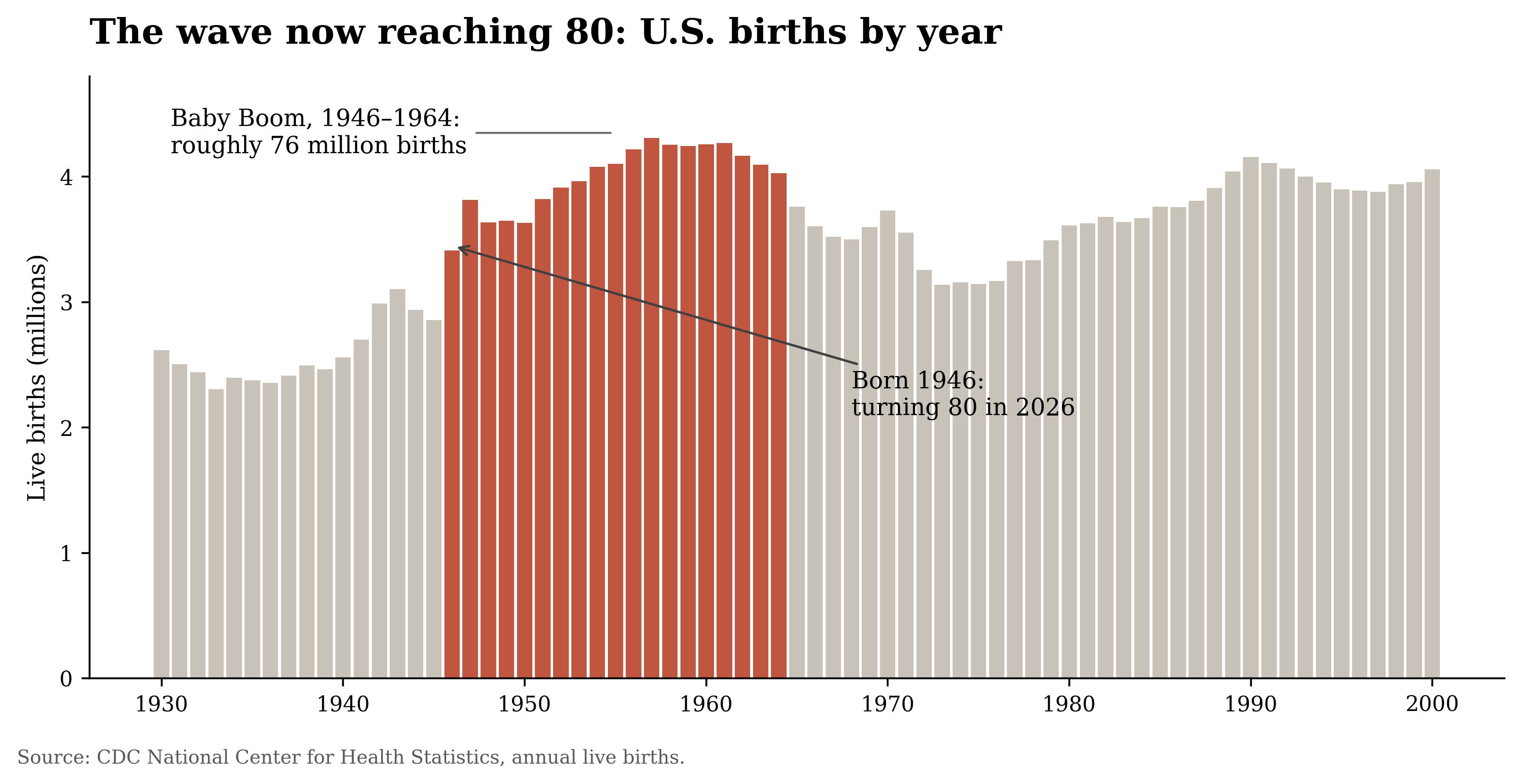
Roughly 76 million Americans were born during the Baby Boom, between 1946 and 1964, and the oldest among them turn 80 this year. These are the ages when Americans write and settle their final estate plans. The transfer we described in the future tense is underway, and it will run for decades to come.
In an extremely positive shift, nonprofits now embrace planned giving far beyond the major-gifts office.
This is the change we most hoped to see. In 2017, planned giving at nonprofits (the practice of raising gifts through wills, trusts, and beneficiary designations) lived almost entirely inside major-gifts teams and was offered to a narrow slice of wealthy donors, even though the evidence pointed the other way—we described an environmental organization that drew 70 percent of its planned-giving dollars from outside its top 10 percent of donors.
Today, most of the country’s leading nonprofits treat planned giving as a program for every supporter. Each August, thousands participate in Make-a-Will Month, reaching far beyond their list of major donors to encourage people to complete an estate plan and consider including a gift. Many will do it again during National Estate Planning Awareness Week, October 19-25 this year.
The broad ask produces real money: FreeWill, the company we founded as students to test the idea of “free estate planning that nudges charitable giving,” has now helped document nearly $15 billion in planned-gift commitments, with an average bequest of more than $50,000 (and an average of two charities receiving gifts per will with any charitable giving)—even though many of these givers would never have been identified as prospects for “major giving.”
To give a sense of how wildly impactful planned giving can be when done well: We believe the American Diabetes Association (ADA) and the World Wildlife Fund (WWF) both have particularly thoughtful and strategic planned giving efforts. ADA’s 2024 audited statements show that bequests ($42.7 million) made up 34 percent of all donated dollars. WWF’s audited statements from 2025 report that “bequests, endowments, and split-income gifts were $47.3 million,” meaning roughly one in four dollars from individuals arrives through an estate.
The hard part is investing in the future.
A planned-giving program takes years to mature and decades to pay out in full, while most nonprofits budget one year at a time: executive directors have payroll to make, development teams have annual gaps to close, and grant reports ask what happened during the funding period. The most successful organizations invest anyway, and they are being rewarded for it. Many others, including small and midsize organizations with deeply loyal supporters, cannot spare the staff and budget to ask.
This is where private foundations need to step up. They are nearly the only institutions in philanthropy that can repeatedly fund on the time horizon planned giving requires. A multi-year grant that builds a grantee’s bequest pipeline (staff, tools, donor outreach) becomes future unrestricted revenue the foundation never has to renew, and it leaves the grantee less dependent on foundations over time. Funders have spent years saying they want grantees to diversify revenue and build resilience; this is what that looks like in practice. The stakes are large enough and the ROI high enough to be blunt: even if the sector keeps making good progress, capturing only part of an $18 trillion opportunity would be among the greatest missed chances in the history of American philanthropy.
A few foundations are forward thinking here—the Harold Grinspoon Foundation has long sought to accelerate planned giving in the Jewish community through “training, support, and financial incentives” (in the form of bonus grants made when a planned gift is secured), and claims that this work has driven $2 billion in additional pledges to Jewish nonprofits. But HGF is far more the exception than the rule, and much larger entities need to play a much greater role.
Estate planning itself still needs to grow.
The deepest constraint has not moved: most Americans still have no estate plan. Caring.com’s 2025 wills study found that only 24 percent of respondents had a will, down from 33 percent in 2022, and the most common reason is the one we heard in our interviews a decade ago: people haven’t gotten around to it. A charitable bequest cannot be added to a plan that was never made, which is why the planning rate matters more to philanthropy’s future than any fundraising technique.
There is a bright spot here as well. Charitable giving is now woven into online estate planning in a way it never was at the desks of many attorneys. The research we cited in 2017 found that about 5 percent of people include a charitable gift when unprompted, 10.4 percent when asked simply, and more than 15 percent when the ask makes giving feel normal, findings that now shape how the online platforms are built. That is true on FreeWill (where 20 percent of plans include a charitable gift), and, to their credit, increasingly true at peers like Trust & Will and LegalZoom. Every plan completed on these platforms now includes a moment that asks what a person wants to leave behind, and millions of Americans are answering.
We ended our 2017 article by writing that a few practical efforts could launch a new era of philanthropic funding, and more of them have materialized than we expected. The demographics are certain, the tools work, and nonprofits have shown they can mobilize. What is still missing is patient capital for the thousands of organizations that cannot yet afford to build. If private foundations supply it, the missing trillions may be found after all.
Read more stories by Jennifer Xia Spradling & Patrick Schmitt.