


 (Photo by iStock/skynesher)
Andrea Constand has utilized the power of technology to transform her own traumatic experience to help other sexual assault and rape survivors.
Constand, a former basketball player who became director of operations for Temple University’s women’s team, was assaulted by Bill Cosby at his home in January 2004. Cosby, who went to Temple and was a donor and trustee, befriended Constand in 2002. Despite the more than 50 women who came forward with personal stories of rape and sexual assault by the entertainer, it was Constand’s court testimony that led to Cosby’s conviction and prison sentence, in April 2018.
After the trial, Constand determined to fight for all victims of sexual violence through founding the nonprofit Hope Healing and Transformation (HHT) in 2019, for which she currently serves as president and executive director. The organization aims to educate and inform survivors by providing them with legal knowledge and support. Through HHT, Constand created an app to help victims on their healing path. Launched in June, SAFEAPP “is an integrative program and support hub with a Mind/Body/Spirit program,” Constand explains.
SAFE stands for Survivors Achieving Freedom and Empowerment. The app’s 21-day program offers a sequence of lessons, divided into three separate modules, on the mind, body, and spirit to promote holistic healing.
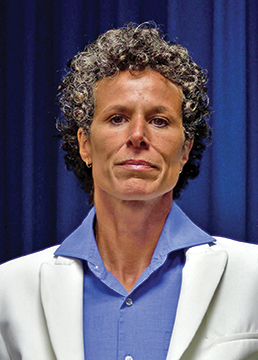 Hope Healing and Transformation Founder Andrea Constand. (Photo courtesy of Bastiaan Slabbers/Oogimages/Alamy Stock Photo)
“This is a trauma-informed app,” says Constand. Stewart Ryan, HHT’s legal representative, emphasizes how much Constand’s personal experience has shaped the program: “The person behind this app had the experience everyone fears when reporting sexual assault and that informs everything about SAFEAPP,” he says. The app, he explains, offers another path toward healing and accessing the justice system, even though “not everyone is ready right away to pursue criminal justice.”
Because sexual assault and rape victims are often treated like they are the criminals, the app seeks to provide them with “all the resources there are—from legal support to emotional support,” Constand says. “If you are not ready to run to the police or drive two hours from your rural area to a rape crisis center, then SAFEAPP is an alternative.”
Through SAFEAPP, victims have access to a trove of resources to educate themselves on everything from the details of being subject to a rape kit to a step-by-step outline of the legal process, to direct communication with lawyers, medical, and mental health professionals.
“A survivor deserves counsel and protection,” Constand says. “Improving the reporting process for victims is crucial to gaining their trust. The lens through which law enforcement agencies see survivors is critical to maximizing credibility and getting convictions.”
Statistics indicate that rape is treated differently from other crimes because rape victims are more often than not blamed for the crime committed against them. According to the FBI Bureau of Crime Statistics, 734,630 rapes occurred in the United States in 2018. Yet, various reports indicate that less than 1 percent of those cases result in a felony conviction, and fewer than 3 percent of cases result in conviction.
Ryan suggests that getting victims to report requires more effort in familiarizing them with the process in advance—which SAFEAPP aims to do. While both Constand and Ryan acknowledge that the app’s program is no substitute for the process of pursuing criminal cases, it does give victims access to support when they most need it.
A private philanthropic foundation in Toronto provided the initial funding for SAFEAPP. Another “major donation came from someone who had a story of their own,” Constand says. “Survivors want to help each other. We have to hold each other’s hands and lift each other up. We have to hire survivors, not fire survivors.” This is why HHT’s board of directors is composed of survivors, public speakers, and clinical social workers.
The trauma-informed lens through which SAFEAPP cares for victims distinguishes it from other survivor services. “While many services and programs are currently available in the United States and Canada, this approach has the potential to help victims build the level of courage needed to identify and confront those who have sought to silence and diminish their humanity,” explains Roberta L. Hacker, the executive director of Women in Transition in Philadelphia, the nation’s oldest continuing service for abused women.
While in its early months, Constand’s measure of success is based on this metric of shared humanity. “We want to spread the word that victims are not alone,” she says, “that other survivors and advocates are right there, on this app, ready to help them heal.”
Read more stories by Victoria A. Brownworth.