


Locally Driven, Network-Supported Systems Change
Neither top-down nor bottom-up leadership is adequate for solving complex social challenges. We need to combine the strengths of both.
Innovative approaches to internally driven, organization-wide efforts to achieve strategic goals (more)

Neither top-down nor bottom-up leadership is adequate for solving complex social challenges. We need to combine the strengths of both.
An excerpt from Leading for Justice on going beyond compliance and compensation in HR.

The hacktivist collective built a framework to encourage and guide participation without direct oversight.

Building better relationships between funders and nonprofits, and investing in capacity, will mean more resilient organizations and more impact.
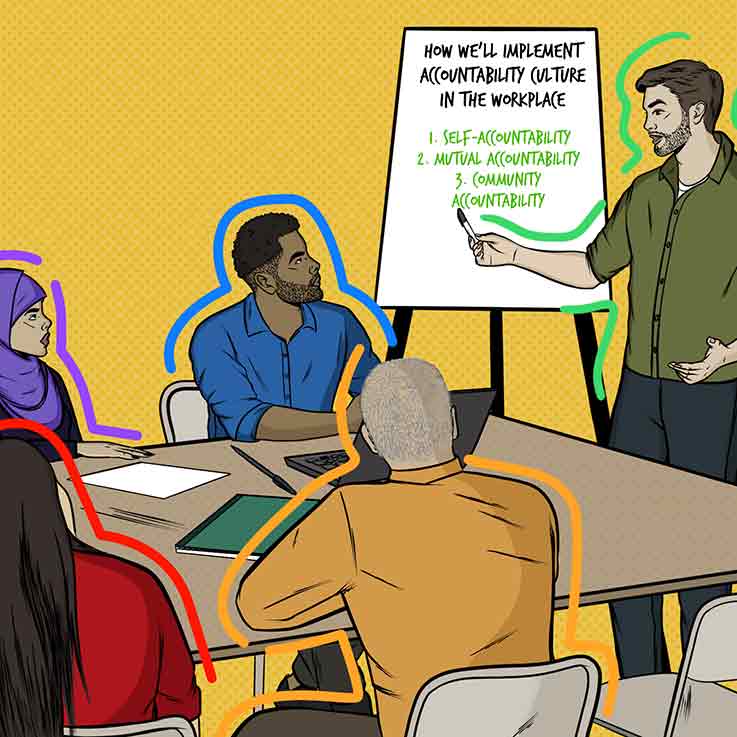
Advancing racial equity within your organization requires making accountability a cultural norm.

Understanding how network members interact with each other is crucial to advancing their common aims.

Because systems naturally resist change, systems thinkers must learn to build change with resilience.

Stereotypes and racial bias in hiring and promotion are damaging at personal, career, and organizational levels.

Sensible innovation policy design, targeted at innovations for the public good, can be a crucial tool in helping our societies recover and rebuild.

This article offers nine strategies to liberate board culture and provides a tool that boards may use to reflect on their own behavior and strengthen their culture.