Government
Building Public Trust Through Collaborative Governance
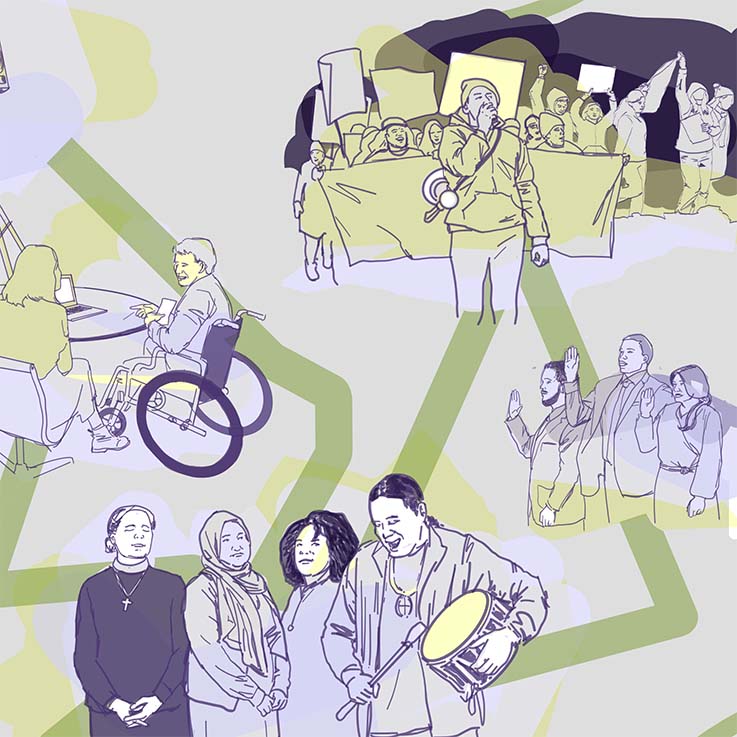
For a more equitable, inclusive, multiracial, and multiethnic democracy, we must invest substantive, resourced, and long-term decision-making power in the public.
Four ways funders of collective impact efforts can help foster trust to strengthen collaboration and achieve greater impact.
Susan Urahn of The Pew Charitable Trusts and Sarah Rosen Wartell of the Urban Institute discuss the many challenges facing American democracy—and ways to find common ground in a polarized environment. Produced in partnership with The Pew Charitable Trusts.
Any organization tasked with getting critical information to local communities—whether responding to a crisis like the pandemic or trying to challenge social injustices—needs a strategy for making sure their message is believed. Journalism offers insight into building trust as people's wariness threatens the uptake of COVID-19 vaccines.
To realize the deep systemic change that America is demanding, philanthropy must reorganize to build and demonstrate a trust-based culture, invest in community leadership capacity-building, and open up decision-making and information-sharing structures.
An excerpt from Compassionate Counterterrorism highlights development-based interventions that have deterred terrorist recruitment.
How a family-planning group and an environmental organization banded together to foster the health of forests, fisheries, and families at the same time.
Cities continue to be the place where citizens can engage most directly with government—especially when nonprofits are there to offer capacity, expertise, and reach.