

The Double Standard
Uncharitable: How Restraints on Nonprofits Undermine Their Potential by Dan Pallotta
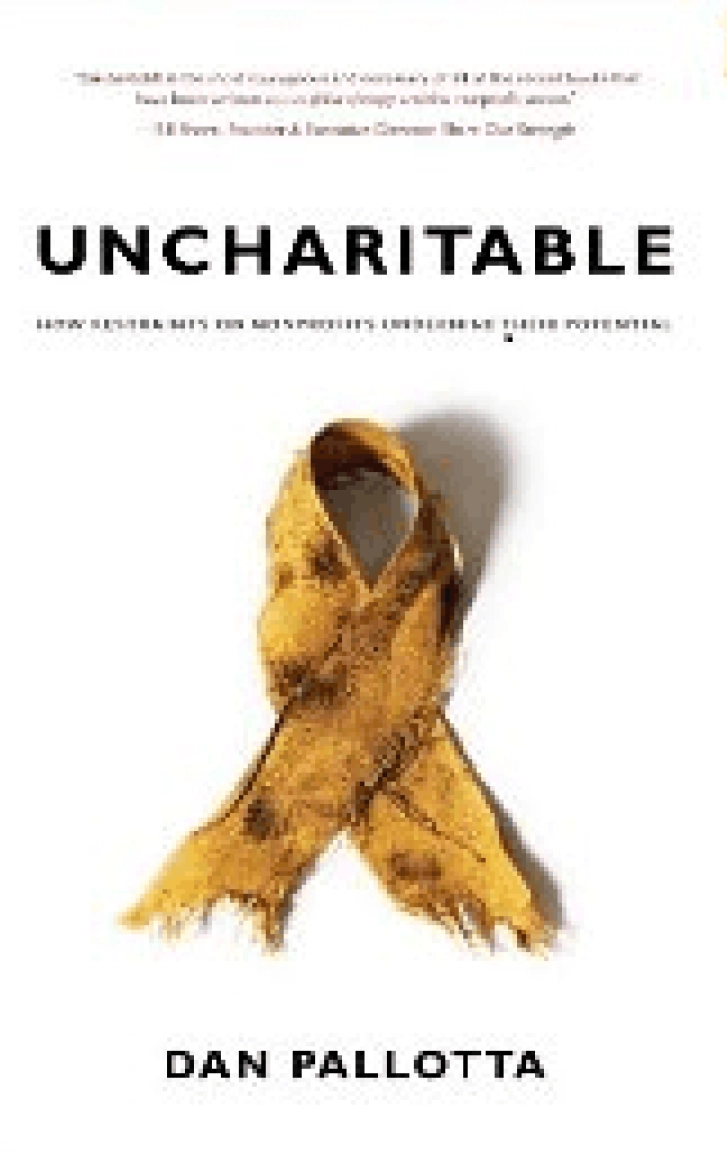
Uncharitable: How Restraints on Nonprofits Undermine Their Potential by Dan Pallotta
"There's no question: with public trust in CEOs and corporations at rock-bottom and the change mantra out of Washington (and Davos) and this week’s TED2009 still freshly potent, cause-wired social entrepreneurs have never had a better opportunity to boost traction globally for their Web-powered ideas."
Research shows branding differentiates nonprofits in stakeholders' minds.

The abuse of the synthetic drug known as methamphetamine has become a top crime problem in the United States, and now a global epidemic. In this audio lecture, part of the Stanford Social Innovation Review's conference on evaluation, IT leader and philanthropist Thomas Siebel discusses the nature of meth addiction as well as the efforts of the Meth Project, a large-scale prevention program aimed at reducing first-time meth use through public service messaging, public policy, and community outreach.

Consumers say they want to buy ecologically friendly products and reduce their impact on the environment. But when they get to the cash register, their Earth-minded sentiments die on the vine. Although individual quirks underlie some of this hypocrisy, businesses can do a lot more to help would-be green consumers turn their talk into walk.


Despite spending vast amounts of money and helping to create the world’s largest nonprofit sector, philanthropists have fallen far short of solving America’s most pressing problems. What the nation needs is “catalytic philanthropy”—a new approach that is already being practiced by some of the most innovative donors.

Two veterans of consumer psychology, marketing, and entrepreneurship provide a guide to using social media for social change.

From pink ribbons to Product Red, cause marketing adroitly serves two masters, earning profits for corporations while raising funds for charities. Yet the short-term benefits of cause marketing—also known as consumption philanthropy—belie its long-term costs. These hidden costs include individualizing solutions to collective problems; replacing virtuous action with mindless buying; and hiding how markets create many social problems in the first place. Consumption philanthropy is therefore unsuited to create real social change.
Consumers say they want to buy ecologically friendly products and reduce their impact on the environment. But when they get to the cash register, their Earth-minded sentiments die on the vine. Although individual quirks underlie some of this hypocrisy, businesses can do a lot more to help would-be green consumers turn their talk into walk.

mPowering has created an app that awards goods and services to individuals facing extreme poverty when they make beneficial choices.