


The Technology Treadmill
Peter Gluckman and Mark Hanson’s Ingenious applies concepts and metaphors from evolutionary biology to explain the impact of technological innovation on human life. A book review from the Spring 2020 issue.

Peter Gluckman and Mark Hanson’s Ingenious applies concepts and metaphors from evolutionary biology to explain the impact of technological innovation on human life. A book review from the Spring 2020 issue.

In response to the coronavirus epidemic, SSIR has temporarily halted seeking submissions for a series on extreme polarization and how it affects civil society's efforts to solve social problems, and how to build collaborations, communicate with the public, and manage conflict in a divided world.

Tech philanthropy is booming, but it doesn’t think nearly enough about the needs of the organizations it hopes to help. Here’s a roundup of best practices and resources that can help tech firms move fast and fix how they fund nonprofits.
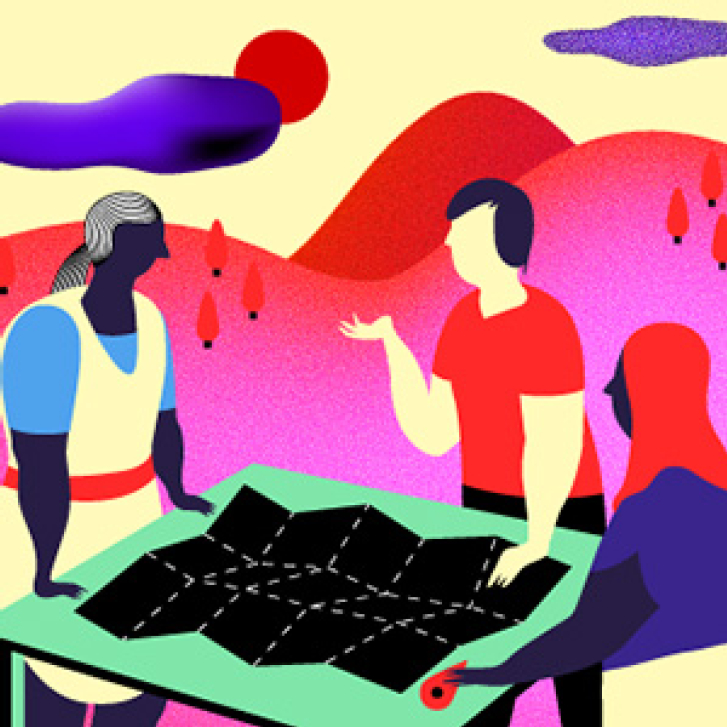
A pragmatic, “good enough” approach to experimentation in humanitarian contexts. The third of five articles in Humanitarian Innovation in Action, a series on innovation as a tool for change within complex institutions.

To truly benefit from innovation, humanitarian organizations need to regard it as a set of values that runs through all of their practices. The first of five articles in Humanitarian Innovation in Action, a new series exploring innovation as a tool for change within complex institutions.

Five principles based in social science that will help organizations connect their work to what people care most about.

Six pathways to making housing more affordable and available from the Ivory Prize for Housing Affordability.

A recent study found three common barriers to knowledge sharing across nonprofits and their networks, as well as ways and means to overcome them.

Two veterans of consumer psychology, marketing, and entrepreneurship provide a guide to using social media for social change.

Using artificial intelligence to predict behavior can lead to devastating policy mistakes. Health and development programs must learn to apply causal models that better explain why people behave the way they do to help identify the most effective levers for change.