
The Wrong Risks
By paying so much attention to managing their own risks, philanthropists are no longer attending to the marginalized people who risk so much to make change happen.
New and innovative ideas for leaders of foundations (more)

By paying so much attention to managing their own risks, philanthropists are no longer attending to the marginalized people who risk so much to make change happen.
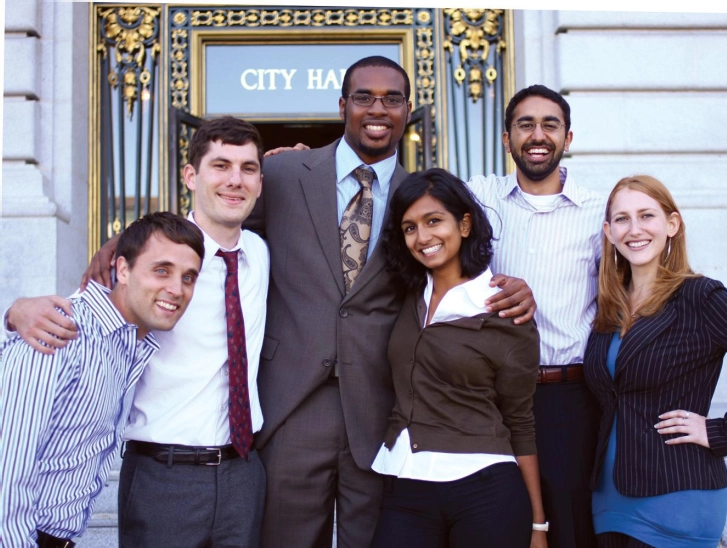
To halt the greying of municipal government, the City Hall Fellows program offers recent college graduates a year-long stint working on everyday challenges such as transportation, public works, and housing.

Jeff Raikes takes over the Gates Foundation at a turbulent time when philanthropic resources are down and social needs are up.
Rural America is largely off the radar of much of philanthropy.

A pluralistic society boasts many independent centers of power and foundations have an instrumental role in supporting such diversity. Online giving marketplaces are further democratizing philanthropy by empowering donors to support the causes they care about. In this panel discussion, sponsored by the Stanford Center for Social Innovation, experts in the field consider whether such online spaces are simply useful adjuncts to the work of philanthropy—or whether they promise to revolutionize the sector altogether.

How do we know that the nonprofit organizations we support are actually effective? In this audio interview, host Sheela Sethuraman converses with Jeff Mason about his efforts, along with key organizational leaders, to develop an assessment tool that evaluates nonprofit management performances. Their work could become a major contribution to the world of philanthropy.
Online giving marketplaces allow for the transfer of funds from interested donors and lenders to those who need them. In this new philanthropy space, it is as yet, unclear whether the donor is the "supply" or the "demand," and organizations are just beginning to experiment with the utility of such online functioning. In this panel discussion, sponsored by the Stanford Center for Social Innovation, philanthropy experts working at online marketplaces discuss how their organizations function and what differentiates them from others.

When it comes to online giving market places, the adage is: If you build it, few will come. So how do you drive enough people to such online spaces to make them work? In this audio lecture, sponsored by the Stanford Center for Social Innovation, William Meehan, McKinsey senior director, talks about the opportunities and challenges in making online giving marketplaces successful, and what lies ahead in this new philanthropy field for organizations dedicated to making a genuine sustained impact in communities.

Neither markets nor philanthropy alone are sufficient to help the world's poorest people. In this audio interview with host Sheela Sethuraman, Jacqueline Novogratz, founder of the Acumen Fund, describes how a combination of patient capital plus management support is making a difference in tackling poverty in Africa and Asia. Novogratz shares experiences and anecdotes from her recently published book, The Blue Sweater: Bridging the Gap Between Rich and Poor in an Interconnected World.
Social enterprise can both ease the terrible consequences of the insularity inherent in nationalism, and enhance the positive opportunities for social change within established heritage and cultural traditions. In this panel discussion, sponsored by the Stanford Center for Social Innovation, experts consider topics ranging from multiculturalism within countries to cross-national and international cultural challenges and opportunities.