Business Models for Building Refugee Resilience
A new era of business collaboration is rising to address humanitarian crises, and the humanitarian sector can help bring these new models to scale.
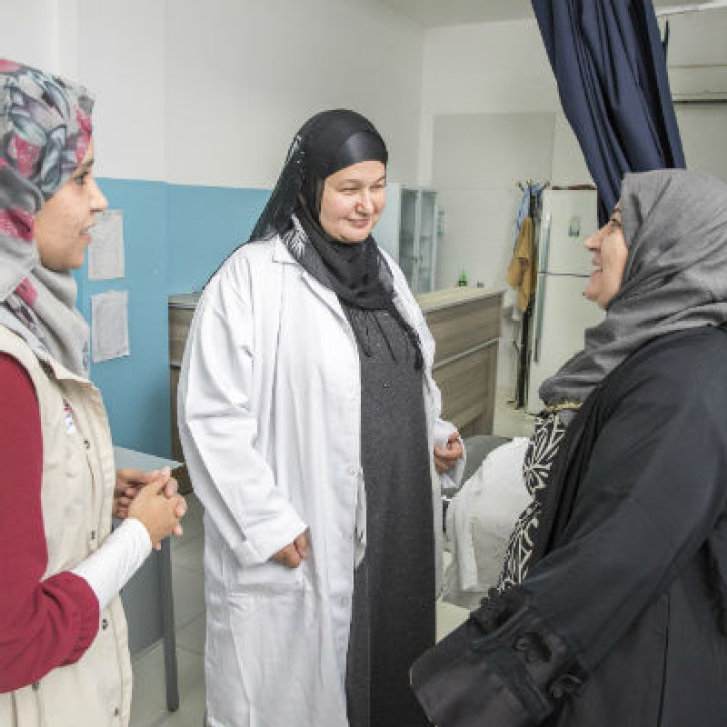
A new era of business collaboration is rising to address humanitarian crises, and the humanitarian sector can help bring these new models to scale.

This article series, produced in partnership with Business Fights Poverty, explores how global companies are stepping up to help achieve the Sustainable Development Goals, and includes practical ideas and guidance for business leaders of today.

Only 19 percent of nonprofit executive team members strongly agree that their teams focus on the right work. To improve the performance of these vital groups, leaders should ask five critical questions.
An excerpt from Jed Emerson’s The Purpose of Capital: Elements of Impact, Financial Flows, and Natural Being
What constitutes “good” failures in philanthropy, and how can we have more of them?

Kate Lauzon found sobriety and a role as an activist through her Massachusetts city's weekly resident feedback sessions, a gathering of civic groups known as "Working Cities Wednesdays" organized by Habitat for Humanity. Part of a series produced for SSIR with the support of the Hewlett Foundation.
Being a courageous and ethical leader in philanthropy means learning to listen, and sharing our power by encouraging, empowering, and enabling others.
How to shift the culture of philanthropy to one where funders understand they are part of—rather than in control of—social movements and systems-change work.
Like a good GPS system, signals from multiple sources—grantees, staff, other funders, and beneficiaries—can help pinpoint where foundations stand. Part of a series produced for SSIR with the support of the Hewlett Foundation.
For a foundation board to fulfill its essential duties, ensuring that it benefits from diverse voices, ideas, and perspectives is paramount.