


Impact Investing, the Brand
The Global Investment Initiative is setting a standard for measuring both financial and social return on investments.
The Global Investment Initiative is setting a standard for measuring both financial and social return on investments.

At its worst, program evaluation is a useless activity that generates lots of boring data and irrelevant conclusions. But at its best, argues Mark Kramer in a talk he gave at the 2008 Nonprofit Management Institute, it can be a strategic tool for the genuine improvement of a nonprofit. He offers exemplars of organizations that have used evaluation effectively to advance their missions.

The B Corp seal of approval distinguishes truly responsible businesses from mere poseurs.
Nonprofits will soon have more volunteers than they can handle.
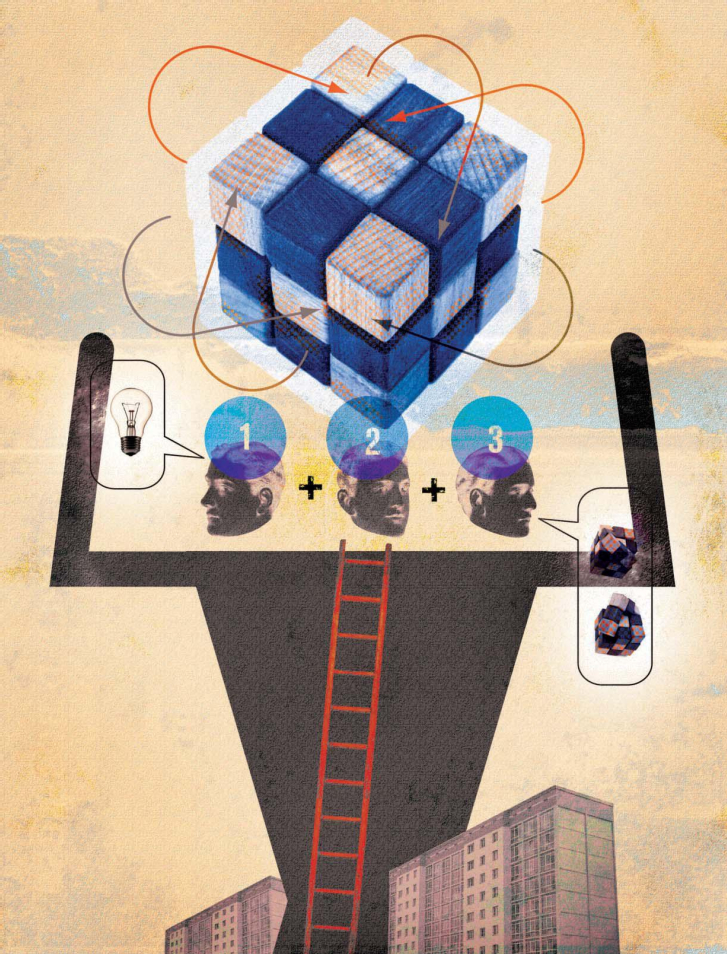
Some of the brightest ideas for social change grow in the spaces between organizations and sectors. Yet few organizations have systems that make collaboration happen. To foster innovation, organizations need to develop places where they can come together and work creatively—that is, platforms for collaboration. In this article, a management expert identifies three kinds of collaboration platforms—exploration, experimentation, and execution—and then outlines what organizations can do to put these platforms to work for them.

Unethical behavior remains a persistent problem in nonprofits and for-profits alike. To help organizations solve that problem, the authors examine the factors that influence moral conduct, the ethical issues that arise specifically in charitable organizations, and the best ways to promote ethical behavior within organizations.

The Rockefeller Foundation is staying at the forefront of new and big ideas, funding new innovation processes like crowdsourcing and collaborative competitions.

To support environmental sustainability and reduce or even stop the threat of global warming, the first line of defense is to avoid using fossil fuels in the first place. In this university podcast followed by questions from the audience, John Podesta suggests that this can be done by focusing on greater energy efficiency—both at personal and policy levels.

Nonprofit management faces one of its biggest challenges in the arena of disaster relief. In this audio interview, Neal Denton, senior VP of government relations and strategic partnerships at the American Red Cross discusses the value of his organization's relationship to the Partnership for Disaster Response. He discusses plans for strengthening this relationship and the role of the private sector in disaster response.
The author submits how nonprofits should act as advocates for democracy