


The Complicated Revolution
Sociologist Jen Schradie reveals how digital activism empowers defenders of the status quo.
Innovations in technology that serve the world (more)

Sociologist Jen Schradie reveals how digital activism empowers defenders of the status quo.

Three lessons from a long-term partnership to reach more than 100 million people with better health care in India.

Three perspectives on the future of transnational advocacy, and how organizations can adapt to the challenges of 21st-century campaigning.

Not everyone needs to become a tech expert, but all activists and nonprofit leaders must develop skills to inquire about, decide on, and demand technological change.

To increase Indian women's participation in the workforce of an increasingly digital world, more of them must obtain access to the internet through cellphones and other technologies.

By taking some simple steps to support women entrepreneurs, accelerator programs like those at the University of California, MIT, and University of San Diego can help reduce notable gender disparities in America's startup landscape.
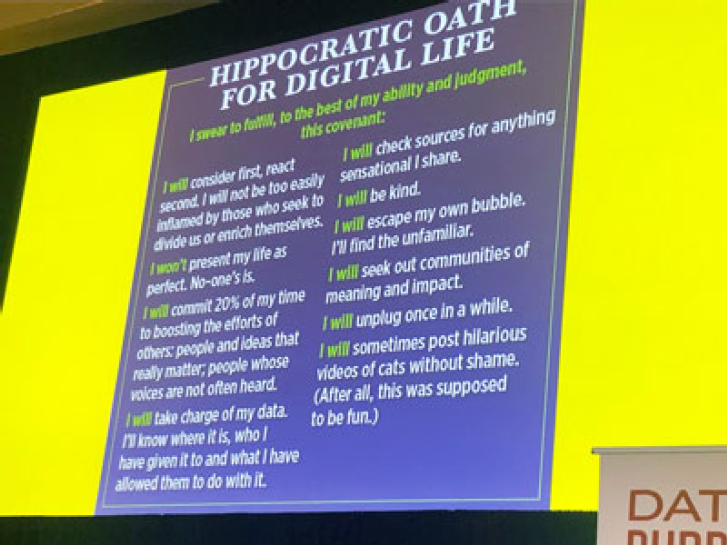
From emphasizing the importance of a data culture to exhorting people to "move thoughtfully and improve things," nonprofit leaders, funders, scholars, and technologists at SSIR's 2019 Data on Purpose Conference provided deep insights into surviving and thriving in an increasingly digital world.

There is no single path to successful digital philanthropy in China, but a new study provides six questions that stakeholders should ask themselves as they begin to develop their strategies.

By making data easily verifiable, resistant to alteration, and instantly available to anyone within a network, the incorruptible digital ledgers known as blockchains can help ensure that commercial goods are ethically produced from mine to store.

How funders can support bold, emerging leaders and their cutting-edge ideas.