


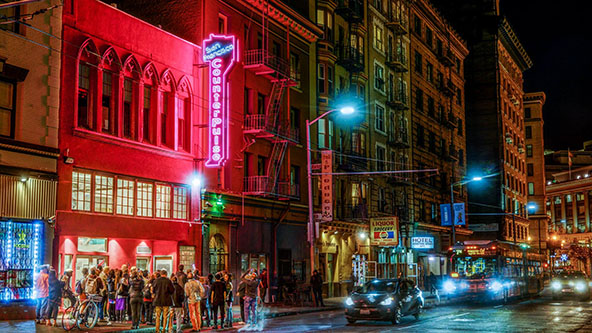
 CounterPulse, a San Francisco-based experimental arts nonprofit, leased and then purchased the building at 80 Turk Street in San Francisco from CAST, giving the organization a new home after they were priced out of their former space. (Photo by Scott Fin)
During the 2010s tech boom, incomes
skyrocketed across the San Francisco Bay Area—but so did the cost of living. The median price of rent, for example, jumped
by 24 percent over the decade. San Francisco’s arts community, in particular, felt the rent crunch: A 2015 civic survey
reported that 70 percent of the city’s artists had been displaced from their homes, workplaces, or both because of higher costs. Local arts organizations that leased office spaces were likewise affected by the price surge. According to the data platform Statista, San Francisco-area office rents
cost $79.06 per square foot, second only to Manhattan among 30 select US markets.
In 2013, San Francisco-based Community Vision (then known as the Northern California Community Loan Fund) created the Community Arts Stabilization Trust (CAST) to protect local arts organizations from being priced out of the Bay Area. The trust buys, renovates, and leases buildings below market value to small and midsize organizations. Organizations can be given the option to buy their spaces within 7 to 10 years, and lease extensions are also available.
“We are an involved, community-centered real-estate organization for culture,” says Moy Eng, CAST’s founding CEO and former executive director, who now serves as a consultant. “We steward and secure affordable space.”
The Oakland-based Kenneth Rainin Foundation provided CAST with a five-year, $5 million seed grant in 2013. Continued funding has come through public and private sources such as tax credits and grants.
CAST currently has real-estate investments in five Bay Area organizations, ranging between $1 million and $6.3 million per organization. CounterPulse, a San Francisco-based experimental arts nonprofit, exemplifies the success of CAST’s model.
Founded in 1991, CounterPulse had long made its home base in the city’s South of Market (SoMA) neighborhood. But by 2012, high rents forced the organization to look elsewhere. “We could see the writing on the wall that we would not be able to renew our lease at the favorable rates that we had before the tech boom,” says CounterPulse executive director Julie Phelps.
The following year, a consultant connected CounterPulse to the newly formed CAST, which at the time had purchased and was renovating a building in the nearby Tenderloin neighborhood for $1.3 million. CAST offered CounterPulse a 10-year lease on the property with an option to buy.
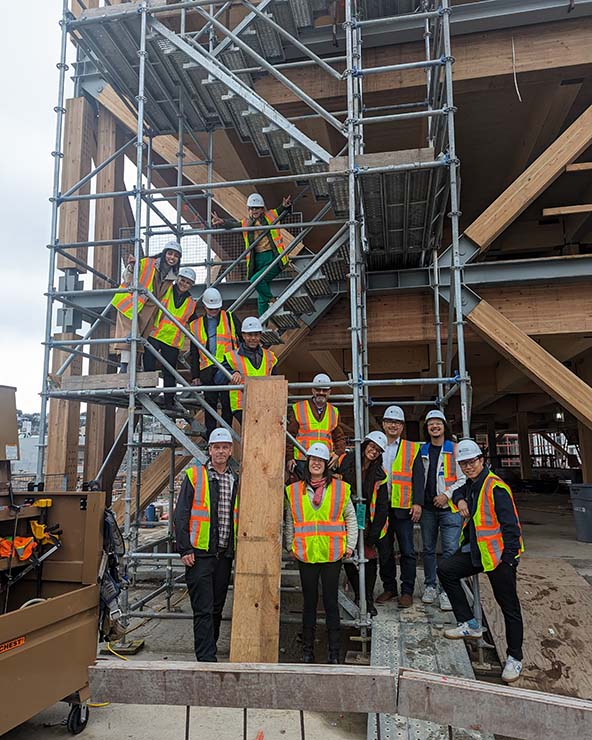 The CAST team tours the construction site for the California College for the Arts (CCA) campus expansion in San Francisco. (Photo courtesy of CAST)
CounterPulse signed a lease on the building in 2015 and opened in the space the following year. The organization would finance renovations on the property during the term of its lease and, through fundraising, amassed $7 million to purchase the building from CAST in 2023.
Eng describes the process of real-estate transactions and development as “intensive,” which is why CAST focuses exclusively on the Bay Area. CAST’s influence is not limited, however. Stakeholders in cities around the world—from Seattle to Sydney to London—have reached out to CAST for consultation on how to stimulate community-centered real estate for artists.
“What do we want in our cities? What do we want in our neighborhoods? How do we step in to do that together?” Eng asks. “Now is the time when things are at a crisis point, and I think this is the moment where change is possible.”
Read more stories by Kyle Coward.