


 (Illustration by Jasmin Pamukcu)
In NBC’s The Good Place, the entire system of the afterlife is thrown into chaos because of one central flaw: The way data about people’s lives is collected and used is completely opaque. Characters discover that the point-based data system deciding their eternal fate is rigged to the core, riddled with hidden rules and impossible standards. People have been judged without ever knowing what data was being collected about them, how it was used against them, or how to change their fates. The result was widespread distrust and the eventual collapse of what was once considered a “heavenly” system.
Although the untrustworthy data system in The Good Place is fiction, many others are very real. In 2005, Facebook promised its 5.5 million college users that their personal information would only be visible to people they specifically allowed. But just five years later, with 400 million users worldwide, the policy had shifted: Third-party apps could now access general information that included users’ names, photos, gender identities, connections, and content set to “everyone.” The shift was a quiet rewriting and subversion of the social contract between people and a platform they trusted. Strategically marketed as a platform for human connection, Facebook quickly revealed itself as a tool of exploitation, surveillance, and disinformation. It became central to scandals like Cambridge Analytica, which exposed how 87 million users’ data had been harvested and weaponized for political manipulation without consent and to atrocities like the Rohingya genocide in Myanmar, where Facebook’s algorithms amplified hate speech that fueled mass violence.
Beyond corporate breaches of trust, the federal government has also weaponized citizens’ data in alarming ways. The Trump administration authorized the Internal Revenue Service to share Americans’ personal tax information with U.S. Immigration and Customs Enforcement to facilitate deportations, turning a basic civic obligation into a tool of surveillance and family separation.
This crisis of distrust extends far beyond individual privacy concerns or interactions on social media. It reaches into the civic data systems that shape our everyday lives—census data, education statistics, transit information, employment records, and other large-scale datasets in which we all participate but don’t determine how they are created or used. Many people never trusted these systems to begin with, having seen how data is too often collected without clarity, context, or consent. When participation is cautious or coerced, the resulting information is partial and distorted, weakening decision-making and often excluding communities most in need of attention, support, and investment. In the midst of data scandals, when the public gets a glimpse behind the curtain, many institutions may fail to respond with genuine transparency and instead with the mere appearance of it, issuing updated usage policies dense with legalese that further obscure rather than clarify. These acts allow powerful institutions to operate with minimal accountability, compelling compliance in ways that make their true uses of our data even more opaque and dubious.
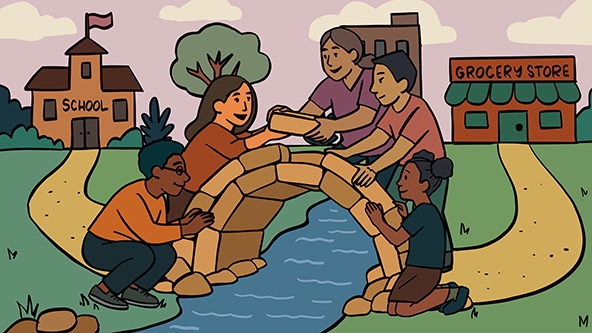
If we want to increase trust among the people we serve and whose data we interact with, we must go above and beyond to be transparent, accountable, and people-centered.
We need a fundamental shift in the power dynamics inherent in data collection and use. In the status quo, powerful dominant institutions, including governments, for-profit companies, and academic institutions, are weaponizing and exploiting people’s data in ways that are deeply dangerous and untrustworthy. They hold all the cards: They design the instruments, extract the information, and control the outcomes—all to fulfill their own desires while the very people who provide the data have little or no say in why their data are being collected, in what ways they’ll be analyzed, or how they’ll be used.
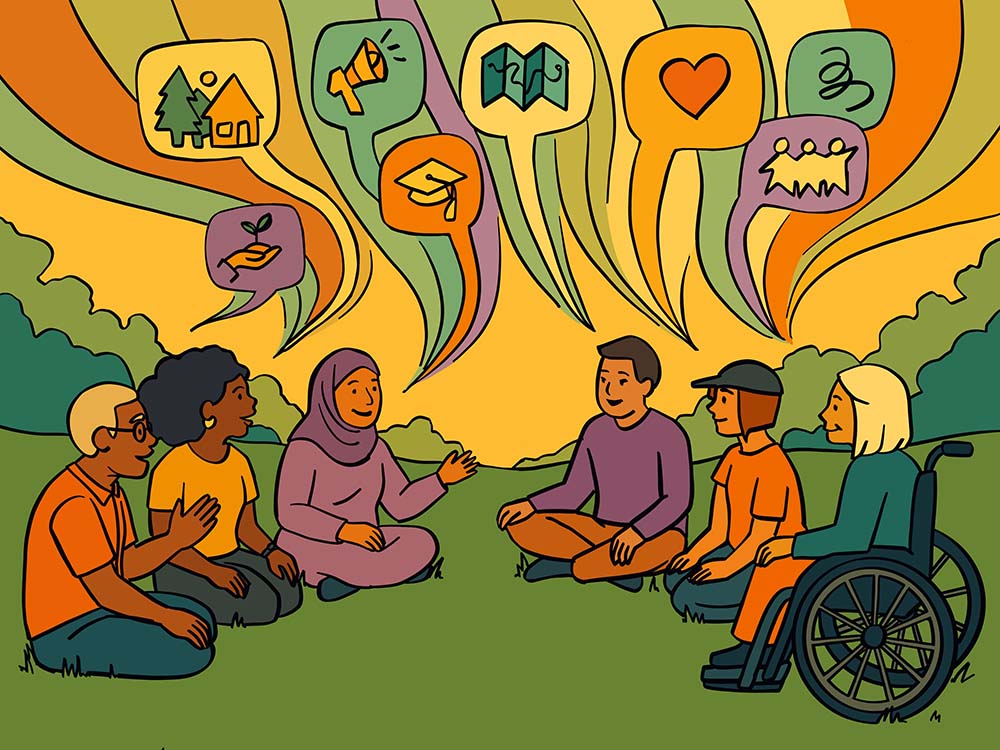
This imbalance is what data equity seeks to correct. Equity is about rectifying structural injustices, redistributing power, and giving people what they need to flourish. Data equity applies the principle of equity to data systems governed by dominant institutions, requiring that they treat people’s information as precious, not disposable. It means ensuring that communities, particularly those who have been oppressed by structural racism and other systems of oppression, have a voice in shaping how data is gathered, how it will be used, and what they receive in return. It means honoring communities’ lived experiences and ensuring data-related policies and practices confront systemic inequities and their legacies of exclusion and harm. Data equity shifts the relationship from extraction to shared governance, where reciprocity and accountability are non-negotiable.
Values That Must Guide How We Collect, Interpret, and Use Data
If data equity is the horizon for dominant institutions, data justice is the destination. Equity offers a path toward fairer practices within entrenched systems, but true justice requires transforming those systems entirely and that work must be community-driven. Values are the compass for both goals. Every act of data collection is a choice about how much respect, honesty, and reciprocity we extend to the people whose lives are reflected within our data sets. Without shared values, even well-intentioned efforts will reproduce the same harms that have already hollowed out faith in our institutions.
A value at the heart of this shift is consent. Data equity begins with choice—the autonomy to decide whether and how to participate, shape what questions are asked, and determine how findings are shared. Too often, communities are handed pre-set consent forms that reduce participation to a “yes/no” checkbox. Co-powered consent goes beyond traditional informed consent, creating a culture and process through which people can define what consent means for them and how they wish to participate, if at all. It makes consent an ongoing, collaborative process rather than a one-time transaction.
Transparency is another critical value for data equity. People deserve to know why their information is being requested, how it will be used, and what they can expect from their participation in a data-related effort. Transparency is not a matter of fine print; it’s about being forthright about how people’s information will be collected and used.
Hand in hand with transparency is accountability. Promises about how data will be used only matter if they’re kept. Accountability means building in follow-through: crediting people for their contributions, circling back with results, and making sure that what’s been promised actually happens.
Then comes reciprocity. Data are not free. They involve time, labor, and knowledge that communities give at their own expense. Honoring their contributions means ensuring that people see tangible benefits from sharing their information, whether that’s recognition, resources, or evidence that their information helped shape a program or policy.
Finally, there is trustworthiness—the thread that binds all these values together. Trustworthiness isn’t claimed; it’s a practice that’s demonstrated and sustained through consistent action over time. It means consistently showing communities that you will honor your commitments, that your intentions align with your behavior, and that people can rely on you to do what you say.
Absent of these values, data is left both fragile and damaged, stripped of credibility and trust. But when these values guide data processes, information becomes meaningful, relationships strengthen, and decisions are grounded in shared purpose.
Data Accountability Agreements: A Framework for Trust-Building
Values guide our direction, but accountability agreements are how we put these values into practice.
Every time we click “accept” on a terms-of-service document, sign a consent form, or enter a contract, we acknowledge a set of rules that govern our participation. The problem is, these agreements usually serve the interests of institutions, not individuals. They force compliance without offering real choice.
But agreements don’t have to work this way. At their best, they can rebalance power by making accountability mutual, guaranteeing that people have a say in whether and how they participate and the confidence in knowing that their preferences will be honored. That is the promise of equitable data accountability agreements: They transform an inequitable one-sided transaction into an equity-driven commitment in which all parties have obligations and rights.
Instead of treating data collection as something done to communities, data accountability agreements create space for honest discussions with communities. They can ensure that thoughtful actions are taken regarding how people’s information will be gathered, shared, and used. And critically, they set clear expectations at the outset about what will happen with people’s information, when they’ll hear back, and what they can expect in return, eliminating the uncertainty and broken promises that erode trust.
Five questions serve as a springboard for developing data accountability agreements with any group of people from whom information is requested:
1. Why Are We Asking for This Information?
Trust begins with honesty about intent. It’s not sufficient to simply restate research objectives or cite evaluation goals in technical language. It is about explaining, in plain terms, why people are being asked to share their valuable information and how their responses will be used to shape something with the potential to impact their lives.
Take the case of an evaluator who is assessing a community nutrition program for a nonprofit organization. A strong, accountability-centered explanation that conveys a clear “why” could be: “We’re asking about your access to healthy food because the county is deciding whether to continue funding the free produce program at the community center. Your opinions on what’s working, what isn’t, and what more is needed can help us advocate for improving and expanding this resource.” The difference is profound. The first treats community members as a source of raw data. The second recognizes them as partners whose experiences are critical to influence the future of a potentially valuable community resource.
2. Who Will See This Information?
People deserve to know who will access what they share, in what format, and for what purposes. This means being specific about staff roles, partner organizations, funders, and potential secondary uses. Situations where people are told their information will be “kept confidential” without specifics, leaves them to imagine worst-case scenarios—often based on real instances where data have been misused or weaponized against communities.
A county health department collecting information about residents’ experiences with public services can provide a detailed and transparent explanation of who will see their data: “Your feedback about accessing county health clinics will be seen by our service improvement team, our department director, and our county health board. Your responses will be kept anonymous, which means it will be impossible for us to connect your identity to your responses. We’ll share anonymized themes in our annual report to the county commission, but no individual responses or identifying information will be included. We will not share this information with law enforcement, immigration authorities, or any entity outside of county health services without a legally valid court order, and we will provide advance notification if this ever occurs.”
By naming both boundaries and permissions, this approach allows people to make informed choices, builds confidence about who will see and use their data, and provides clarity about how the institution will protect their information.
3. How Will We Build Consensus for Using This Information?
Building agreement with the people contributing information is essential because the data we seek can’t exist without them. This means creating space for discussion and negotiation about how information will be analyzed and used. This shifts data use from a “take it or leave it” arrangement to a co-created agreement.
A foundation program officer evaluating grant effectiveness might say: “Before we analyze this information, we’d like your input. What would you want us to focus on when we look at the data? Are there specific ways you would want your experiences presented? What conclusions do you think would be harmful if drawn, or what recommendations would be most useful for your community? We’ll also check in with you before we publish any reports or present findings to make sure you’re comfortable with how your contributions are being represented. If at any point you want to withdraw your information or change how it’s being used, you can contact us, and we’ll honor that request.”
This language acknowledges that communities bring unique insights about their own realities that can easily be overlooked by outsiders. When community perspectives shape analysis, findings are more accurate, more relevant, and much less likely to cause harm.
4. How Will We Return This Information to You?
Many times, communities give their time and insights only to never see or hear about them again, as results vanish into a black hole of institutional reports, briefs, and presentations. Data equity demands reciprocity: When people share their information, something meaningful must be given back. This represents an act of respect that closes the loop between those who provide data and those who use it.
For example, a market researcher studying consumer experiences might provide a clear statement committing to returning survey information to consumers: “We appreciate you sharing your perspectives with us. Within 90 days of completing our survey analysis, we’ll produce a report sharing what we learned. We want to share it with you so that you can see how all of the information shared was summarized and the recommendations that will be made as a result. Please let us know the best way of sharing the report with you, whether it’s by email, providing downloadable copies, or something else. If our recommendations, which are directly informed by your input, lead to changes in local business practices, we plan to follow up to see if those changes are actually helping.”
The principle is simple: People should benefit from the information they help create. When data is shared back in accessible ways, it becomes a tool for participation and collaboration rather than extraction.
5. How Will We Give Credit and Acknowledgment?
Recognition is tied to the values of accountability, transparency, and reciprocity. Showing appreciation for the people who contribute to a data-related effort is important, but how people are acknowledged should be determined by their preferences. Some may want to be named publicly for their contributions, while others may desire anonymity for safety or privacy. Equity means honoring both choices. What’s non-negotiable is that people’s intellectual contributions as co-creators of knowledge are valued.
A UX researcher at a health care technology company might explain: “We recognize that your feedback represents valuable knowledge and labor. In our internal reports and presentations to leadership, we will acknowledge that our design improvements came directly from patient insights. If your specific ideas shape our product, we’ll credit ‘patient contributors’ in our release notes. We will not use your contributions for promotional materials without asking your permission first and ensuring you receive proper recognition.”
Acknowledgment builds trust and connection between data providers and data users, strengthens credibility in the information gained, and ensures that expertise drawn from lived experience is valued alongside professional credentials.
A Call to Action
Our need for reliable data is increasing, just as people’s trust in institutions and trust in data are decreasing. And this distrust is deserved. It is built on decades of experiences where people’s data has been used to harm them—whether it’s been used to deny them services, to surveil and police them, to separate families through deportation, to criminalize their survival strategies, or to justify systems of oppression. In our current moment, these threats aren’t distant memories; they’re present-day realities that are immediate and intensifying.
Organizations that want to build trust must begin the work now of making accountability fundamental to their data-related efforts:
- For researchers and evaluators: Start by identifying one upcoming project where you can pilot data accountability agreements. Bring community partners into the design process early, not after methods are locked in, and discuss how collected information will be interpreted, shared, and used.
- For funders and foundations: Build data accountability agreements into your own grantmaking processes. Provide resources to support the time, infrastructure, and relationships needed to make equitable data practices possible. Model data accountability agreements in your own data practices related to research, evaluation, and learning.
- For government agencies: Apply data accountability agreements to the collection and use of civic data, particularly those related to surveys and administrative data. Establish clear processes for transparency, feedback, and shared decision-making to build public trust in government data systems.
- For private-sector companies: Use data accountability agreements to set clear expectations about consent, use, and return of information in ways that can positively set your company apart and illustrate a commitment to trustworthiness to your clients and consumers.
- For everyone: Examine your organization’s data collection practices through the lens of the five accountability questions above. Where are you already doing this well? Where could you improve? What would it look like to pilot data accountability agreements in your next project?
The values of consent, transparency, accountability, reciprocity, and trustworthiness are not aspirational—they are the very cornerstones of legitimate data practice and can be operationalized by data accountability agreements. These agreements are not a luxury; they are a necessity for sustaining access to information that makes effective action possible. Organizations that embrace these agreements will be well-positioned to gather meaningful information, sustain genuine partnerships with the people they serve, and drive lasting change.
Read more stories by Jamila M. Porter, Zamir Bradford, Lynne Le & Kay Schaffer.