


 Photograph by Michelle & Chris Gerard
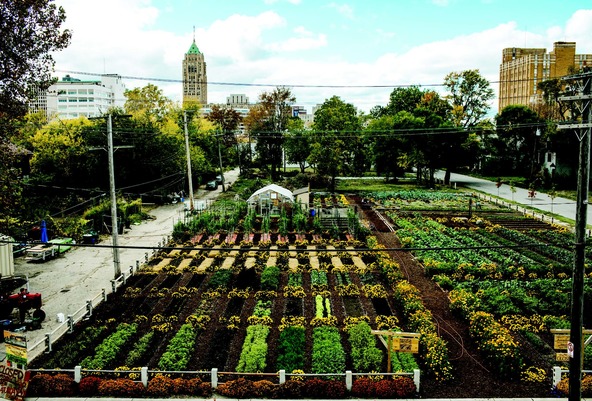
An estimated 1,400 urban gardens have sprouted up throughout Detroit, created by individuals and groups that want to put the thousands of acres of vacated and often blighted land to more productive use—growing fresh food, generating income, and creating community. As the number and size of these gardens (in some cases small farms) grows, and as Detroit’s economy recovers, disagreements over them are beginning to erupt. Some critics argue that the land could be better used for other commercial purposes that would provide more and better jobs for the approximately 25 percent of Detroit’s labor force that remains unemployed. Others think the land should be used for new housing, particularly in parts of the city that are near mass transit and are experiencing an economic upturn, like the area pictured here. The Michigan Urban Farming Initiative garden lies near Wayne State University and only a few blocks from a station on a new light rail system that connects to downtown Detroit. Whatever one’s position on urban farming, the fact that Detroiters are now arguing over the best use of formerly abandoned land is a hopeful sign. (For more on Detroit’s recovery see the sponsored supplement, “Drawing on Detroit,” elsewhere in this issue.)
Read more stories by Eric Nee.