
Content by Eric Nee. More information about the author is available at the base of any article listed below.

The digital system should serve the public interest, with much more intentional governance of technology in its broadest terms, including culture, norms, mindsets, institutions, ethics, and participation.



While the array of media products that SSIR offers has changed over the last 20 years, our mission has not.
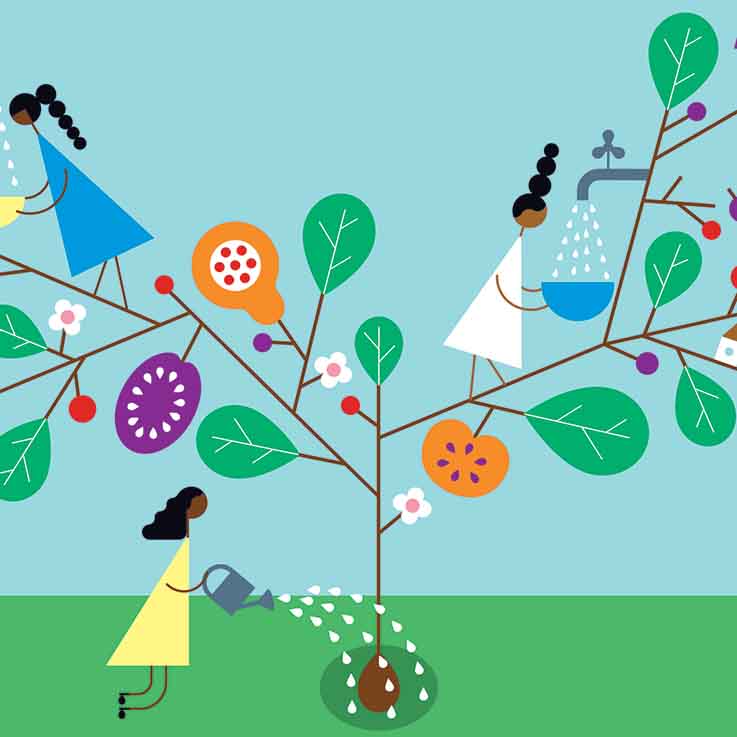
While large amounts of money can make a difference, it’s not the only way that philanthropists can have an impact.

A successful transition away from fossil fuels will require strong and vocal civil society organizations and social movements, along with government and business, to make the changes that are necessary if we are to avoid the calamities of global warming.

People from disadvantaged communities have largely been cut off from the tech cornucopia. It doesn’t have to be this way.

Nonprofits need to go into relationships with donors with their eyes wide open and dispassionately weigh the risks and rewards of the exchange.

Authors of a seminal article on collective impact explore what it means to put equity at the center of the practice and how that changes the collective impact process itself.

Nonprofits, governments, and businesses around the world have changed how they operate to overcome the impact of COVID-19. The social sector should continue to build on that creativity in the wake of the pandemic.

Looking at a board through the lens of colonization can increase its effectiveness and improve board culture.

Despite the poverty rate being significantly higher in rural America, philanthropists continue to pour money into urban areas.

One of the important ways to improve the lives of ordinary Americans is to empower workers and encourage the growth of unions.

Until recently, most of the 3,422 companies (in 71 countries) that have become a B Corp have been small and medium-sized, but a growing number of large, established corporations are starting to undergo the certification process as well.

Our mission is to find and publish articles by leading thinkers and doers that provide insight on important issues and challenges that social sector leaders must deal with continually. As it turns out, some of these eternal topics are essential now. The Editor's Note from the Summer 2020 issue.

How the social sector and Stanford Social Innovation Review are responding now and preparing for what comes next. Part of the series Rethinking Social Change in the Face of Coronavirus.

Social innovation leaders should reconsider partnering with the public sector, which has many more resources and much more power than the nonprofit sector, and more of a mandate to address social problems than does business.

Rather than a model with a fixed approach, as collective impact is, the community system solutions framework can be adapted to different types of situations. The Editor's Note from the Winter 2020 issue.

An earned-income business model can tempt nonprofits to pursue the wrong revenue opportunities but they can also be a more reliable income stream than grants or gifts. An Editor's Note from the Fall 2019 issue.

During the Industrial Revolution, labor organizations, social movements, the media, and government came together to rein in big business, providing lessons on how to regulate firms of today like Facebook, Amazon, and Google, writes SSIR's editor-in-chief in an introduction to the Summer 2019 issue.

It’s time for socially responsible business leaders to pay higher wages and offer better benefits.

A growing chorus of critics are questioning whether big philanthropy is actually a good thing.
As America undergoes dramatic upheavals, one of the ways to understand these changes and to come up with solutions is to examine them through the lens of civil society.

The conservation movement has been criticized for being too homogenous, but the National Audubon Society is taking steps to change that.

Social innovation will take different forms in different countries. In China, businesses are likely to take the lead.

America’s first memorial honoring African-Americans who have been lynched opened in Montgomery, Alabama.

Since 2003, Stanford Social Innovation Review has provided a forum for social-change leaders to share new ideas and best practices, and learn from one another.
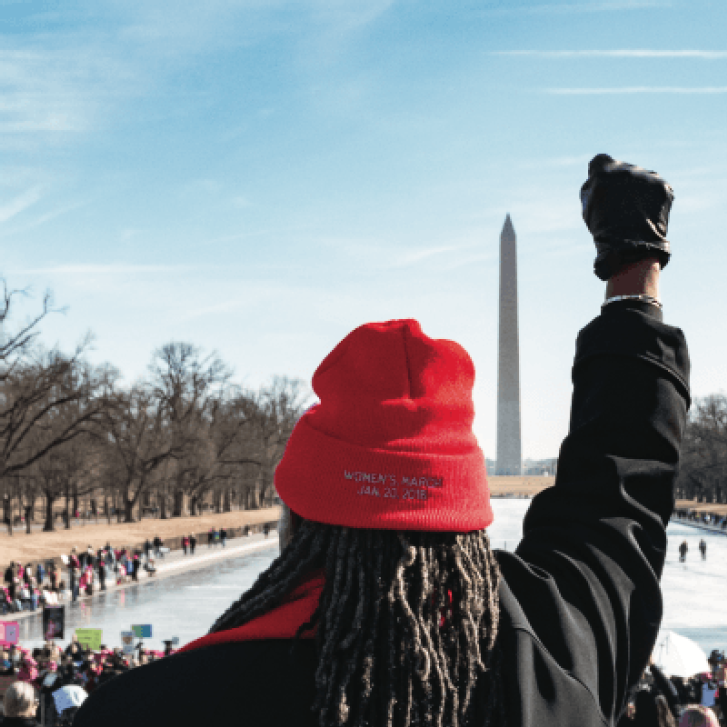
From the Women’s March to #MeToo, women have risen up to change politics and society.
Philanthropists and other impact investors play a critical role in funding risky, early-stage startups developing science-based solutions to climate change.


At a time of rising nationalism and cutbacks in foreign aid in countries around the world, philanthropists play a critical role, not just in providing money, but in fostering cooperation and goodwill between people and nations.
Community foundations should reaffirm their unique role in the philanthropic landscape and focus on the needs of their geographic community.

Puerto Rico has effectively declared bankruptcy, putting government programs and social progress at risk.
The ACLU spent the last decade strengthening its state affiliates, just in time to battle the Trump Administration’s reactionary policies.

Native American activists in North Dakota build broad support to protect sacred lands from environmental degradation.
The social sector needs to take greater advantage of the behavioral sciences when developing programs and services.


Too many nonprofits develop products and services without paying enough attention to their customers (the beneficiaries).

The number of urban gardens in Detroit has been increasing as people seek to put abandoned land to better use.
Innovation is an important tool to create social change, one that can be learned and mastered.

Many of the more than 355,000 smallholder coffee farmers in Rwanda are members of producer co-ops.
Nonprofit organizations and social businesses must adapt to technological changes to survive.

Marine reserves that cut across national borders in Africa are protecting underwater life.
To create long-lasting social change, organizations and programs must become embedded in the local community.

One of the cities hit hardest by the wave of home foreclosures was Stockton, Calif., a city that later declared bankruptcy.
It’s time for more foundations and philanthropists to make $10 million plus grants to social change organizations.

One of India’s biggest challenges is providing clean water to all of its 1.3 billion citizens.

Social innovators in India are making progress against social problems as varied as the lack of high-quality education, limited access to clean water and hygiene, and inadequate nutrition.

One of India’s largest, and most intractable, challenges is providing clean water to all of its 1.2 billion citizens.
Leaders who view communications as a strategic function integral to their organization’s overall operations can be more successful in their work.

Thousands of Africans attempt to reach European soil by scaling fences surrounding Spanish cities.
More than ever we are seeing a blurring of the lines between the nonprofit and for-profit sectors—but that is not always a good thing. An introduction to the summer 2015 issue.

A Brazilian organization uses ballet to help disadvantaged youth improve their lives.
There are important lessons to be learned from social enterprises that have failed—an introduction to the spring 2015 issue.

A growing number of Maasai in Kenya are ending female circumcision and replacing it with other coming-of-age rituals.
Innovation comes in different forms, and most of the time it's not disruptive. An introduction to the winter 2015 issue.
The City of Philadelphia Mural Arts Program has produced more than 3,600 murals throughout the city.
Increased cross-sector collaboration has allowed businesses to use the power of capitalism to solve social problems—an introduction to the fall 2014 issue.

Papua province is the epicenter for HIV/AIDS in Indonesia, the world's fourth largest country.
Leaders of social change organizations should embrace the uncertainty of strategic plans.

Women and even girls continue to be the victims of acid attacks by men in Bangladesh and other countries.

There has been a renewed interest in traditional Indian spiritual practices by Native and other Americans alike.
Stanford Social Innovation Review has a new look that is bolder, more energetic, and more contemporary, reflecting today's social change movement.

Every year nonprofits and government agencies partner to help resettle the more than one million new immigrants to the United States.
Paul Brest and Kelly Born's Up for Debate article on impact investing zeros in on several important issues and offers some controversial conclusions.

NYU's College of Dentristy partnered with the government of the Caribbean island nation of Grenada to fight tooth decay among children.
Many people think that the term “government innovation” is an oxymoron, but innovation does occur in the public sector and the pace is accelerating.

Solnechny Mir (Our Sunny World) is a Russian rehabilitation center that hosts more than 250 children and their families each week.
Stanford Social Innovation Review celebrates a decade of innovative ideas and practices.

e-waste recycling in Agbogbloshie provides a livelihood for thousands of people, but it also results in a heavily polluted environment.
The impact investing field is maturing as leaders of social innovation reflect on their experiences and research.
Although new corporate forms like B Corps make it easier to pursue a social mission, it turns out that you don't need one to do so.

A discussion of the ways in which growing numbers of communities are aligning resources and pulling together to create significant change on a community problem.
Making multi-sector collaborations work—a report from the CECP 2012 Corporate Philanthropy Summit.
Critics of Obamacare have taken away attention from important aspects of the act, such as its focus on keeping people healthy.
As we create new ideas and solutions to society’s problems, we have to be careful not to become too wedded to them and think that they are universally applicable.

Jeff Skoll is one of the most creative, generous, and effective philanthropists of his time. And at age 47, he’s just getting started.
As entrepreneurs create more for-profit businesses with strong social missions, the opportunity for socially minded investors to invest in them grows.
The ShoreBank saga provides important lessons for people who believe that for-profit institutions can be used for social change.

Manish Bapna, managing director of World Resources Institute, is helping China manage its environmental problems.

Neal Keny-Guyer believes that wars, earthquakes, and other disasters create opportunities for Mercy Corps to help improve society.

Jeffrey Sachs believes we must lift a billion-plus people out of poverty while reducing our impact on the environment.

Joanne Weiss is in charge of the federal government’s $4.3 billion Race to the Top Fund, a new program that is funding innovations in K-12 education.

Jeff Raikes takes over the Gates Foundation at a turbulent time when philanthropic resources are down and social needs are up.

Under Fred Krupp’s leadership, the Environmental Defense Fund has become one of the most important power brokers in the environmental arena. Krupp has helped accomplish what some thought was impossible—getting businesses to go green voluntarily.

The Rockefeller Foundation is staying at the forefront of new and big ideas, funding new innovation processes like crowdsourcing and collaborative competitions.

William Brindley spent most of his career keeping financial institutions at the leading edge of technology. Now, as CEO of the nonprofit consortium NetHope, he is using those same skills to help nonprofits do the same. NetHope now has 25 member organizations, among them Save the Children, Mercy Corps, Oxfam, the International Federation of Red Cross and Red Crescent Societies, and Catholic Relief Services.

Managing Editor Eric Nee spoke with Self-Help’s founder and CEO, Martin Eakes, about the subprime loan crisis and its impact on the poor.
SSIR Managing Editor Eric Nee spoke with Escuela Nueva’s president Vicky Colbert about her efforts to change the way children are educated.
SSIR Managing Editor Eric Nee spoke with the X Prize Foundation’s president, Thomas Vander Ark, about how prizes can stimulate social innovation.

SSIR Academic Editor Jim Phills spoke with Nike’s Hannah Jones about the sportswear giant’s extensive corporate social responsibility programs.

SSIR Managing Editor Eric Nee met with Emmett Carson to discuss his bold plans for the newly merged Silicon Valley Community Foundation, which is now the fourth largest community foundation in the country.
Remittances dwarf traditional forms of aid to less developed nations.
MacArthur “genius” prize winner creates drugs for the developing world.
Why do nonprofits talk a lot about partnering with business and government, yet rarely talk about building partnerships with trade unions?
Sidebar to "The Hidden Cost of Paradise:" The Miwoks were exterminated from Yosemite Valley.