


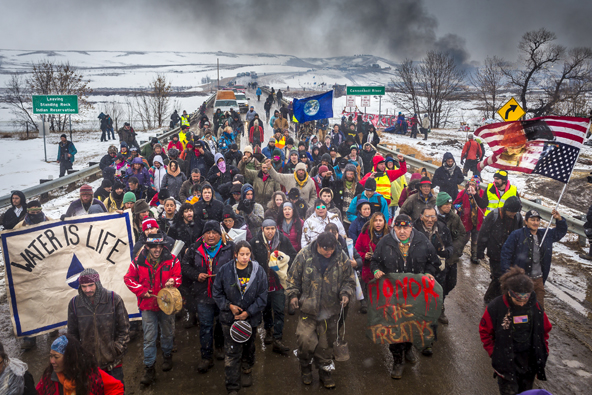
 (Photo by Michael Nigro/Pacific Press/Lightrocket via Getty Images)
The Dakota Access Pipeline protest that began in 2016 in North Dakota has grown to become one of the most significant US protests in this century. Led by the Standing Rock Sioux tribe, protesters are attempting to stop the construction of a 1,100-mile oil pipeline stretching from North Dakota to Illinois that crosses the Missouri River within miles of the tribe’s reservation. The pipeline is being built on lands considered sacred by Native Americans and also poses an environmental risk (particularly to the Missouri River) from potential oil spills. In an effort to stop construction of the pipeline, protesters created several camps in the area that eventually housed as many as 10,000 people. Thousands more staged protests in cities around the United States, and even around the world. The protest received a significant setback when President Trump signed an executive order on January 24, 2017, giving the go-ahead for the construction of the pipeline. The march pictured here took place on February 22, 2017, the day that law enforcement agencies evicted the last protesters from the camps. While it now seems that the pipeline will be built, the Dakota Access Pipeline protests were not a failure. They brought together Native Americans, environmentalists, social justice advocates, and others, creating the seeds of a social movement that is likely to grow.
Read more stories by Eric Nee.