


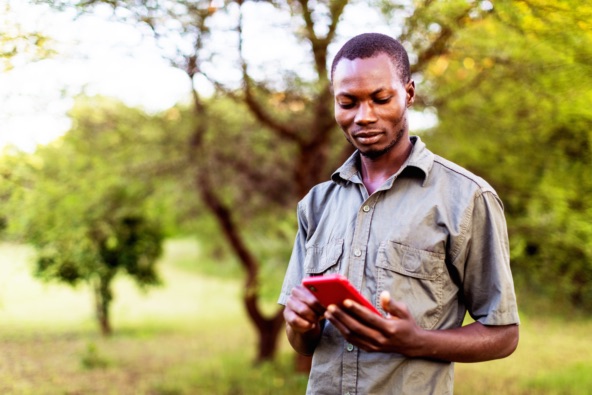
 (Photo by iStock/GCShutter)
Natural disasters have become more frequent around the world in the past decades, with many experts contending that such catastrophes are linked to climate change. Many communities, particularly in developing countries, have been caught ill-prepared for the disasters, resulting in massive loss of lives, livelihoods, and property.
After the 2024 El Niño-induced drought in Southern Africa—the worst in more than 40 years—communities waited weeks and even months for emergency relief from their governments and aid agencies. For people in remote areas, the relief never reached them. As a result of the drought, countries across the region are struggling to raise the billions of dollars needed to feed millions of people on the brink of starvation.
Seeking to curb delays in emergency relief, Mercy Corps Ventures—an arm of the NGO Mercy Corps—initiated a test program in 2023 that sent relief cash payments to people before a natural disaster happened. The technology facilitating this work relies on high-fidelity satellite data, predictive analytics, and mobile banking to identify people who might be affected by a natural disaster and allocate financial aid to them.
“By leveraging satellite data and AI, organizations can predict natural disasters like droughts with greater accuracy and ensure that emergency relief payments reach vulnerable populations in advance,” says Gebremedhin Gebremeskel Haile, assistant professor of Earth and Environmental Sciences at Wesleyan University. “Mobile payments, in particular, provide a lifeline to affected communities, enabling them to procure essential supplies, maintain food security, and mitigate the worst impacts of crises.”
Nearly 300 million people around the world need humanitarian assistance, with more than $223 billion in aid given in 2023. However, according to the international NGO Start Network, 99 percent of this aid is issued after natural disasters strike, making it difficult to disburse aid to the affected people. UN research shows that anticipatory action—aid delivered before disaster strikes—is seven times more cost-effective than traditional humanitarian aid.
“Anticipatory action empowers beneficiaries to plan and reduce impacts of emergencies, rather than waiting for relief and rebuilding support in the aftermath,” says Scott Onder, chief investment officer at Mercy Corps Ventures. By giving unconditional cash support, Mercy Corps respects the needs of the beneficiary, providing dignity of choice for them to use the funds on what they need most.
Over the past two years, Mercy Corps has piloted anticipatory actions in Guatemala and Kenya, with a third initiative in Nepal concluding early this year. In Kenya, Mercy Corps Ventures partnered with the local finance and tech businesses Fortune Credit Limited, DIVA Technologies, and Shamba Network on the project. They first compared Normalized Difference Vegetation Index (NDVI) satellite data on the state of vegetation in an area to predict drought. Once a prediction was made, smart contracts—the fund-distribution process, including the confirmation of exchange rates, recipient validation, and preparation of SMS notifications—triggered automatic payments via stablecoins and crypto payment rails, immediately distributing the funds in local currency to Kenyan communities.
Haile cautions that there are limitations to consider, since “access to mobile networks and financial services is not yet universal in Africa.” Remote or underserved areas may struggle to benefit from these technologies due to weak connectivity, lack of mobile devices, or inadequate digital literacy.
Despite the continent’s current tech capacity, Mercy Corps Ventures believes it can significantly scale up the pilot and further optimize cash transfers through enhanced climate analytic, AI, and remote sensing data provided by satellites to deliver cash transfers to people affected by natural disasters. This year, the initiative will be expanded across the Horn of Africa to reach more livestock owners and farmers in Kenya as well as in neighboring countries like South Sudan and Somalia.
Read more stories by Andrew Mambondiyani.