


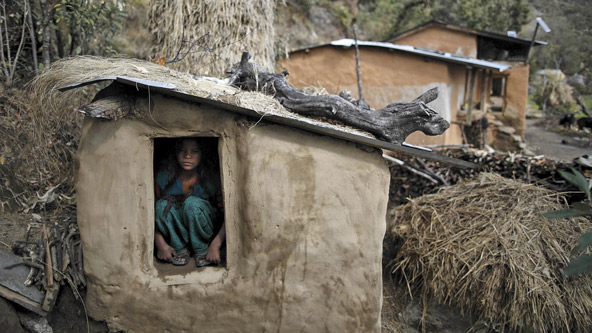
 (Photo by Navesh Chitrakar, Reuters)
"Tradition" serves as a bulwark for male power and control. It keeps women and girls trapped within oppressive patriarchal structures, beliefs, and practices, such as chhaupadi, a Hindu practice prevalent—even though outlawed—in Nepal known as “menstrual exile.”
It is this tradition that deems menstruating people like Uttara Saud—who was 14 at the time this photo was taken—unclean, impure, and untouchable for the duration of their menstrual cycles. During each cycle, women and girls must remain enclosed in sheds or huts, many of which lack windows, electricity, and running water. They also are denied access to water supplies, livestock, and all forms of touch.
Fear of the female body results in containment and violence. The United Nations has documented the various life-threatening risks of chhaupadi: illness or death caused by dehydration, suffocation, or weather exposure; animal attacks; and rape and sexual assault.
Women’s rights and human rights organizations like Action Works Nepal and Rato Baltin Project take aim at this tradition through creating broad access to scientific knowledge that destigmatizes menstruation. Shibboleths fall when data and evidence-based research are accessible and become common knowledge.
Read more stories by Marcie Bianco.