



More than three decades after the collapse of the Soviet Union, cities in Eastern Europe and Central Asia (EECA) continue to grapple with economic stagnation, aging infrastructure, and environmental degradation while also facing new pressures from climate change and regional conflicts. In this context, traditional city planning, which tackles problems in isolation, is struggling to keep up. Urban strategies often rely on siloed, one-off interventions that fail to reflect the complexity of social challenges or adapt to shifting conditions. As a result, efforts are frequently fragmented, overlook root causes, and miss opportunities for long-term, cross-sector collaboration.
Instead of addressing one issue at a time, cities need to develop a set of coordinated, interlinked solutions that tackle multiple urban challenges simultaneously and align efforts across sectors. As part of a broader strategy to address environmental, economic, and social goals at once, for example, cities might advance a range of initiatives, such as transforming biowaste into resources, redesigning streets to reduce air pollution, and creating local green jobs. These kinds of “portfolio” approaches are leading to lasting and systems-level change.
Since 2021, the United Nations Development Programme (UNDP) has been collaborating with 15 cities across EECA to solve problems in ways that embrace complexity and interconnectedness. Selected through open calls under two UNDP initiatives, Mayors for Economic Growth and the City Experiment Fund, these cities demonstrated a strong interest in tackling systemic issues. Their proposals highlighted the problems they face, their capacity for innovation, and local initiatives and partnerships.
Their ongoing journeys have surfaced four lessons that can help other cities move beyond conventional planning pitfalls, and adopt a more responsive, inclusive, and sustainable approach to urban development.
1. Understanding Root Causes Through Community Engagement
Many cities attempt to solve complex problems by targeting their most visible symptoms. Cities often respond to rising unemployment, for example, by offering tax incentives that attract new businesses or industrial parks. Yet surface-level solutions like this overlook deeper, interconnected issues like skills mismatches between workers and available positions, inadequate transportation access to and from job centers, and barriers to entrepreneurship caused by complex regulations and limited access to capital.
The solution lies in engaging with local communities to uncover how various challenges interweave in residents' daily lives. This means moving beyond one-off public consultations and instead committing to ongoing dialogues with diverse community groups, particularly those who tend not to take part in planning processes. Rather than applying a blueprint, for example, UNDP takes a hands-on, hyperlocal approach, co-designing initiatives with city teams, providing coaching and technical support at different points in the process, and fostering shared ownership between local authorities and citizens to ensure that urban transformation efforts are inclusive, adaptive, and grounded in lived experience.
The small Armenian town of Stepanavan exemplifies the value of this approach. Located just over 100 kilometers from the capital, Stepanavan is known for its tranquility rather than its appeal to young people and families. As a result, it faces severe depopulation, with residents aged 18 to 29 making up less than 15 percent of the permanent population. This decline threatens the town’s economic vitality, strains its education and health systems, and weakens local institutions by reducing the pool of active citizens, skilled professionals, and future leaders needed to sustain community life and public services.
When COVID-19 further exacerbated this population decline by disrupting education and local services, and accelerating youth outmigration, local officials initially focused on economic growth, aiming to attract investment and stimulate job creation. However, this approach overlooked the broader social and cultural factors influencing young people’s decisions to leave.
In response, the municipality, with support from UNDP, led a structured community listening process involving more than 200 stakeholders across sectors. The city conducted targeted interviews and dialogues with young residents using tools adapted to the local context to gather input, feedback, and insights. The findings revealed that the youth exodus was driven by a combination of factors: limited educational opportunities, a lack of meaningful employment, and an absence of vibrant cultural spaces. These insights were synthesized into youth personas—capturing primary needs and aspirations—which helped guide strategic discussions and shape a more holistic local development approach.
Instead of looking at the challenges separately, Stepanavan designed a response that included skills development, employment pathways, and community revitalization—a cohesive strategy aimed at making the town an attractive place to build a future, First, to align talent development with local economic opportunities, the municipality partnered with a local aviation agency to establish an Aviation Center that offers technical training linked to emerging industries. It also collaborated with the local tech community to launch an IT Learning Center, equipping young people with digital skills for green transition jobs. Simultaneously, it opened up space for creative and entrepreneurial expression, transforming an abandoned Soviet-era cultural center into a youth innovation bub that offers workspace, vocational training, and cultural programming. It also invested in new recreational and cultural spaces, such as an open-air cinema and a sports courtyard, ensuring that the town’s renewal extended beyond employment to quality of life.
Though long-term population trends will take time to shift, early results are promising: More than 500 young people have engaged in these initiatives, participating in non-formal education, community projects, and social integration activities. To help sustain and scale these efforts, Stepanavan also established the Resilient Stepanavan Fund—a dedicated financial mechanism that mobilizes alternative capital to support climate adaptation, disaster preparedness, and community revitalization. By leveraging tools such as municipal bonds, venture philanthropy, and public-private partnerships, the fund aims to diversify investment and drive long-term renewal.
In sum, by threading together training, employment, entrepreneurship, cultural renewal, and sustainability initiatives, Stepanavan has reframed its identity from a quiet town in decline to a place where young people can learn, work, and create a future worth staying for.
2. Building Adaptive Systems: Start Small, Learn Fast
Cities often try to solve problems through large, top-down, one-time interventions such as major infrastructure projects. However, these approaches typically lack the flexibility to respond to rapidly changing conditions and emerging challenges.
A more effective approach is to develop portfolios of smaller, interconnected initiatives that can be tested, adjusted, and scaled based on results. This allows cities to learn quickly what works and what doesn’t, change course as needed, and build on successful efforts.
Mykolaiv, a prominent city in southern Ukraine, demonstrates how this works in practice. Prior to 2022, the city thrived as a major center for shipbuilding and logistics, accounting for 23 percent of Ukraine’s maritime operations and 80 percent of alumina exports. However, the city sustained significant damage after Russia’s invasion, with more than 8,000 civilian infrastructure sites damaged and half of the residents leaving in search of safer living conditions.
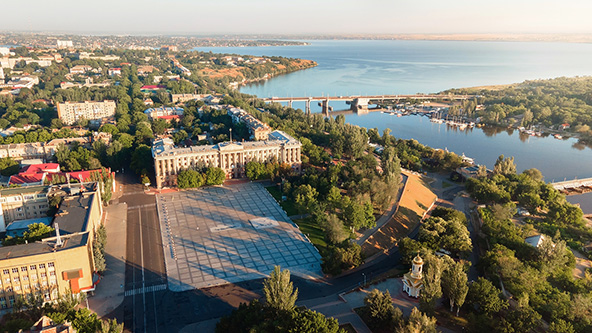 A bird’s-eye view of Mykolaiv, Ukraine, a prominent city in southern Ukraine. (Photo by Aleksandr Mokshyn)
Rather than waiting to implement a single, large-scale recovery plan, the city launched multiple smaller initiatives to test possibilities, including the exploration of new economic models. Alongside rebuilding essential infrastructure, these efforts aimed to support local innovation, empower small businesses, and engage citizens in shaping the city’s future.
At the heart of this approach is a social space called the Portfolio Hub, where businesses, citizens, and municipal leaders work together to generate and refine ideas. Located in the municipality building, the hub combines in-person workshops with digital tools and online forums, creating a flexible environment for ongoing collaboration. Leaders actively engage in structured workshops, ideation sessions, and events such as the "Mykolaiv – City on the Wave" international conference, which brought together local entrepreneurs, maritime industry experts, sustainability advocates, and municipal leaders to co-create and discuss strategies for sustainable recovery. The conference highlighted practical initiatives, such as revitalizing shipyards and industrial parks and supporting small enterprises through innovation challenges, that resulted from the hub’s collaborative process, making Mykolaiv’s reconstruction an adaptive, community-driven process.
One of the most ambitious initiatives that has emerged from the hub is the Blue Innovation Challenge, a program designed to accelerate economic recovery by supporting enterprises working in sectors of the “blue economy”—economic activities related to oceans, waterways, and sustainable use of aquatic resources. The challenge involved a competitive selection process in which local micro, small, and medium-sized enterprises proposed innovative solutions aligned with Mykolaiv’s strategic focus on blue economic transformation. Twelve promising businesses were selected and are now implementing a variety of projects, including low-impact aquaculture systems, sustainable port logistics, smart water monitoring technologies, and renewable energy integration for coastal industries.
In its attempt to engage and enable a diverse group of innovators to address immediate and long-term recovery, Mykolaiv has successfully attracted investment and technical support for urban development. Notably, it has established international partnerships, including with the Ministry of Foreign Affairs of Denmark, that have provided more than €140 (around $160) million in funding and expertise in resilient city planning, co-design processes, and capacity building. Collaboration with local businesses, NGOs such as the Ukrainian Association of Business Support Centers, and sustainability experts working together to shape recovery has further strengthened Mykolaiv’s progress.
Even in the face of crisis, Mykolaiv’s experience underscores how adaptive, community-driven innovation can become a foundation for long-term recovery.
3. Transforming Government Roles: From Regulator to Facilitator
Traditional approaches to solving municipal challenges are often bureaucratic and create barriers to innovation, with rigid procedures and departmental silos preventing cities from tapping into local knowledge and resources. Simply providing funding or making regulatory changes isn’t enough to spark sustainable innovation.
Instead, cities need to actively facilitate innovation by bringing together diverse partners and creating supportive environments for new ideas to flourish; they must convene local individuals and groups, provide resources and support, and help scale successful initiatives.
A compelling illustration of this governance shift comes from Batumi, Georgia, which faces significant youth unemployment despite being a thriving tourism destination. The city’s reliance on seasonal, low-skill service jobs has limited economic diversification and led to the emigration of talented youth seeking better opportunities elsewhere.
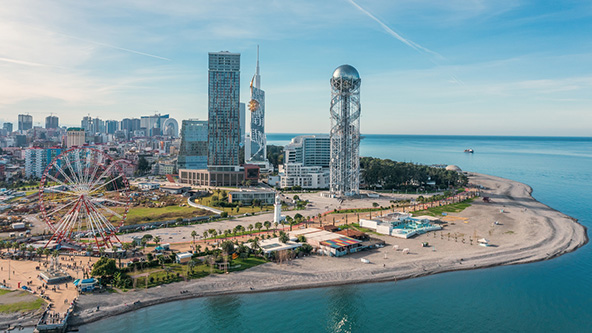 An image of Batumi, an emerging economic hub in Georgia on the Black Sea. (Photo by DedMityay)
To combat this brain drain, Batumi’s city government worked with UNDP and the European Union to develop a comprehensive approach to supporting its emerging startup ecosystem. It began by engaging in conversations with startups, investors, and tech-savvy digital nomads to understand needs and opportunities. It also forged alliances with partners such as Batumi Tech Park, Startup Connect, Axel-Georgian Business Angel Network, Startup Grind, and the Georgia Innovation and Technology Agency (GITA), a government agency dedicated to supporting innovation, technology, and entrepreneurship. Through initiatives like mentorship programs, including the Hardware Startup Incubator 2.0, startup summits, investment forums, and the development of a dedicated co-working hub called the Batumi Startup Space, the city created spaces where youth and entrepreneurs could collaborate, test ideas, and grow scalable innovations organically.
In the last two years, the city has already seen tangible results. It’s now home to 30 technology startups, founded primarily by young entrepreneurs from Batumi and other regions, with potential for global scale. What’s more, GITA has doubled its funding for small-scale grants for startups from Batumi. The city has also hosted events to energize the local startup scene, including an annual Startup World Cup national competition, startup community events featuring successful Georgian founders, and a pre-accelerator program run by Batumi Tech Park.
In addition, prompted by recent research showing that 17 percent of young people associate their ideal job with innovation and technologies, the city integrated educational activities for startups and entrepreneurship into its four-year youth municipal strategy and 2023 development budget.
In shifting from a top-down regulator to an active enabler of innovation, Batumi is redefining what local government can be, namely a catalyst for youth opportunity, entrepreneurship, and inclusive economic growth.
4. Smart Investment: Spreading Risk, Building Momentum
The fourth lesson relates to how cities structure and finance transformation efforts. Cities attempting major transitions, such as moving away from fossil fuels, often struggle to balance long-term goals with immediate community needs. Traditional approaches typically focus either on large infrastructure projects or on social programs, missing opportunities for integrated solutions.
Developing portfolios of complementary initiatives that address both physical and social infrastructure can create reinforcing benefits. It also helps attract investment by spreading risk across multiple, smaller, testable projects while showing immediate community benefits.
Pljevlja, Montenegro, demonstrates this approach in action. This coal-dependent town of 24,000 people, where the local mine and thermal power plant employ a third of the population, is working to transition to a greener economy by deploying a series of strategically interconnected initiatives that build on one another. Energy efficiency improvements in public buildings have reduced costs, improved public spaces, stimulated demand for local green businesses, and provided new opportunities for retrained workers.
Building on the success of these local efforts, Pljevlja worked closely with Montenegro’s national government to scale its initiative into a national energy efficiency program, securing €8.8 (about $10 million) in funding, with €2.8 (about $3.2) million earmarked for Pljevlja. The national program, scheduled for implementation in 2025, is led by the Ministry of Energy and Mining in partnership with the Environmental Protection Fund of Montenegro, with technical support from UNDP and financing from the European Union.
In addition to infrastructure upgrades, the city has prioritized economic diversification. An important intervention was the launch of the Co-Creation Hub, a physical space that serves as a center for innovation and learning by hosting diverse events, workshops, and training sessions that bring together predominantly youth alongside experienced professionals from various fields, including sustainable development, entrepreneurship, and engineering. There, people can collaborate on solutions to civic challenges related to energy, construction, building design and urban planning, traffic, and health care. By fostering entrepreneurship, supporting innovative financing mechanisms, and attracting tech professionals, the hub helps turn physical infrastructure investments into broader economic opportunities.
Together, these initiatives form a reinforcing system: Energy efficiency improvements reduce costs and increase awareness, worker retraining programs align with emerging green sectors, and the creative hub promotes innovation and investment. By spreading risk across diverse but interconnected projects, Pljevlja demonstrates how cities can build momentum for transition.
These case studies highlight that success is not just about what cities do, but how they work. Cities that cultivate collaborative leadership networks beyond traditional power structures, embrace flexible approaches that enable continuous learning and adaptation, and find innovative ways to mobilize resources despite constraints are better positioned to navigate complex challenges. Transformation requires sustained commitment, genuine community engagement to foster trust, and the ability to generate reinforcing benefits across multiple initiatives. As more cities across the EECA region adopt this approach, they will not only expand its impact but also strengthen the foundation for systemic urban change at scale.
Read more stories by Yaera Chung, Ievgen Kylymnyk & Svetla Baeva.