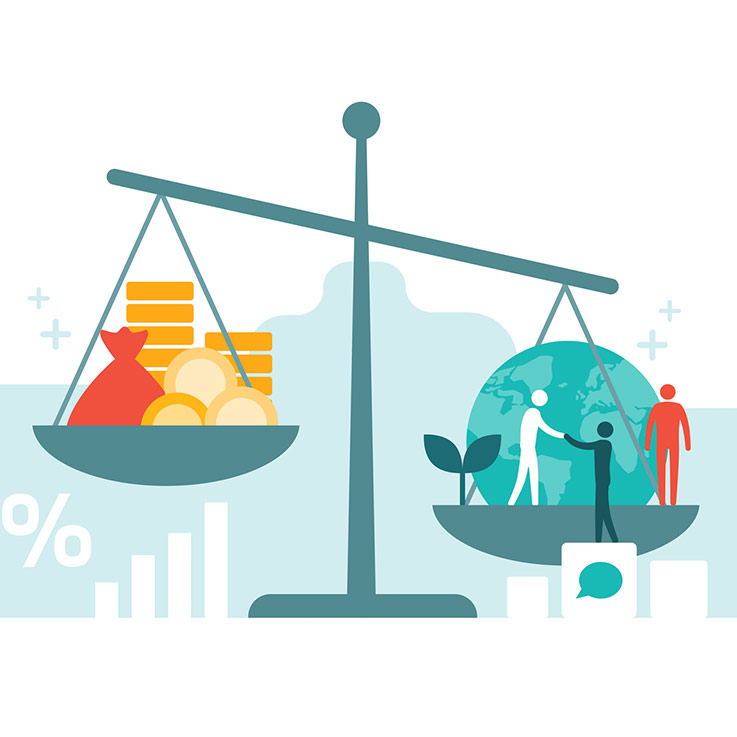
Reconceptualizing the Social Economy
The social economy is increasingly seen as a motor for social change, but how can this shift in perspectives be framed to better understand and harness its potential?
Social innovations that improve the living standards of the poor (more)
The social economy is increasingly seen as a motor for social change, but how can this shift in perspectives be framed to better understand and harness its potential?
To be laboratories of a more inclusive prosperity, American companies need to try new ways to help workers share in the fruits of their labor, and they need the space and freedom to experiment.
Neighborhood investment trusts can help create more inclusive economies in cities and restore the fabric of US democracy.
International aid must use different approaches to address the massive systemic problems it seeks to solve.
For all the glowing press that unconditional cash transfers (UCT) have gotten, cash is still a long way from living up to the hype and transforming the development sector.
A call to bring back matriarchy in Indigenous communities to rebuild and decolonize the foundation of Native community life.
Twenty years ago, New Markets Tax Credits began transforming America’s underserved communities. While some question the federal program’s impact, one rural Oregon tribe has made them a cornerstone of better health and cultural restoration.
Enthusiasm for systems change is not new, and a broader historical perspective will help systems change enthusiasts learn from the past what NOT to do: replicate the ineffective mindsets and engineering approaches that have defined so much of the systems change work in our sectors.
By focusing on three principles—shared goals, open acknowledgement of differing incentives, and the reduction of hierarchy and centralized strategy—organizations can build stronger partnerships, with an emphasis on action.
Six pathways to making housing more affordable and available from the Ivory Prize for Housing Affordability.