


ACLU v. Trump
The American Civil Liberties Union is leading the fight in the United States against the Trump administration's executive overreach. We asked them for a status update.
New and in-depth explorations of solutions to social, environmental, or organizational problems (more)

The American Civil Liberties Union is leading the fight in the United States against the Trump administration's executive overreach. We asked them for a status update.

How should philanthropy respond to the US government's sharp cuts to social spending and threats against civil society? Some of the social sector's foremost leaders and thinkers share ideas and strategies for meeting the moment. Plus, read a timely follow-up essay from MacArthur Foundation President John Palfrey.

The diversity and vibrancy of our sector give me optimism that we will meet the current crisis and weather future challenges in the years to come.

Raven Indigenous Outcomes Funds has pioneered community-driven outcomes contracts to center Indigenous communities in Canada as leaders in addressing health and social problems. They present a bold new model for outcomes purchasing.

Randomized controlled trials are touted as the benchmark for evaluating social programs. The social sector should focus instead on an improvement orientation to evaluating performance. | Open access to this article made possible by the Crown Family School of Social Work, Policy, and Practice at the University of Chicago
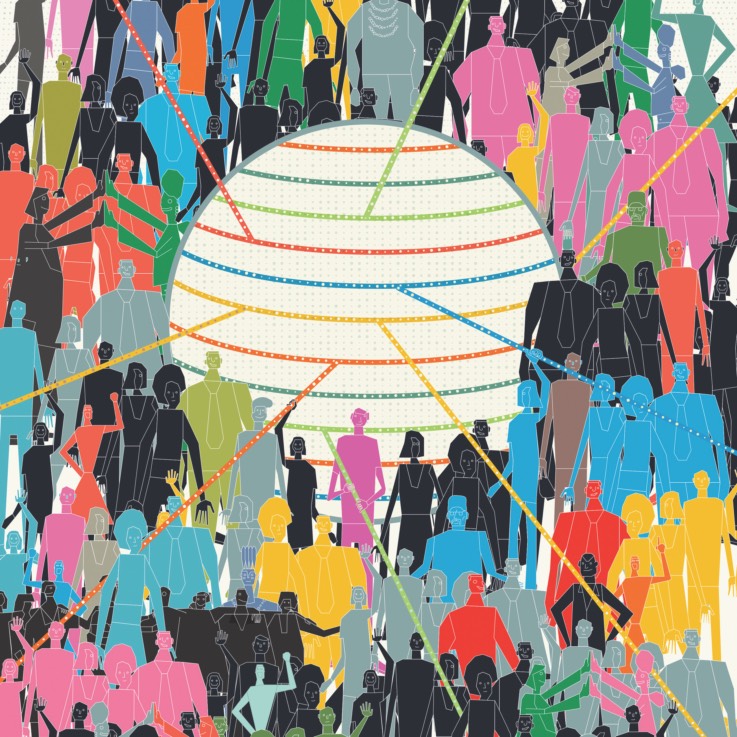
The world is undergoing simultaneous economic, technological, geopolitical, environmental, and social changes that organizations cannot address alone. Only a collective approach to social innovation can solve for challenges that are too large for individual organizations.

The predominant model for educating nurses prepares them for hospital settings. By adopting a competency-based education model rooted in community care, nursing programs can better equip their students to address the diverse health-care needs and environments of the 21st century.

Many public-private collaborations that address complex social problems flounder. We offer a new model to get such partnerships back on track.

Worsening conflicts around the world need more than state actors to resolve them. Community-based organizations are working to heal the social fragmentation at the root of mass atrocity and identity-based violence.

To succeed, place-based neighborhood transformation must have deep roots in the community that support innovative ways to branch to outside resources. Bonton Farms offers a model of such work.