


The Case for Investing in Employee Ownership
Transitioning businesses to employee ownership has the potential to significantly reduce the overall wealth gap as well as the racial equity gap. But it will take capital investment to scale.
New and innovative ideas for leaders of foundations (more)

Transitioning businesses to employee ownership has the potential to significantly reduce the overall wealth gap as well as the racial equity gap. But it will take capital investment to scale.

Why social impact organizations are acquiring mission-aligned nonprofits.
After many years of excluding the disability community, philanthropy is starting to make changes. The Ford Foundation’s awakening on disability inclusion offers a model for the rest of the sector.

Endowments are often lacking for social change nonprofits—even more so for Black-led organizations. By closing this gap, we could radically transform how we confront society’s most pressing issues.
Open-access to this article made possible by The Bridgespan Group.
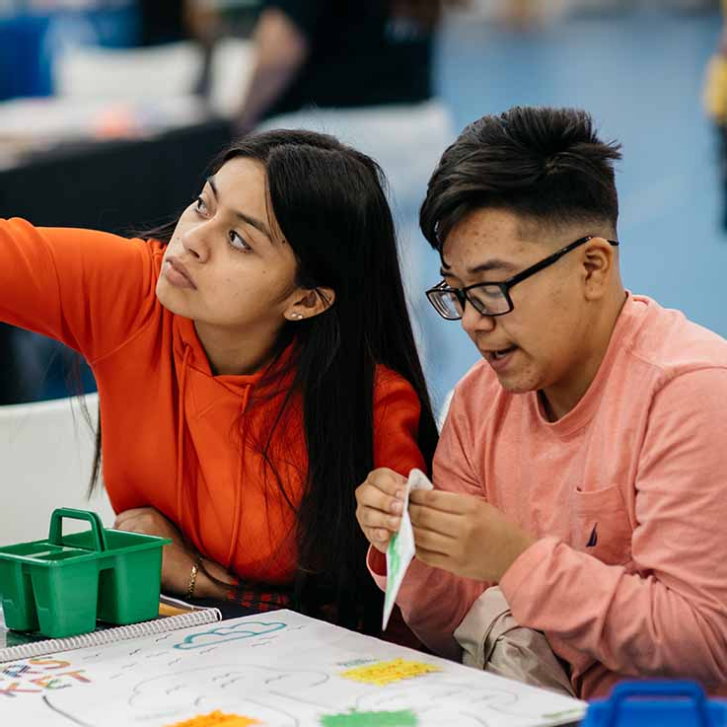
Championing initiatives is not enough. Philanthropy must fund their implementation and build power in communities to keep the ball moving.

Optimizing the path from funder to fundee isn’t something philanthropy has thought about systematically, but the sector should take this moment to build some muscle into it, with an eye toward racial and economic justice.
Trust-based philanthropy is becoming an increasingly well-defined approach for addressing the power imbalance in the nonprofit sector and closing the gap between funders and grantees. How does a trust-based approach to giving compare to a strategic one? To help us explore the characteristics of both, SSIR publisher Michael Voss speaks with Julia Reed of Schwab Charitable, Philip Li of the Robert Sterling Clark Foundation, and Nadia Roumani, cofounder of the Effective Philanthropy Learning Initiative at PACS. A sponsored podcast developed with the support of DAFgiving360.

Building better relationships between funders and nonprofits, and investing in capacity, will mean more resilient organizations and more impact.

Insightful quotes and summaries of sessions from the “People, Power, Resources: Enacting an Equitable Future" conference.

Four principles were key to the success of the COVID-19 Solidarity Response Fund, a joint effort of the UN Foundation and the World Health Organization to raise hundreds of millions of dollars to help nations around the world survive the pandemic.