


Social Impact Guarantees: The Next Evolution in Outcomes-Based Funding
A new take on collaborative funding in Singapore could help outcomes-based funding go more mainstream.
New and innovative ideas to help nonprofit leaders raise money, and to help funders and donors give more effectively (more)

A new take on collaborative funding in Singapore could help outcomes-based funding go more mainstream.

Venture capital has lagged behind on adoption of ESG practices. Here are four ways they can become more mainstream.

How philanthropic organizations can better understand the degree to which they include beneficiaries in their decision-making processes, how contextual considerations shape participation, and where problems and opportunities lie.
How does current US tax law affect charitable giving? What do these policies mean for nonprofits and donors? What strategies maximize the amount of money coming into charitable organizations? SSIR publisher Michael Voss speaks with Mike Townsend of Charles Schwab and Company and Hayden Adams of the Schwab Center for Financial Research to help donors and nonprofits think through the impact of tax policies on charitable funding. A sponsored podcast developed with the support of DAFgiving360.

It’s time for science philanthropy and communication to cocreate a new era of partnership with communities of color. | Open-access to this article made possible by the Rita Allen Foundation.

Last spring, as the COVID-19 pandemic magnified the United States’ racial and class inequities, Teach for America endeavored to put philanthropic power in younger, more racially diverse hands.
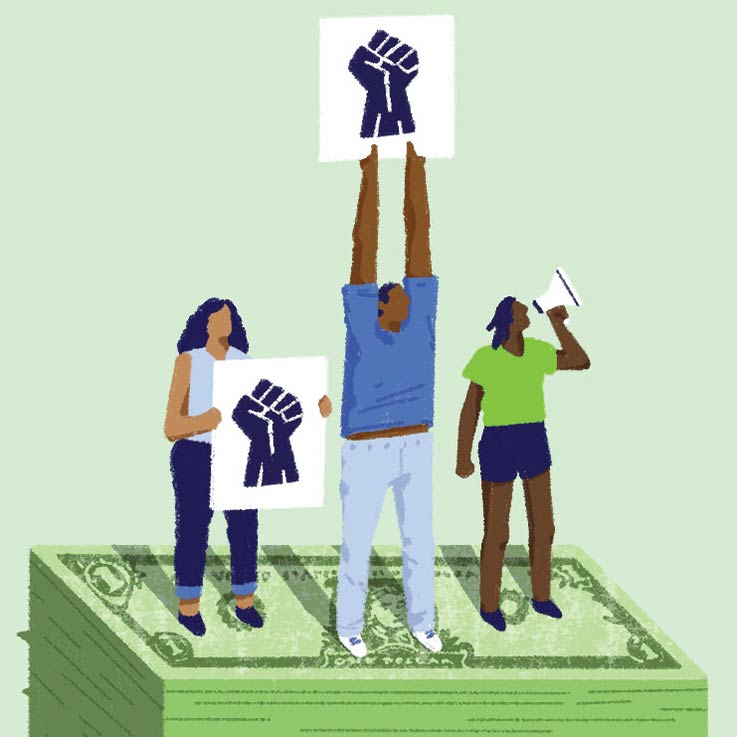
We created the Democracy Frontlines Fund to enable experienced anti-racist organizers to do their crucial work. They taught us how to do philanthropy better.

Building better relationships between funders and nonprofits, and investing in capacity, will mean more resilient organizations and more impact.

As state and local governments in the United States start spending the largest infusion of direct federal funding in history, they should make sure they aren’t investing in systems that increase inequity.
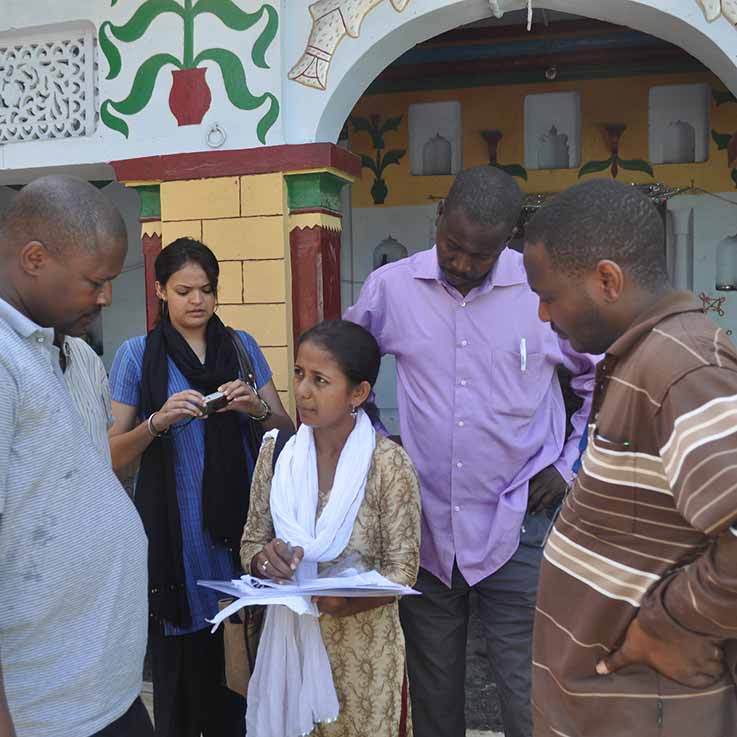
Too many forms of global giving can actually undermine local accountability and perpetuate the dominant position of Northern NGOs. The PAL Network illustrates what a globally oriented (and even locally oriented) philanthropy can look like.